A sudden scampering noise above your bedroom ceiling usually means an uninvited guest has arrived. Cold weather drives wildlife toward warm spaces, making winter pest proofing an essential task.
According to the National Pest Management Association, rodents invade an estimated 21 million homes across the country each winter. Attics offer shelter and dry insulation for their nests.
Spotting squirrels early protects your attic insulation and saves you from costly electrical repairs. Here is how to find entry points, check for damage, and solve the problem safely.
Clear Signs Squirrels Have Invaded Your Attic
Squirrels make noise during the day. Most tree squirrels wake at sunrise to forage and return before dusk.
If you hear quick running or scratching sounds in the morning, you likely have tree squirrels. Nighttime scurrying usually points to mice, rats, or bats instead.
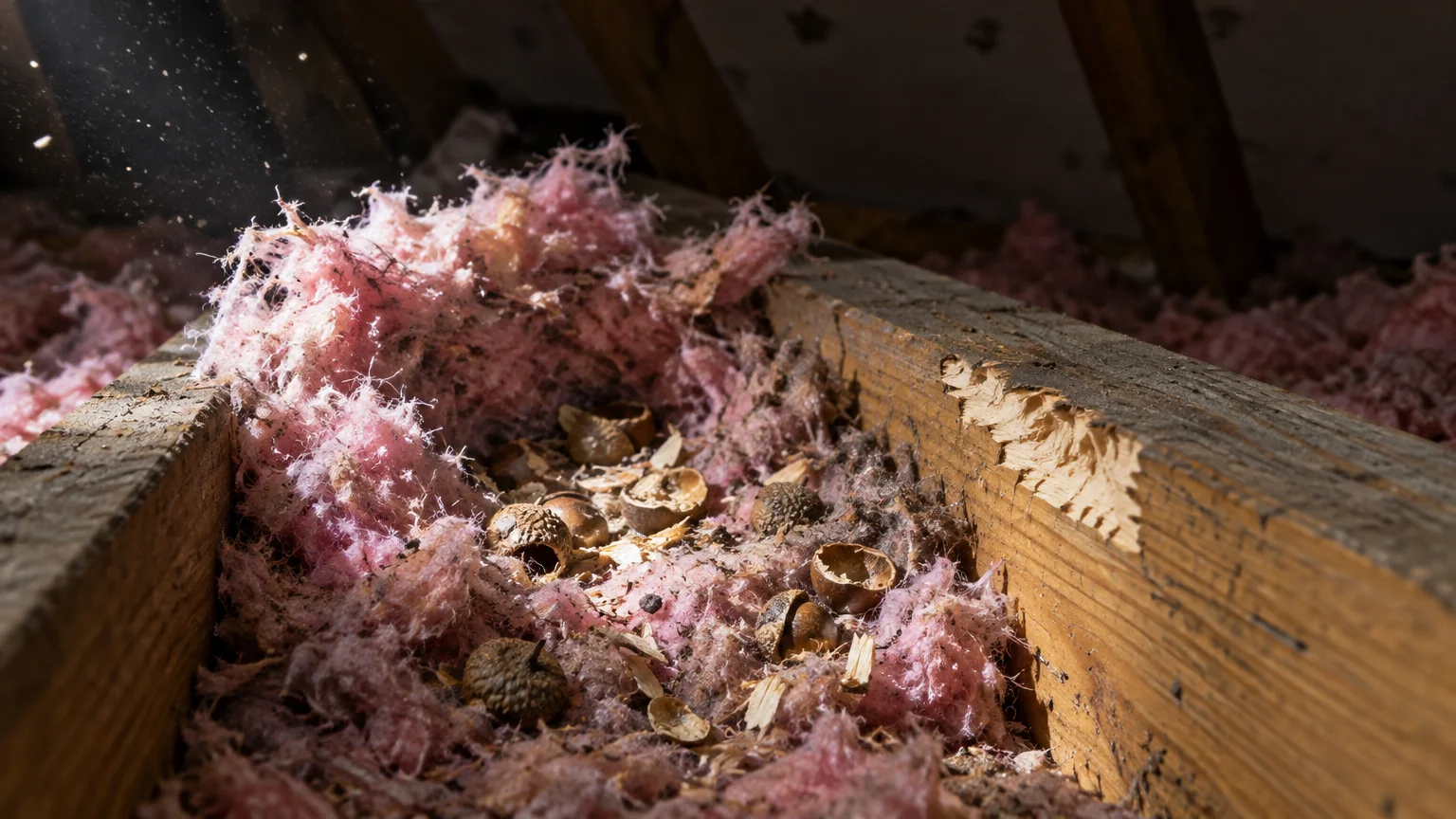
Look for chewed materials around your attic floor. Squirrels must gnaw constantly on wood, pipes, and cables to wear down their teeth.
You may also notice trampled or shredded fiberglass insulation. Squirrels tear insulation apart to build soft nests called dreys in hidden corners.
Check for droppings along attic pathways. Squirrel droppings look like dark brown pellets with rounded ends, measuring about half an inch long.
Identifying Attic Wildlife: Squirrels vs. Other Pests
Different pests require different solutions. Use this simple guide to identify which pest entered your roofline.
| Pest Type | Peak Activity | Common Sounds | Nesting Signs |
|---|---|---|---|
| Gray and Fox Squirrels | Early morning and late afternoon | Fast scurrying, rolling nuts, gnawing | Shredded insulation balls, packed leaves, acorns |
| Flying Squirrels | Midnight to dawn | Light tapping, soft chirping | Communal latrines, finely chewed cardboard |
| Mice and Rats | Nighttime | Scratching in walls, quiet scuttling | Scattered small droppings, shredded paper |
| Raccoons | Nighttime | Heavy thumping, crying, chattering | Large mashed insulation beds, torn ductwork |
The Hidden Risks: Chewed Wires and Fire Hazards
Squirrels do more than make annoying noises. Their sharp front teeth chew through plastic coatings on electrical cables, leaving bare copper wire exposed.
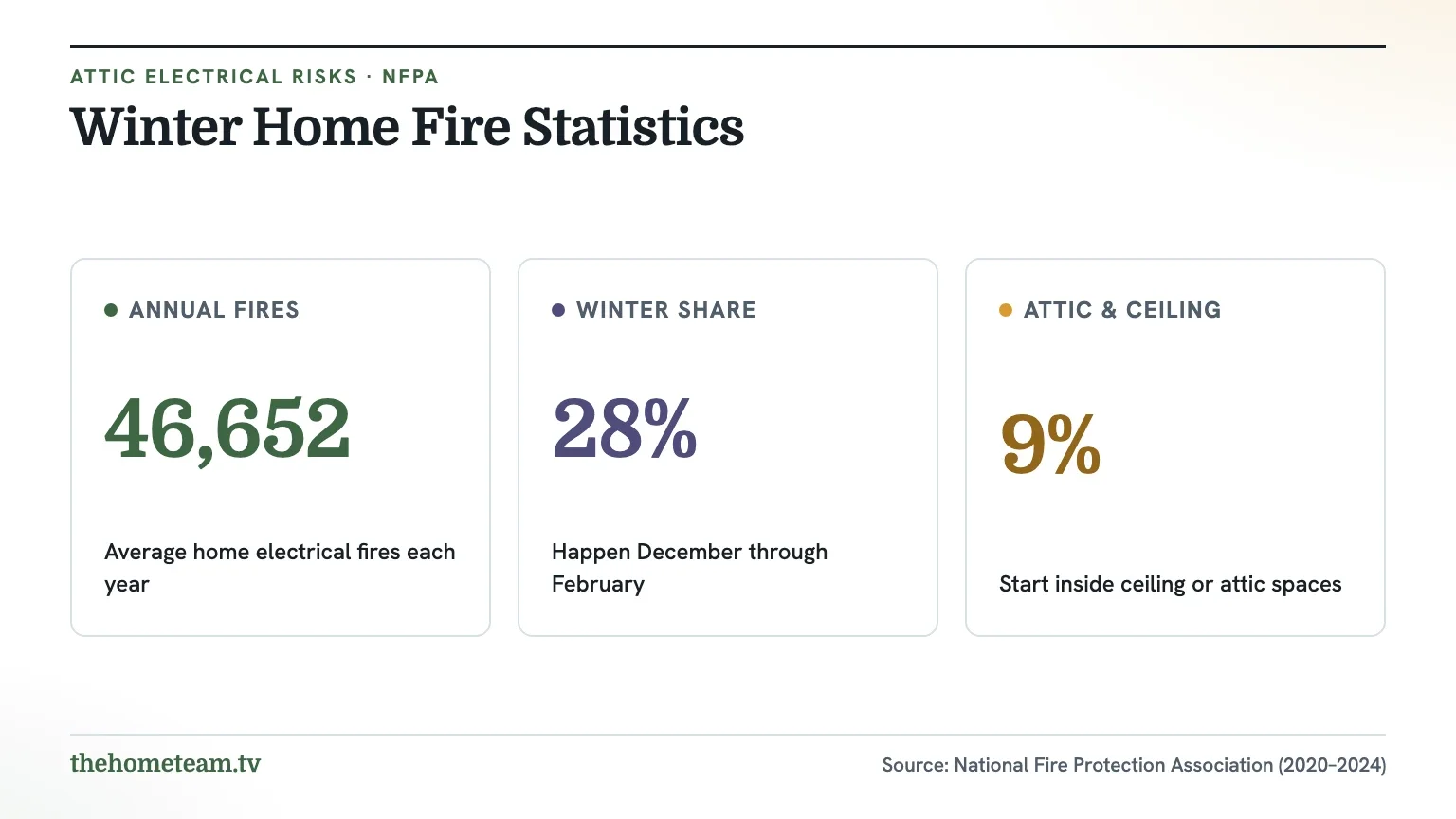
The National Fire Protection Association reported that fire departments responded to an annual average of 46,652 home electrical structure fires between 2020 and 2024.
About 9% of these fires began in an attic or ceiling space. In fact, 28% happened during the winter months of December, January, and February.
You can learn safe wiring inspection steps at This Old House. Always shut off power at the main breaker before inspecting wiring near nests.
Standard homeowners insurance policies rarely pay for pest removal or chewed framing. However, most policies do cover secondary damage if a fire occurs.
How to Locate Roofline Entry Points
Tree squirrels can squeeze through openings as small as 1.5 inches wide. Tiny flying squirrels need an opening no bigger than a quarter.
Walk around your home with binoculars on a sunny afternoon. Look for chewed fascia boards, bent soffits, and loose roof ridge vents.
Inspect the roof edge where gutters meet your shingles. Water damage often rots the wood here, giving pests an easy path to chew through.
Check your chimney flashing and roof vents as well. Wire screening from Bob Vila guides can help you seal vents against wildlife.
Safe Exclusion and Humane Timing Standards
Many people believe freezing winter temperatures trap squirrels inside attics. In truth, tree squirrels do not hibernate during the winter months.
They remain active all season long. They shelter in nests during bitter cold snaps and venture outside during milder afternoons to dig up food.
Never seal an entry hole without checking if the attic is empty first. Trapping an adult squirrel inside will force it to chew through your drywall.
Mating season runs from December through February, with pups arriving between February and April. Mother squirrels nurse their pups for 10 to 12 weeks.
If you seal holes while babies stay in the nest, the mother will chew through your roof to save them.
To test an entry hole, stuff it loosely with crumpled newspaper. If the paper stays put for five good-weather days, seal the hole permanently.
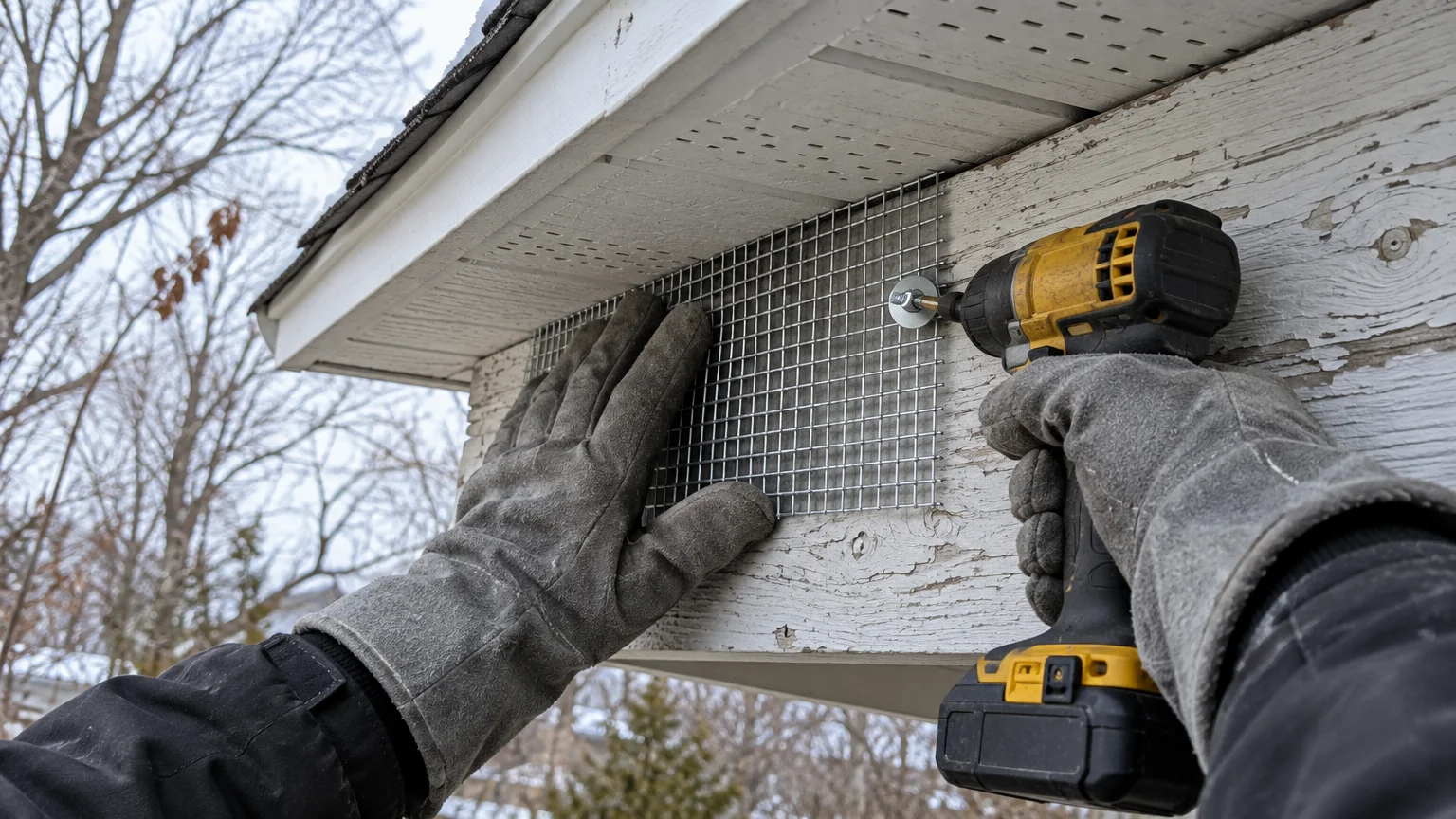
Cover permanent openings with heavy steel wire cloth. Experts at PennState Extension recommend using 1/4-inch or 1/2-inch galvanized hardware cloth.
“A garden is a grand teacher. It teaches patience and careful watchfulness; it teaches industry and thrift.” — Gertrude Jekyll
DIY vs. Hiring a Pro
Sealing simple gaps on a single-story roof is a straightforward weekend job. However, steep roofs and deep infestations require specialized safety gear.
Trapping laws also restrict what homeowners can do. Many states, including California, Illinois, and Pennsylvania, make it illegal to trap and relocate wildlife off your property.
Basic squirrel removal by a professional costs about $300 on average. Complex eviction jobs that include cleanup and repairs range from $500 to $1,500.
If pests chewed electrical lines, expect to pay an electrician $2 to $4 per square foot to run new wiring safely.
Care Killers: Mistakes That Make Infestations Worse
Setting poison baits in your attic creates severe problems. A poisoned squirrel often dies inside wall cavities, causing horrible odors and insect swarms.
Poisoned pests also endanger local wildlife and family pets if they slip outside. Rely on exclusion barriers instead of chemical baits.
Another major mistake is using light plastic mesh or spray foam alone. Squirrels chew through cured expanding foam in just a few minutes.
Always back your foam or wood patches with steel hardware cloth or metal flashing. Metal provides the only chew-proof barrier against rodent teeth.
Frequently Asked Questions
Will squirrels leave my attic on their own when spring arrives?
Squirrels rarely leave on their own once they establish a nesting site. You must repair exterior entry points to keep them out permanently.
How can I tell if baby squirrels are in my attic?
Listen for high-pitched chirping sounds from one area between February and May. If you spot an adult nursing or carrying nesting fluff, assume babies are present.
Do strobe lights or sound machines drive squirrels out?
Sound devices and flashing lights rarely work for more than a day or two. Squirrels quickly grow used to the disturbance and stay in their warm nests.
Protecting Your Home This Season
Winter pest proofing takes time, but acting early prevents expensive repairs later. Inspect your roofline this week, monitor entry holes carefully, and protect your home before spring nesting starts.
For electrical, gas, structural or roofing work, hire a licensed professional and check your local building codes before you start.