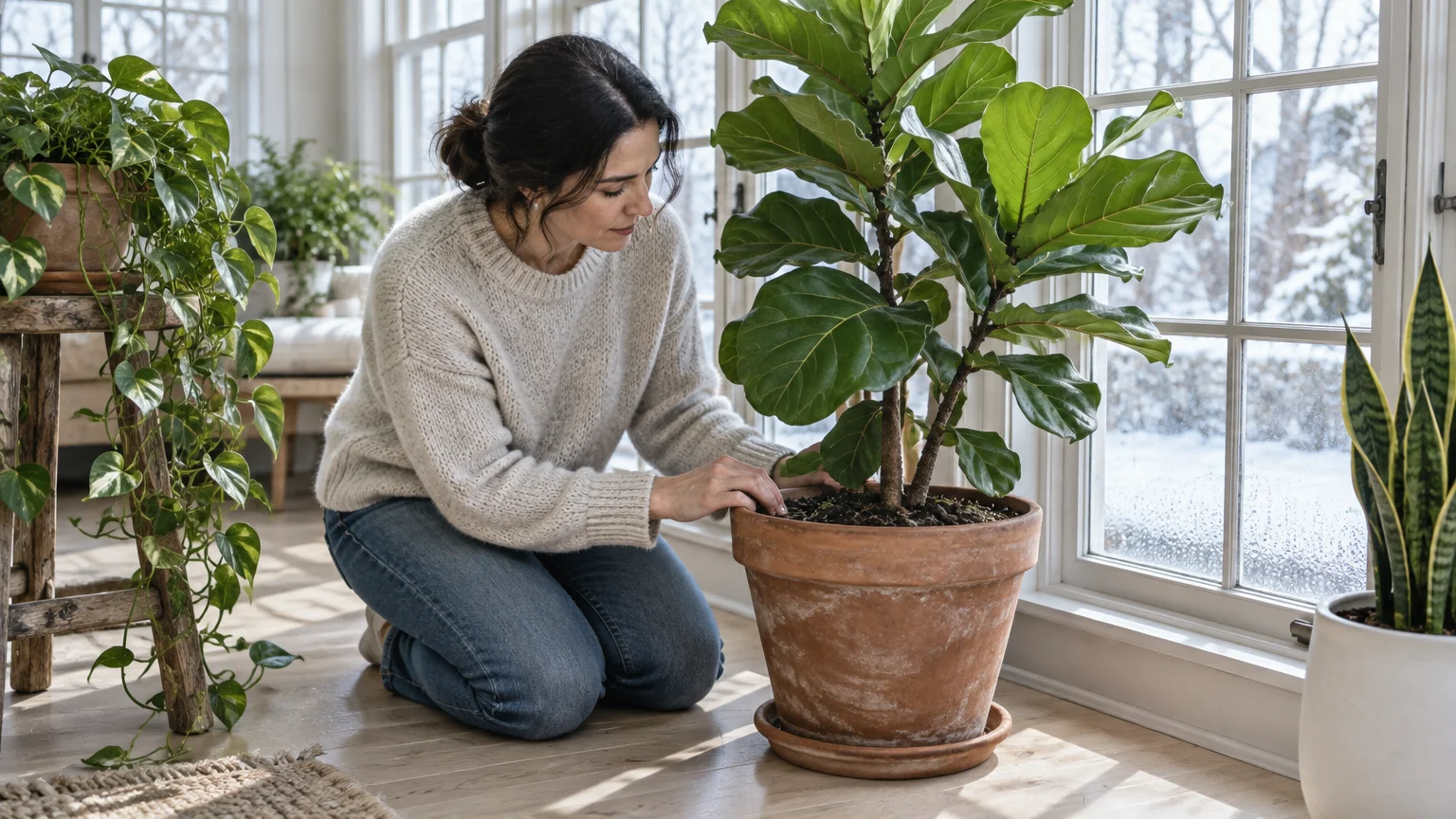
You can banish the swarm of tiny black flies hovering around your indoor plant collection without spraying harsh chemicals. A few strategic adjustments to moisture and soil biology break their reproductive cycle within weeks.
Fungus gnats thrive during winter because shorter daylight hours and cooler temperatures slow plant water uptake. Excess moisture lingering in the top layer of potting soil creates an ideal nursery for their larvae.
By targeting their habitat directly, you will safeguard your greenery and restore peace to your living space. Here is your actionable blueprint for clean, healthy winter houseplant care.
Why Winter Houseplant Pests Multiply Indoors
Indoor plant care shifts dramatically when outdoor temperatures fall. As central heating turns on, indoor houseplants drink far less water than they do during active summer growth.
Saturated soil transforms your containers into prime breeding territory for Bradysia species, commonly known as fungus gnats. These potting soil pests proliferate in damp, decomposing organic matter.
University entomologists note that Bradysia fungus gnats complete their lifecycle in roughly 17 days at 75°F. In cooler winter homes between 65°F and 75°F, development spans three to four weeks.
Adult females deposit hundreds of microscopic eggs in damp surface media. Once hatched, the larvae feed heavily within the top two to three inches of potting soil before pupating.
Master Soil Moisture to Halt Infestations
Moisture control serves as your foundation for eradicating winter houseplant pests. Without consistent surface dampness, gnat eggs desiccate and newly hatched larvae starve.
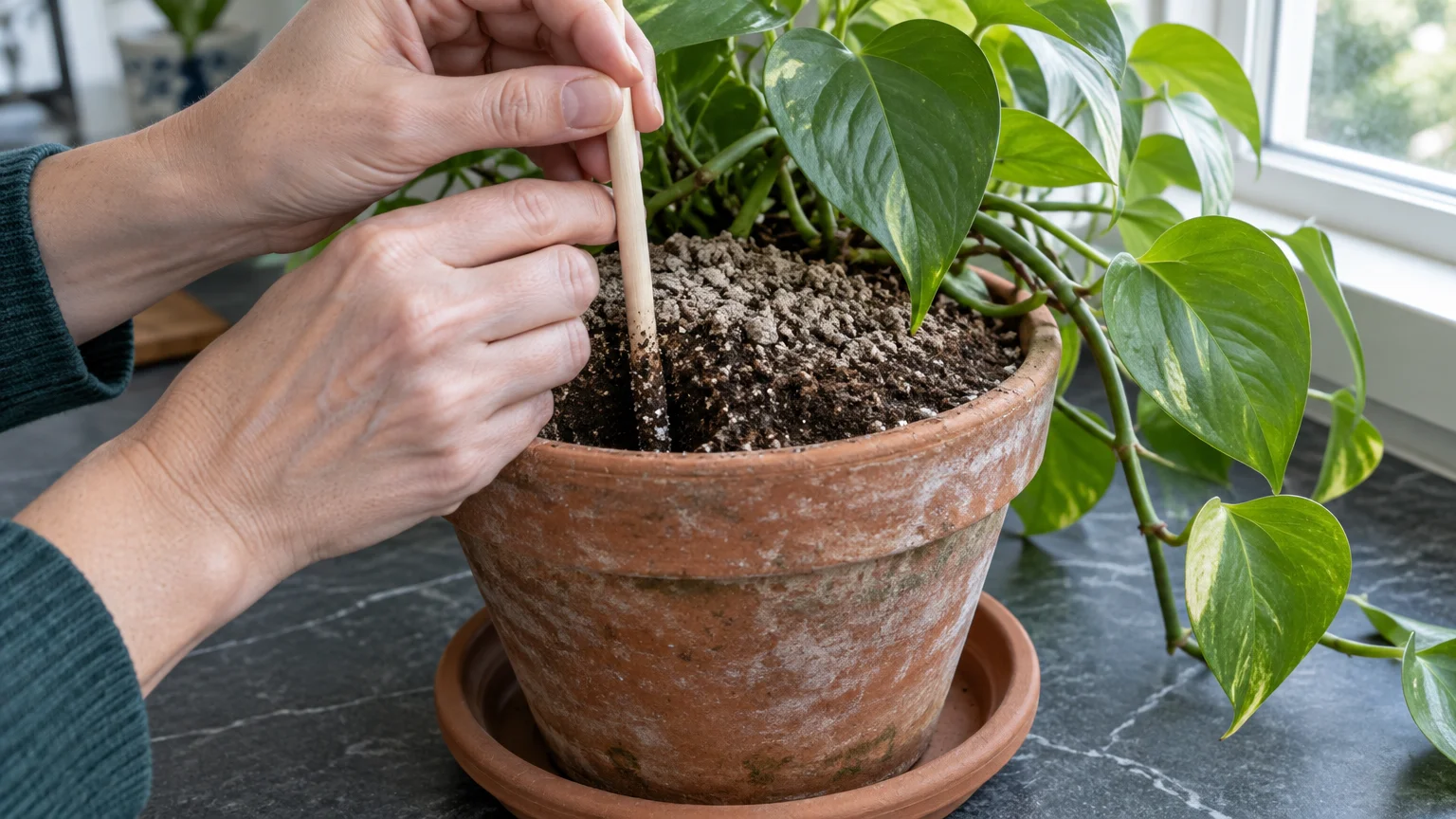
Allow the top one to two inches of potting soil to dry completely between waterings. Use your index finger or a dry wooden chopstick to assess depth before adding water.
Always empty saucers and decorative cachepots within thirty minutes of watering. Standing water saturates bottom soil and invites adult gnats seeking moist egg-laying sites.
Consider bottom-watering your plants by filling their saucers and allowing roots to drink upward. As research from Clemson Home & Garden Information Center shows, dry surface soil drastically curtails gnat reproduction.
Install a Mineral Barrier to Block Egg Laying
Adult fungus gnats need direct access to moist organic soil to deposit their eggs. A clean mineral barrier effectively cuts off this access.
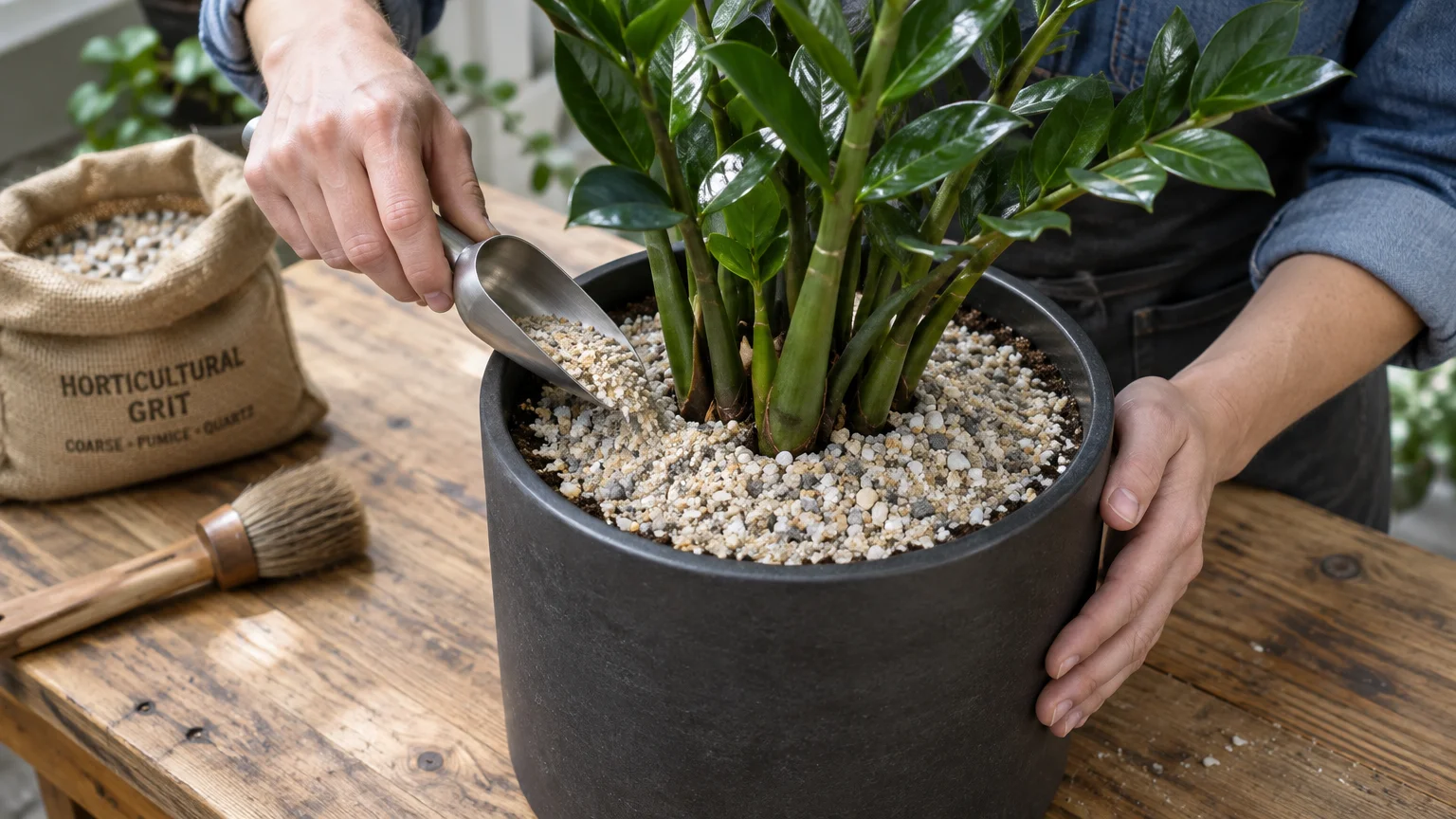
Spread a half-inch to one-inch layer of coarse sand or fine horticultural gravel over the potting mix. This gritty top layer drains immediately and remains bone-dry.
Never substitute fine play sand or builder’s sand for coarse grit. Fine sand packs tightly, retains surface moisture, and restricts soil aeration.
When adult gnats touch dry grit, they cannot dig down to deposit eggs. Larvae maturing deep in the container also struggle to penetrate the gritty crust.
Deploy Bti to Eliminate Larvae Naturally
When gnats already inhabit your pots, physical barriers alone are not enough. You must eradicate the feeding larvae concealed in the root zone.
Bacillus thuringiensis israelensis (Bti) offers an exceptional, targeted biological control. This soil bacterium produces specific proteins that destroy the gut lining of fly larvae when ingested.
The EPA registers Bti products for residential and organic use, confirming no toxicity to humans or pets. Still, always cross-reference household toxicity risks with the ASPCA Animal Poison Control database.
Inspect product labels carefully before purchase. Ensure your chosen Bti formulation is registered for potting soil applications rather than exclusively for outdoor mosquito standing water.
Because Bti targets only active feeding larvae—leaving eggs, pupae, and adults unharmed—a single treatment will not suffice. Water thoroughly with Bti every five to seven days across three to four weeks.
Trap Adults With Yellow Sticky Cards
Airborne adults do not feed on roots, but they lay up to 200 eggs each. Capturing flying adults interrupts their reproductive cycle.
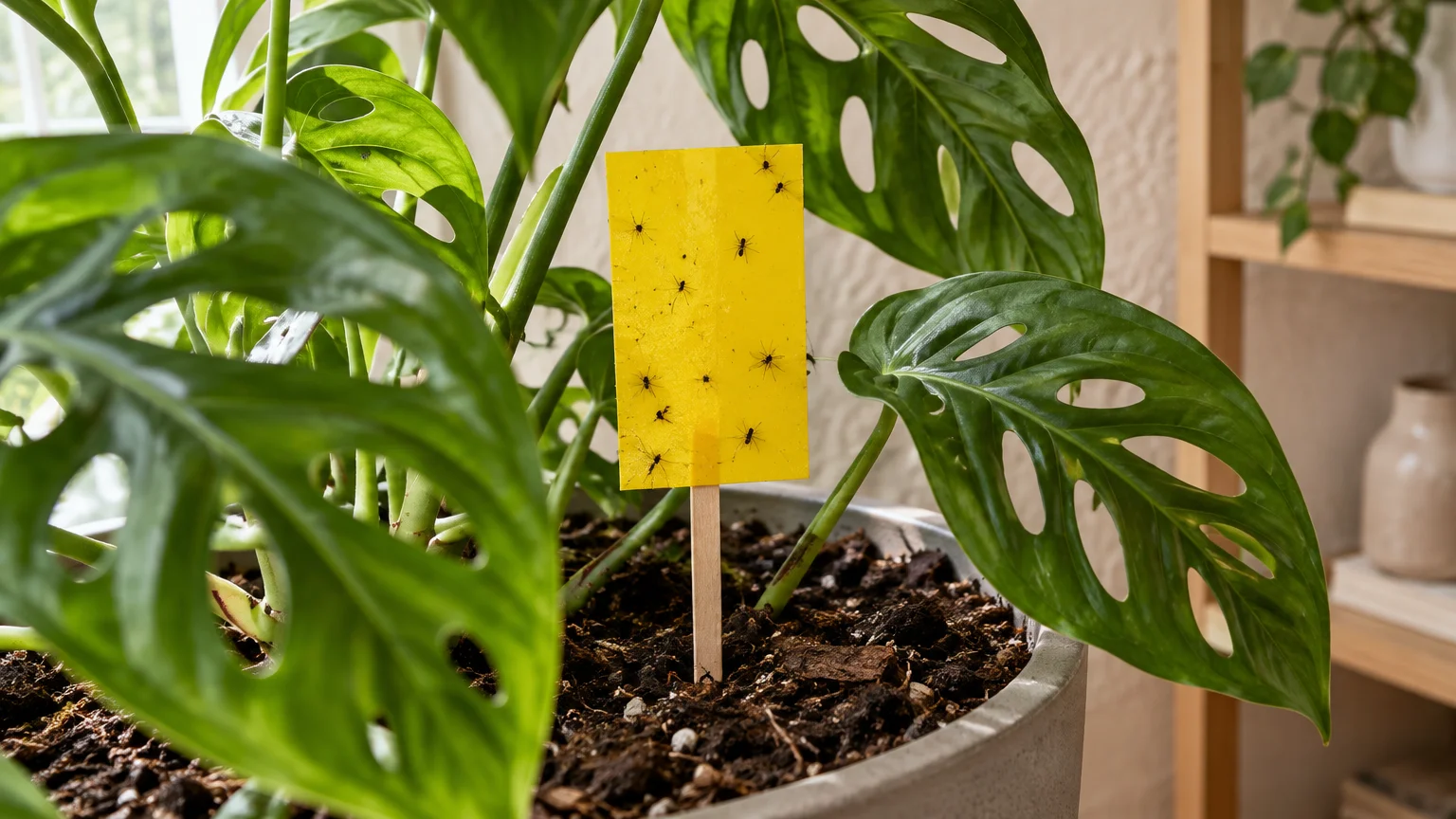
Stake yellow sticky traps right at the soil level where gnats take flight. Yellow reflects light at wavelengths that adult gnats find irresistible.
Guidance from PennState Extension highlights yellow sticky traps as essential monitoring tools. They reveal whether your treatments are shrinking the pest population over time.
Comparing Non-Toxic Fungus Gnat Treatments
Selecting the right interventions depends on whether you face a minor nuisance or an active infestation. Use this summary to coordinate your strategy.
| Method | Target Stage | Application | Primary Advantage |
|---|---|---|---|
| Soil Moisture Control | Eggs and young larvae | Let top 1 to 2 inches dry out | Free cultural habit; halts future generations |
| Coarse Sand Barrier | Adults and emerging flies | Add 1/2- to 1-inch layer of grit | Dries instantly; blocks egg burrowing |
| Bti Biological Drench | Active feeding larvae | Weekly soil drench for 3 to 4 weeks | Destroys larvae safely without synthetic chemicals |
| Yellow Sticky Traps | Flying adults | Place horizontally near soil surface | Catches active breeders; monitors infestation size |
Don’t Make These Errors
Quick internet fixes often harm your plants while failing to eradicate pests. Avoid using harsh chemical bug sprays indoors where ventilation is limited.
Do not drench roots with undiluted hydrogen peroxide or household detergents. These mixtures strip root hairs and destroy beneficial soil microbes without eradicating the entire larval population.
Avoid top-dressing your pots with decorative sphagnum moss or shredded bark. These moisture-retaining organic materials create ideal nurseries for fungus gnats houseplants love to colonize.
Patience and Observation in Winter Plant Care
“A garden is a grand teacher. It teaches patience and careful watchfulness; it teaches industry and thrift.” — Gertrude Jekyll
Winter gardening demands attentive restraint rather than rapid, drastic reactions. Inspecting your plants weekly lets you catch moisture issues before pests multiply.
Frequently Asked Questions
Do fungus gnats harm houseplant root systems?
Adult gnats are harmless to plants, but dense larval populations chew on root hairs. This damage stuns growth and leaves plants vulnerable to fungal root rot.
Can I use cinnamon powder to kill fungus gnats?
Cinnamon acts as a mild natural fungicide, reducing the surface mold that larvae consume. However, it does not reliably kill larvae or prevent adult egg deposition.
How long does it take to eliminate an infestation?
Expect the eradication process to take three to four weeks. Because Bti and moisture controls target specific life stages, you must outlast the current insect generation.
Restore Balance to Your Indoor Garden
Take control of your indoor jungle today by inspecting moisture levels across your collection. Adjusting your watering schedule, laying down coarse sand, and applying Bti will restore balance quickly.
This article is for informational purposes; results vary with your home, your region, and the materials you use. Check the manufacturer’s instructions before you start.