Smart Strategies & Upgrades
Transforming your property into an energy-efficient haven involves both interior mechanical updates and exterior biological solutions. By treating your home and your garden as a single, integrated system, you can maximize your results and significantly reduce utility costs.
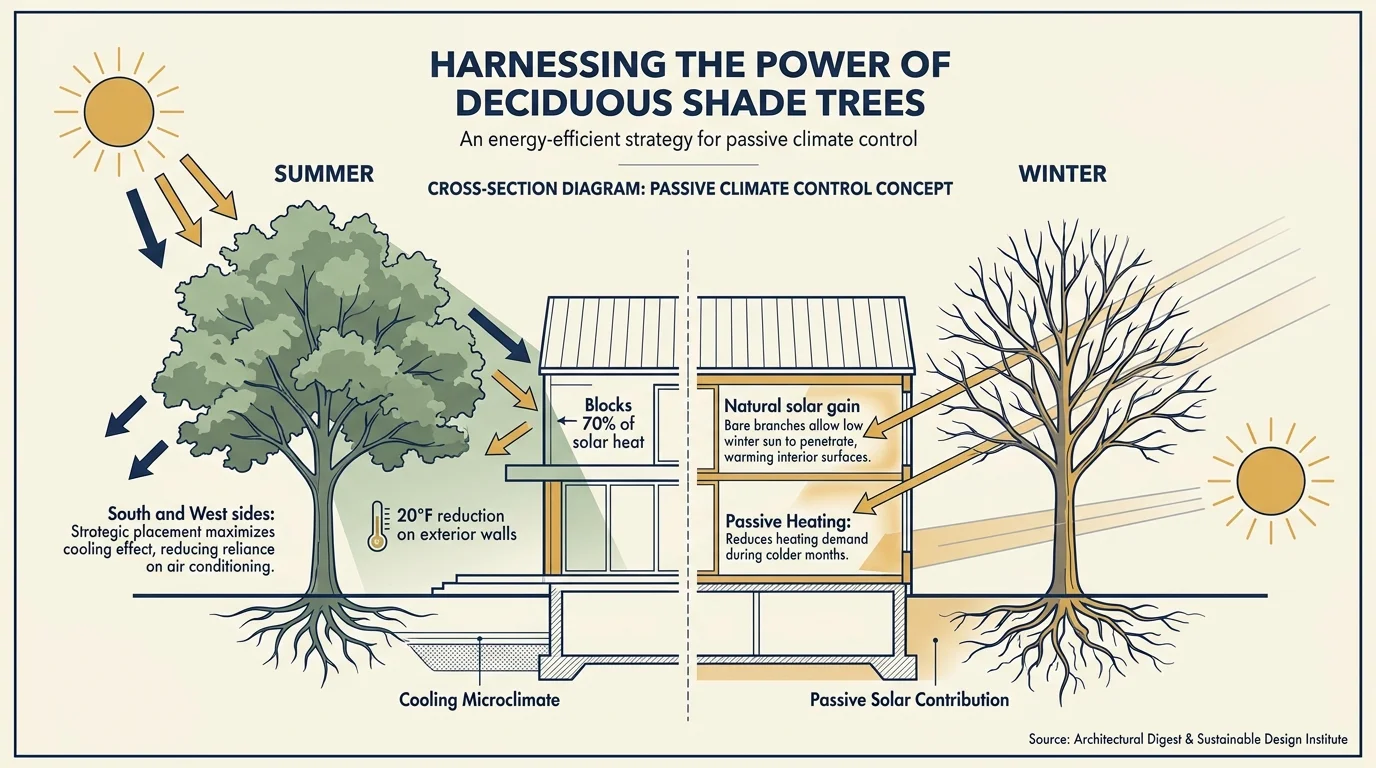
Harnessing the Power of Deciduous Shade Trees
Nature provides one of the most effective cooling systems available. Planting deciduous trees—such as maples, oaks, or ginkgos—on the south and west sides of your home blocks intense summer sunlight before it ever hits your windows. During the hottest months, a mature tree canopy can reduce the temperature of your home’s exterior walls by as much as 20 degrees Fahrenheit. When autumn arrives and the leaves drop, the bare branches allow the much-needed winter sun to penetrate your windows, naturally warming your rooms.
Success with shade trees relies entirely on proper planting techniques and site selection. Before you purchase a sapling, assess your soil composition. Compacted clay soil requires aeration and the addition of organic compost to prevent waterlogging, whereas sandy soil drains rapidly and benefits from organic matter to retain moisture. Understanding your soil ensures your tree establishes a robust root system capable of supporting a massive canopy.
During the crucial first year of establishment, your watering cadence dictates the tree’s survival. Provide a deep, slow soak at the base of the trunk once a week rather than frequent, shallow sprinkles. Deep watering encourages roots to grow downward, making the tree more drought-resilient and stable over time.
You must also heed structural cautions when placing large vegetation near your house. Plant large shade trees at least 15 to 20 feet away from your foundation. Roots naturally seek out moisture and can aggressively infiltrate older plumbing lines or cause concrete foundations to crack and heave. Additionally, consider allergen considerations; if you or your family members suffer from seasonal allergies, seek out female tree varieties. Male trees are notorious for releasing heavy, wind-borne pollen that can easily drift into your open windows.
Creating Evergreen Windbreaks
Winter winds sweeping across your property actively strip heat away from your exterior walls, forcing your heating system to work overtime. You can mitigate this heat loss by planting a dense row of evergreen trees or shrubs on the north and northwest sides of your property. Species like the Norway Spruce or Arborvitae maintain their thick foliage year-round, serving as a biological wall that deflects freezing gusts.
A properly positioned windbreak can lower the wind chill near your home significantly, offering a passive way to save on heating cooling. Just like deciduous trees, evergreens require thoughtful soil preparation and a consistent watering cadence during their first two years. Ensure the soil is slightly acidic and well-draining. Mulch the base heavily to retain moisture and regulate soil temperature during sudden winter freezes.
Indoor Greenery for Microclimate Management
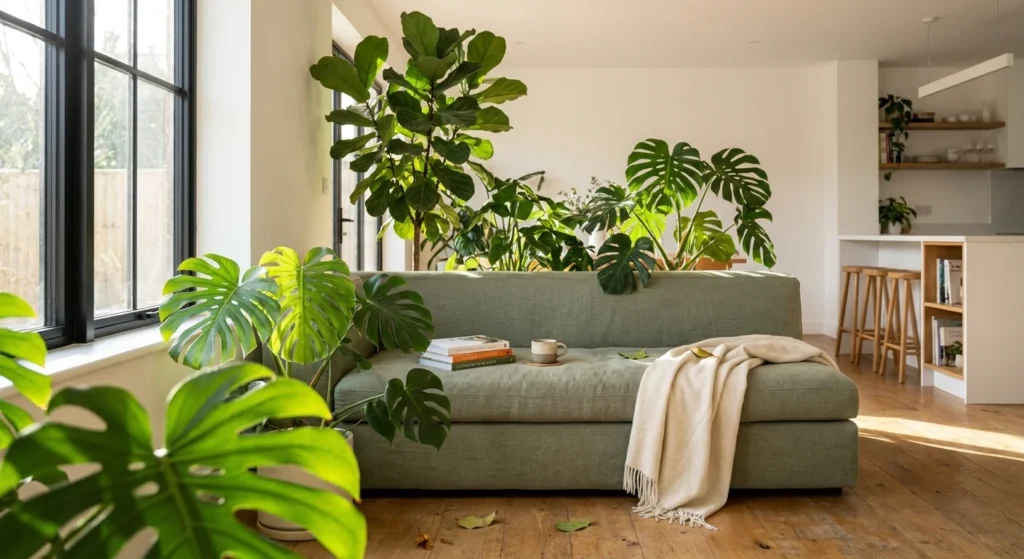
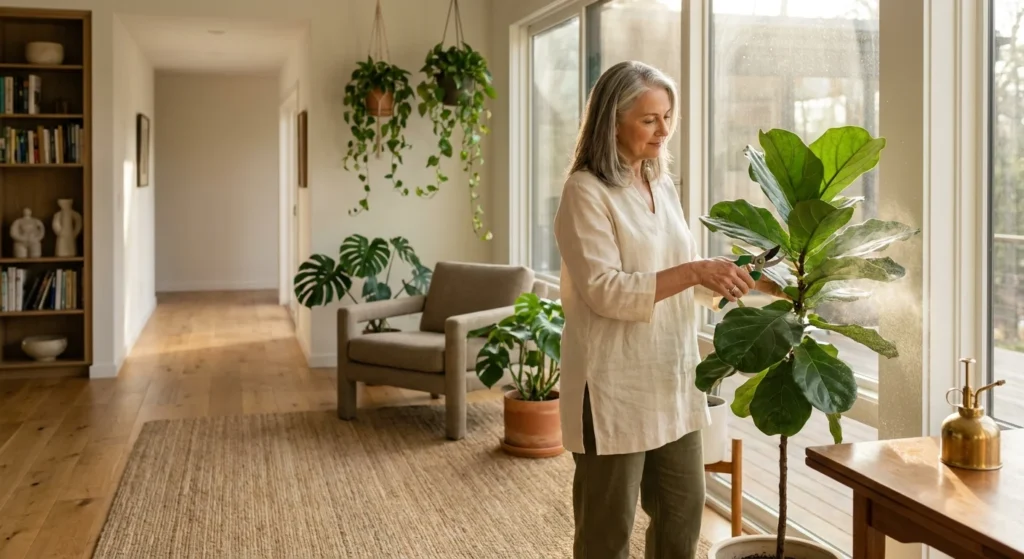
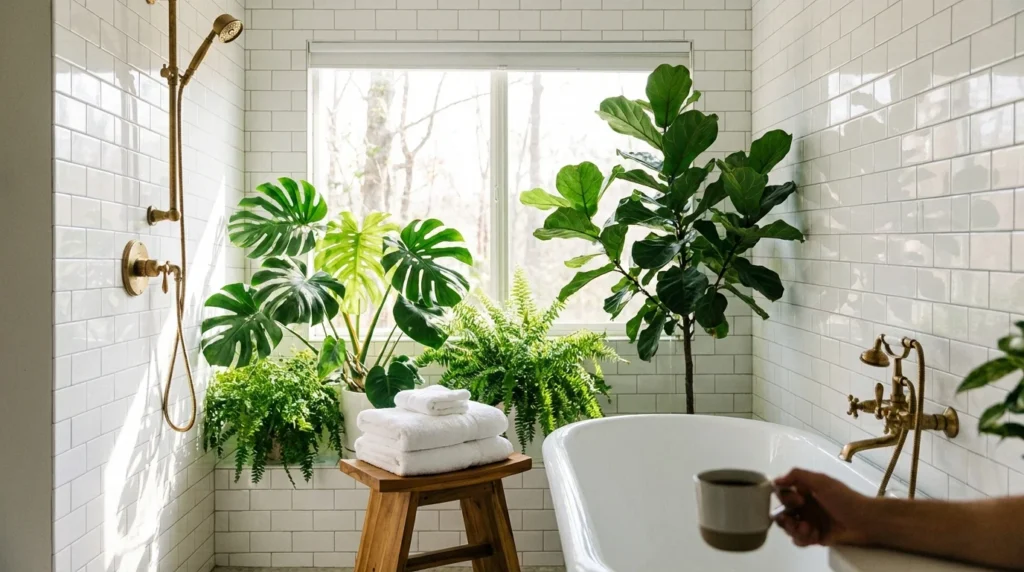
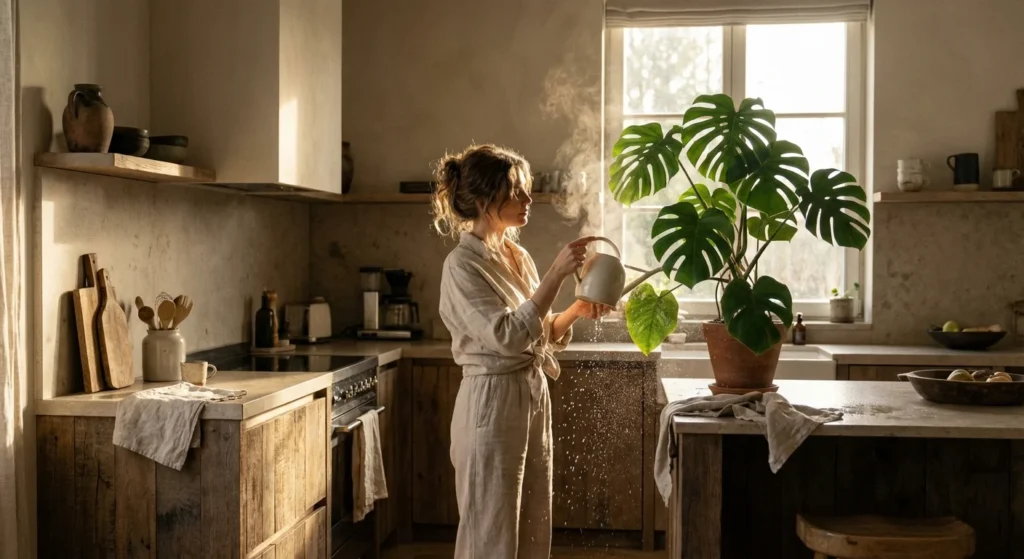
Your indoor environment also benefits from carefully selected greenery. Houseplants actively release moisture into the air through a process called transpiration. During dry winter months when your furnace strips the air of humidity, adding plants can naturally raise the moisture levels in your home. Air with a balanced humidity level holds heat better; 68 degrees in a properly humidified room feels significantly warmer than 68 degrees in bone-dry air.
Group plants like Boston ferns, spider plants, and peace lilies together to create humid microclimates. Pay close attention to light levels; place these humidity-boosting plants in bright, indirect sunlight to encourage robust growth without scorching their leaves. Maintain a balanced watering cadence—keep the potting mix evenly moist but never completely saturated. Overwatering quickly leads to root rot and attracts nuisance insects like fungus gnats.
Always prioritize pet safety when selecting your indoor greenery. Many popular houseplants, including sago palms, lilies, and certain philodendrons, are highly toxic to cats and dogs. Opt for pet-safe varieties like the classic spider plant, cast iron plant, or various peperomias to ensure your furry companions remain out of harm’s way.
Sealing the Building Envelope
Even the best landscaping cannot compensate for a drafty house. Upgrading your home’s thermal envelope is a critical step in lowering your utility bills. Warm air naturally escapes through unsealed cracks around windows, doors, and baseboards in the winter, while hot summer air forces its way inside during July and August.
Applying high-quality silicone caulk to stationary gaps and installing durable weatherstripping around moving doors and windows are incredibly efficient home tips that yield immediate returns. Check your attic insulation as well. Upgrading to a higher R-value insulation prevents radiant heat transfer through your roof. Pay attention to structural cautions when working in an attic; always step securely on the joists rather than the drywall ceiling, and wear a respiratory mask to avoid inhaling fiberglass particulates.
Smart Thermostats and Automated Comfort
Modernizing your home’s climate control removes the guesswork from energy conservation. A smart thermostat learns your daily routines and automatically adjusts the temperature when you are asleep or away from the house. By reducing heating and cooling efforts during periods of low activity, you prevent your HVAC system from wasting valuable energy.
When looking for ways to lower energy bills seniors often benefit greatly from these technologies. Many smart thermostats feature large, high-contrast digital displays, voice-command integration, and remote smartphone control. This allows homeowners with limited mobility to adjust their environment effortlessly from a favorite chair or bed, ensuring comfort remains a top priority without micromanaging the physical thermostat dial.