
Budget, Time, & Skill Considerations
Executing a successful home refresh requires realistic planning. You do not need to gut your house to eradicate outdated decor; small, intentional shifts often yield the most dramatic results. Understanding the necessary resources helps you pace your project and avoid burnout.
From a financial perspective, swapping out heavy window treatments for sheer linen panels or natural shades can cost anywhere from fifty to a few hundred dollars per window, depending on your material choices. Investing in mature, high-quality houseplants like a large Ficus or a trailing Hoya is remarkably cost-effective compared to purchasing new furniture, typically ranging from thirty to one hundred dollars. If you are upgrading your seating to prioritize ergonomic, aging-in-place comfort, expect to allocate a larger portion of your budget. Quality upholstery designed for long-term lumbar support is a true investment in your daily well-being.
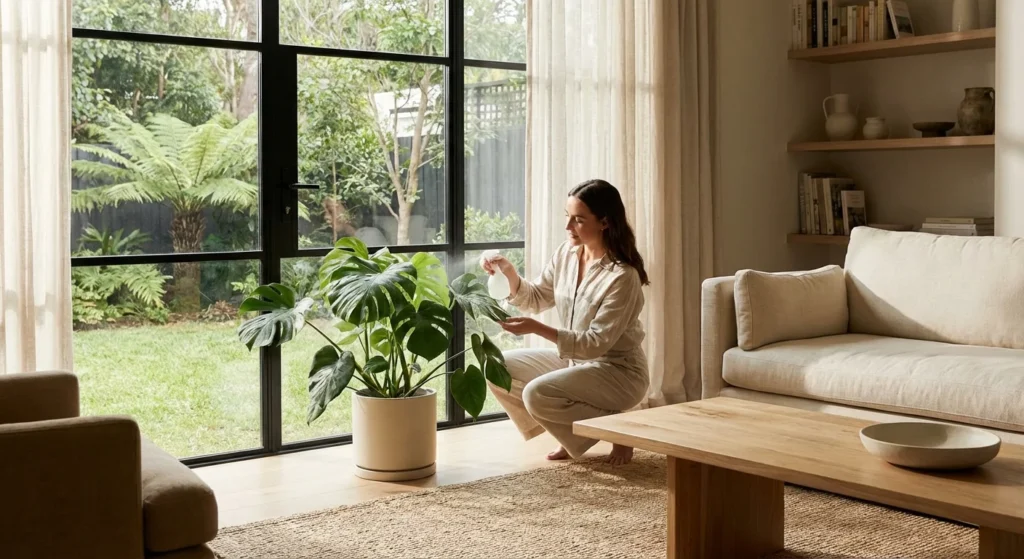
Time commitments vary based on the scale of your decorating tips and adjustments. Repotting plants and establishing a functional watering cadence requires an hour or two on a weekend. When upgrading soil, remember to pre-moisten your potting mix before transferring your plant; dry peat-based soils can become hydrophobic, repelling water and leaving the root ball dehydrated even after a thorough soaking. Conversely, decluttering your floor plan and rearranging heavy furniture to widen walkways may take a full afternoon and require an extra set of hands.
In terms of skill, indoor plant care is a highly learnable science. Begin by mastering the light levels in your home—track how the sun moves across your rooms to identify your bright, indirect light zones versus your low-light corners. Understanding your microclimates dramatically increases your horticultural success rate.
For authoritative guidance, refer to cooperative extension resources like the PennState Extension and the Clemson Home & Garden Information Center. Botanical gardens and university horticulture programs are also excellent references.