Frequently Asked Questions
How do light levels affect the quality of stored food?
Much like shade-loving plants wither under direct sunlight, many foods degrade when exposed to light. Ultraviolet rays break down the essential oils in spices, turn cooking oils rancid, and trigger sprouting and toxicity in root crops like potatoes. Keep your pantry dark when not in use. Install motion-sensor LED lighting; it provides excellent visibility when you open the door but automatically shuts off to protect your food.
What is the best way to prevent pantry pests naturally?
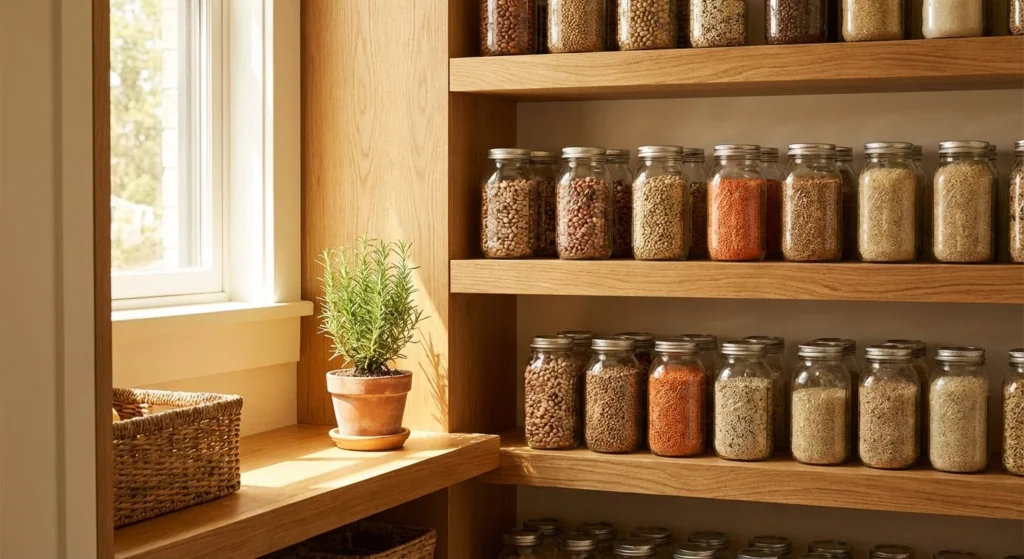
The most effective defense is physical exclusion. Decant all paper- or plastic-wrapped grains, flours, and legumes into airtight hard-sided containers immediately upon bringing them home. Wipe up spills instantly. You can also place bay leaves inside your bins of flour and rice; the strong scent acts as a natural deterrent for weevils and moths without altering the flavor of your food.
How can I make my pantry more accessible as I age?
Focus on visibility and reach. Replace deep, fixed shelves with sliding pull-out drawers so you never have to reach blindly into the back of a dark cabinet. Store your heaviest items—like large glass jars, canned goods, and root vegetables—between knee and shoulder height. Use D-shaped Lazy Susans in tight corners to bring items directly to you with a gentle spin.
Are any common pantry staples dangerous to pets?
Yes. Alliums (onions, garlic, shallots) are highly toxic to dogs and cats, causing severe anemia if ingested. Keep these items elevated or secured in latched, breathable bins. Additionally, keep bulk bags of items containing xylitol (a common artificial sweetener) locked away, as it is exceptionally deadly to dogs.