Budget, Time, & Skill Considerations
Upgrading your pantry to properly store these five staples requires an initial investment of both time and capital, but the long-term payoff is substantial. Reducing food waste, avoiding duplicate purchases, and creating a visually pleasing, stress-free cooking environment yields daily dividends.
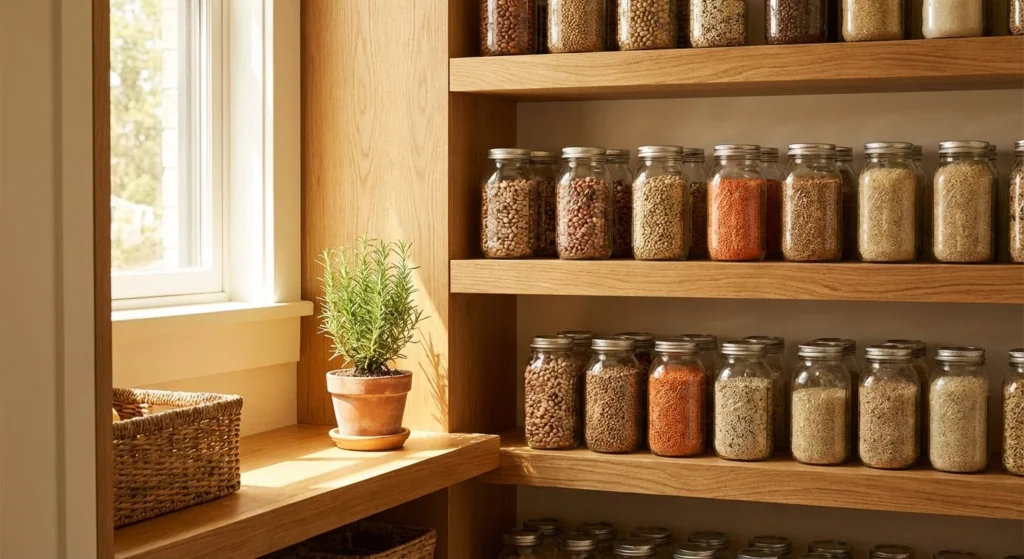
Financially, transitioning to airtight food storage containers is the most immediate expense. High-quality glass jars with silicone seals or modular acrylic bins range from five to twenty dollars a piece. To keep costs manageable, build your container collection gradually. Start by securing your whole grains and legumes, as these are most vulnerable to pests. You can also upcycle commercial glass jars—like those from pasta sauce or pickles—by thoroughly sanitizing them and removing the labels with a simple paste of baking soda and oil.
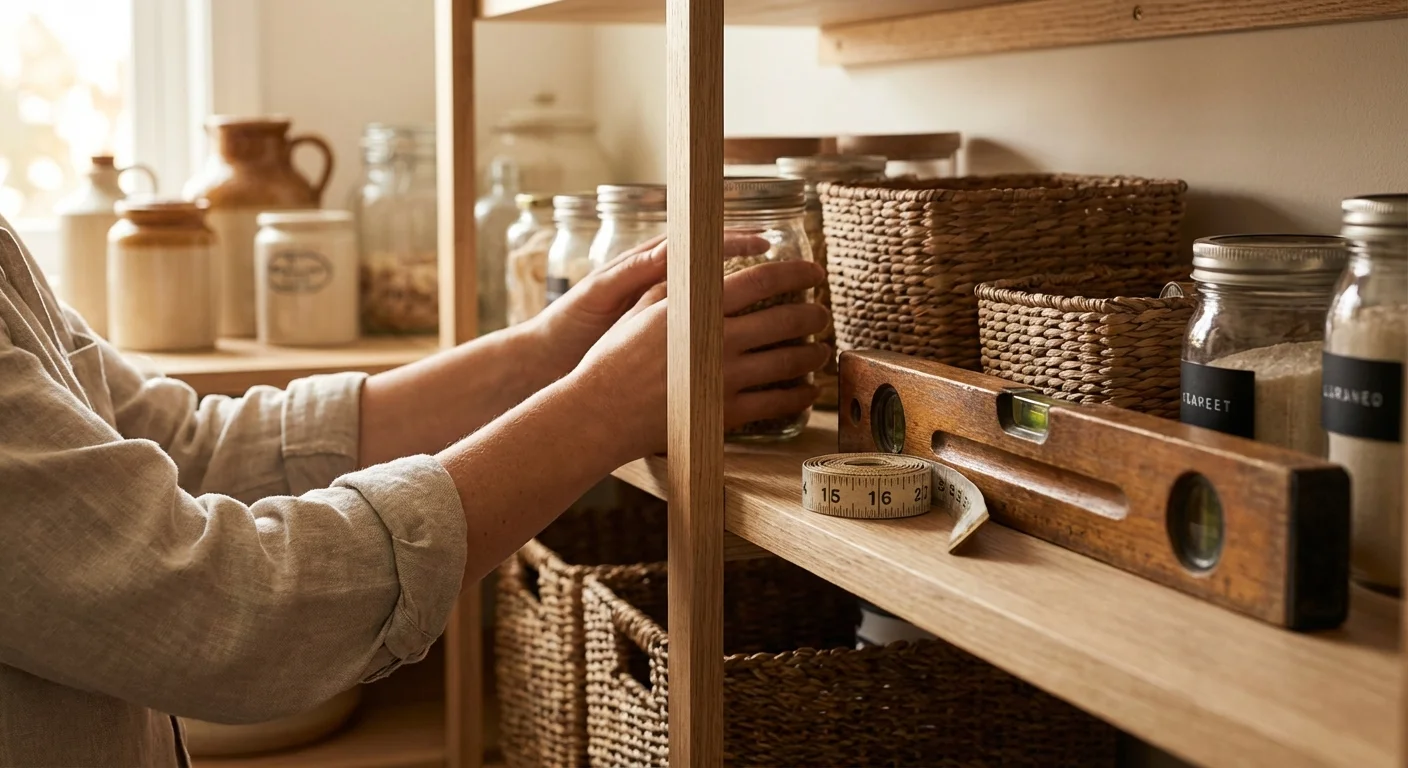
If your pantry requires structural upgrades, assess your DIY capabilities realistically. Swapping out bowed wire racks for solid wooden shelving is a moderate weekend project for a homeowner comfortable with a circular saw, a stud finder, and a level. You will need to invest in quality lumber, heavy-duty anchors, and sturdy brackets. However, if you plan to install complex hardware—like custom pull-out drawers, heavy-duty glides, or integrated lighting to improve visibility—hiring a licensed finish carpenter might be the safer route. Professional installation guarantees that drawer glides are perfectly aligned and capable of holding fifty to one hundred pounds of weight without racking.
Maintaining a well-stocked pantry takes minimal time once the systems are in place. Dedicate fifteen minutes once a month to audit your stock. Check the expiration dates, wipe down shelves to deter pests, and rotate older items to the front. This simple habit keeps your emergency prep robust and your kitchen running smoothly.