Smart Strategies & Upgrades
Building a reliable pantry means selecting ingredients that offer maximum versatility and shelf life, then organizing them in a way that prioritizes ergonomics and safety. As we dive into these five essential staples, pay close attention to the structural cautions and household tips that accompany them. Dry goods and liquids carry significant weight, and proper shelving is non-negotiable.
1. Dried Beans and Legumes
Dried beans, lentils, and chickpeas represent the ultimate intersection of nutrition, affordability, and longevity. They are absolute powerhouses for emergency prep, offering dense protein and fiber that will stay viable for years when stored correctly. For the plant enthusiast, legumes hold a special place; in the garden, they act as nitrogen-fixers, enriching the soil for neighboring plants. In the pantry, they provide endless culinary possibilities.
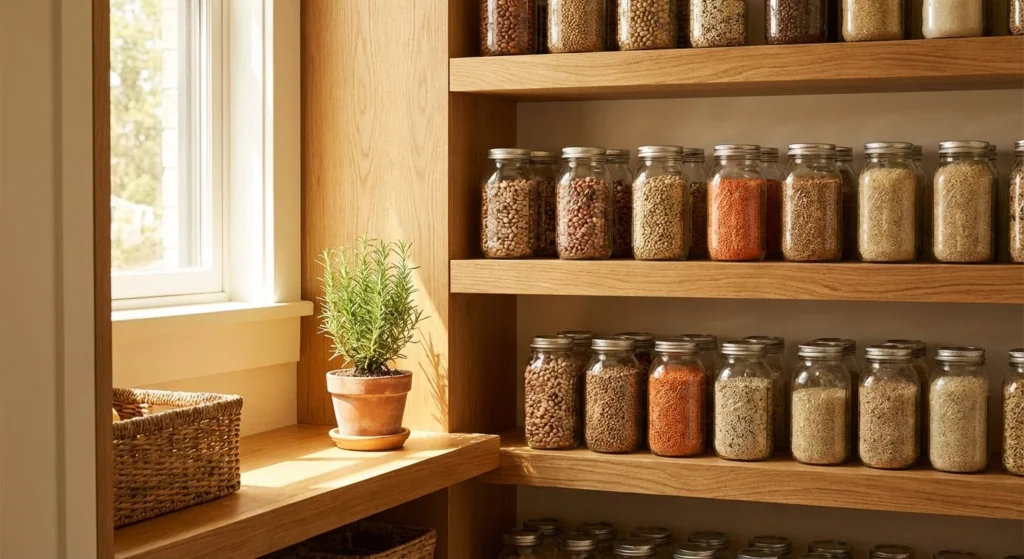
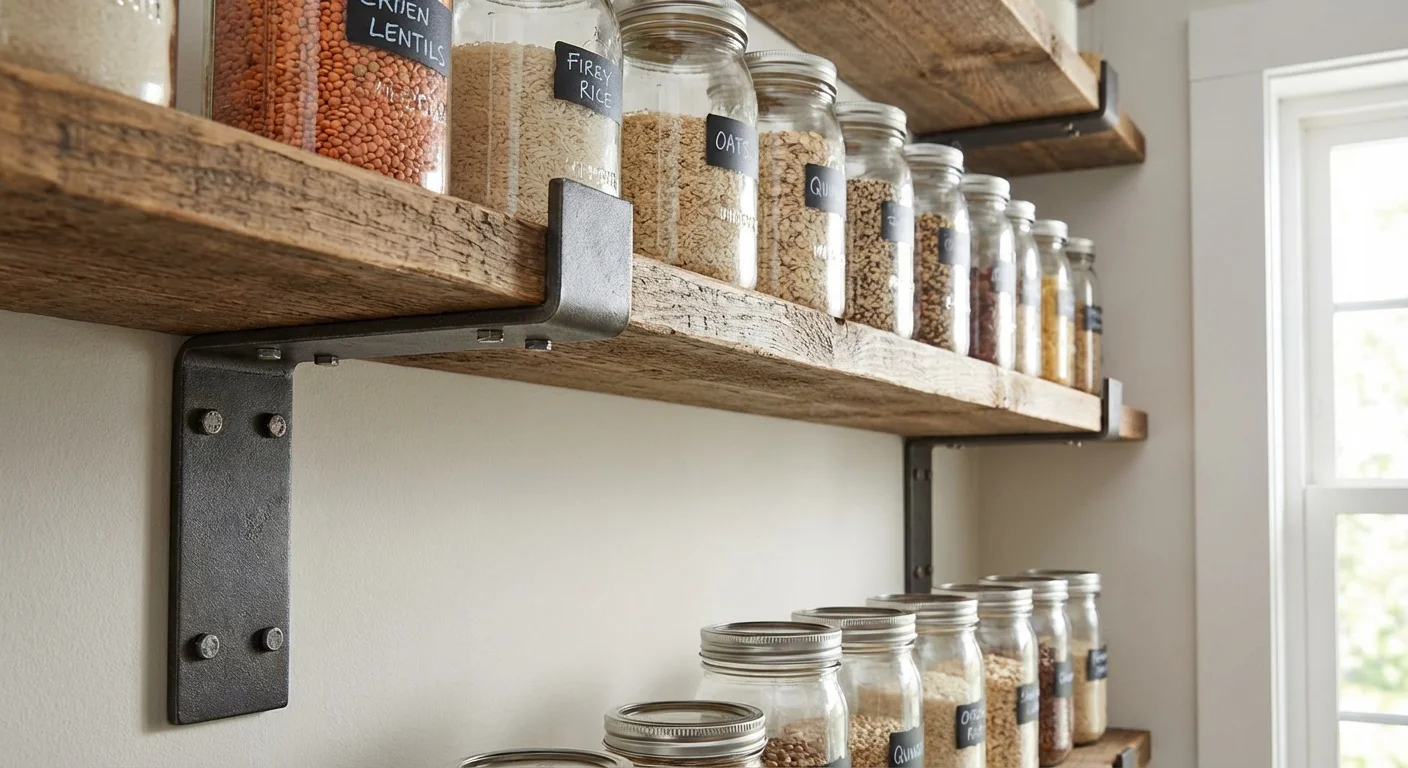
To maximize their lifespan, transfer dried beans out of their flimsy plastic retail bags immediately. Store them in airtight glass or heavy-duty, BPA-free acrylic containers. This blocks ambient moisture and keeps out common pantry pests. Because bulk glass jars add considerable weight to your shelving, ensure your pantry relies on structurally sound supports. If you use floating shelves, mount heavy-duty steel brackets directly into the wall studs. For aging-in-place comfort, store these heavy glass jars at waist height. This simple adjustment prevents you from straining your shoulders reaching for high shelves or straining your lower back bending down.
2. Versatile Whole Grains
Quinoa, brown rice, rolled oats, and farro form the versatile backbone of countless meals. Grains offer long-term sustenance and comfort, making them indispensable kitchen essentials. However, whole grains contain natural oils in their bran, which can turn rancid if exposed to high heat or excess moisture. Furthermore, grains are highly susceptible to pantry moths and weevils.
Protect your investment by utilizing strict food storage protocols. When you bring bulk grains home, place them in the freezer for forty-eight hours to neutralize any microscopic pest eggs before transferring them to airtight pantry bins. Keep your grain storage area cool and dark. If your pantry shares a wall with a major appliance like an oven or a dishwasher, monitor the temperature fluctuations. You might need to install passive vents in your pantry door to improve airflow. High humidity not only spoils grains but also creates an environment conducive to mold. While your tropical houseplants might love a humid environment, your pantry requires a crisp, dry microclimate.
3. Root Vegetables and Alliums
Potatoes, sweet potatoes, onions, and garlic are living botanical specimens that require precise environmental conditions to remain dormant and fresh. Storing root crops correctly is a matter of respecting their biology. Exposure to high light levels triggers photosynthesis in potatoes, causing them to turn green and produce solanine—a toxic compound. Therefore, store potatoes in completely opaque, breathable bins near the floor where the air is coolest.
Onions and garlic require excellent airflow to prevent rot. Wire baskets or perforated wooden crates serve them perfectly. Never store onions and potatoes in the same bin; onions release ethylene gas, a natural ripening agent that signals potatoes to break dormancy and sprout prematurely.
When organizing these items, pet safety must remain a top priority. Alliums—including onions, garlic, shallots, and chives—are highly toxic to cats and dogs. Ingestion causes severe damage to their red blood cells. Always store these specific root vegetables in pull-out drawers or elevated bins that curious pets cannot access. Incorporating sturdy, full-extension drawer glides allows you to reach items at the back of the bin without bending, perfectly aligning with universal design principles for an accessible home.
4. Acidic Preserves and Canned Tomatoes
Whether you grow and can your own heirloom tomatoes or buy high-quality preserved San Marzanos from the market, acidic preserves are foundational for quick, deeply flavored meals. From hearty winter stews to bright summer salsas, canned tomatoes offer unmatched culinary utility.
From a home design perspective, large quantities of canned goods pose a unique structural challenge. A flat of canned tomatoes is incredibly dense. Wire shelving often warps under this concentrated load. Upgrade your pantry by installing solid wood or high-density MDF shelves supported by reinforced ledger boards. To support aging-in-place, consider integrating a gravity-fed can organizer. These organizers automatically rotate your stock using the first-in, first-out method. You simply load new cans at the top, and the oldest cans roll to the front at the bottom. This reduces cognitive load, minimizes food waste, and prevents you from having to dig through deep, heavy stacks to find what you need.
5. Robust Culinary Herbs and Spices
A plant lover’s kitchen is never without a rich collection of herbs and spices. Dried rosemary, thyme, oregano, cumin, and smoked paprika elevate basic staples into extraordinary dishes. Many homeowners enjoy growing these culinary herbs outdoors or on sunny kitchen windowsills. Achieving the perfect concentration of essential oils in your homegrown herbs requires paying close attention to soil composition and watering cadence—too much water dilutes the flavor of Mediterranean herbs like rosemary.
Once dried and harvested, herbs demand careful preservation. The volatile oils that give spices their punch degrade rapidly when exposed to heat, oxygen, and ultraviolet light. Never store your spice rack directly over the stove or on a windowsill. Instead, dedicate a shallow pantry drawer or a specialized door-mounted rack to your spices. Use uniform, opaque jars or amber glass bottles to block out harmful light. Keep labels facing upward in a drawer for immediate, strain-free identification. A well-organized spice collection streamlines your cooking process and ensures your meals remain flavorful and vibrant.