
Smart Strategies & Upgrades
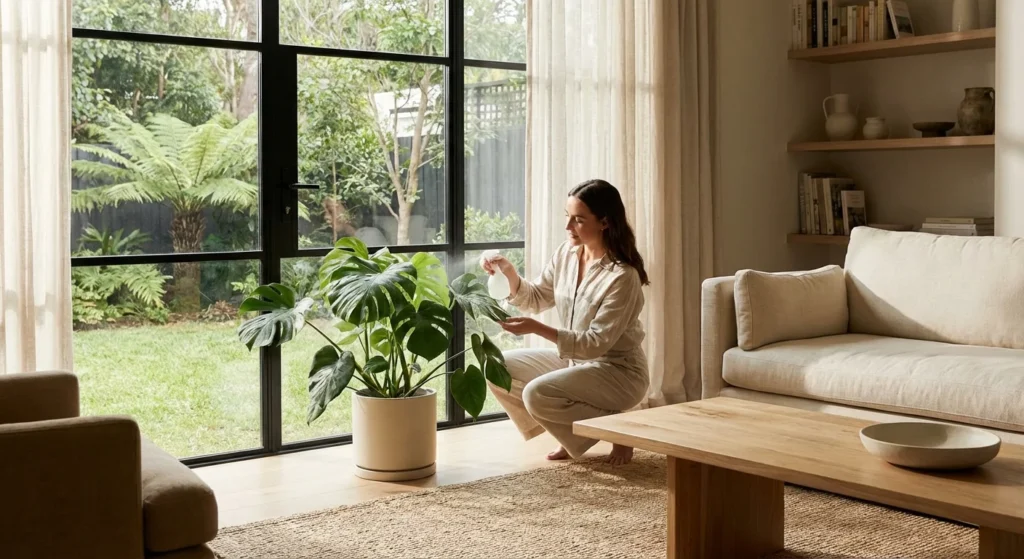
Transforming your space into an elegant, long-term sanctuary involves looking at how you move through your rooms and interact with your environment. The following six smart upgrades specifically target the intersection of home safety, fall prevention, and indoor gardening, ensuring your living space remains both thriving and secure.
1. High-Traction, Waterproof Flooring for Spill Zones
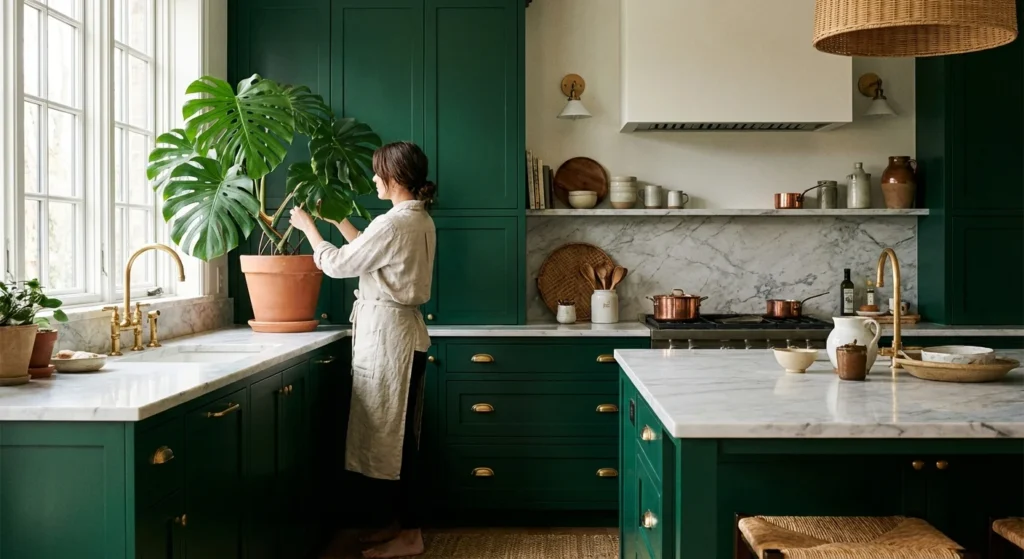
If you keep tropical plants like Monsteras or ferns that require frequent watering and ambient humidity, you know that water spills are an inevitable part of plant parenthood. Even with the utmost care, a few drops from a misting bottle or a slight overflow from a drainage saucer can turn a smooth surface into a dangerous slipping hazard. Fall prevention starts from the ground up, making flooring one of the most critical safety upgrades you can undertake.
Replace high-gloss tiles or slick hardwood in your primary plant-care zones with high-traction, waterproof materials. Textured luxury vinyl plank flooring offers the warm aesthetic of natural wood but provides superior grip and total moisture resistance. Cork flooring is another excellent, design-forward option; it is naturally antimicrobial, gentle on the joints when you stand for long repotting sessions, and highly slip-resistant. If you prefer tile in sunrooms or conservatories, opt for matte porcelain with a high coefficient of friction. Furthermore, you can refine your soil composition to mitigate spills entirely. Using a well-draining soil mix heavily amended with perlite and orchid bark allows water to absorb evenly rather than pooling and spilling over the edges of your pots.
2. Layered Smart Lighting for Pathways and Plant Health
Proper illumination is a cornerstone of safe senior living and essential for a thriving indoor garden. Traditional lighting often forces you to choose between ambient room aesthetics and the intense light required by your sun-loving succulents. Smart upgrades allow you to master both while drastically improving your home safety through automation.
Install motion-activated smart lighting along all primary pathways, hallways, and staircases. When you wake up before dawn to fetch a glass of water, automated baseboard lights will gently guide your way, preventing accidental trips over resting pets or stray furniture. Above your plant displays, incorporate smart LED grow lights integrated into your home network. You can program these full-spectrum bulbs to mimic the natural sunrise and sunset, delivering the precise foot-candles your fiddle leaf fig demands without requiring you to manually switch fixtures on and off. This layered lighting approach ensures that your home is never plunged into sudden darkness and your plants receive consistent, automated care.
3. Ergonomic Plant Staging to Reduce Physical Strain
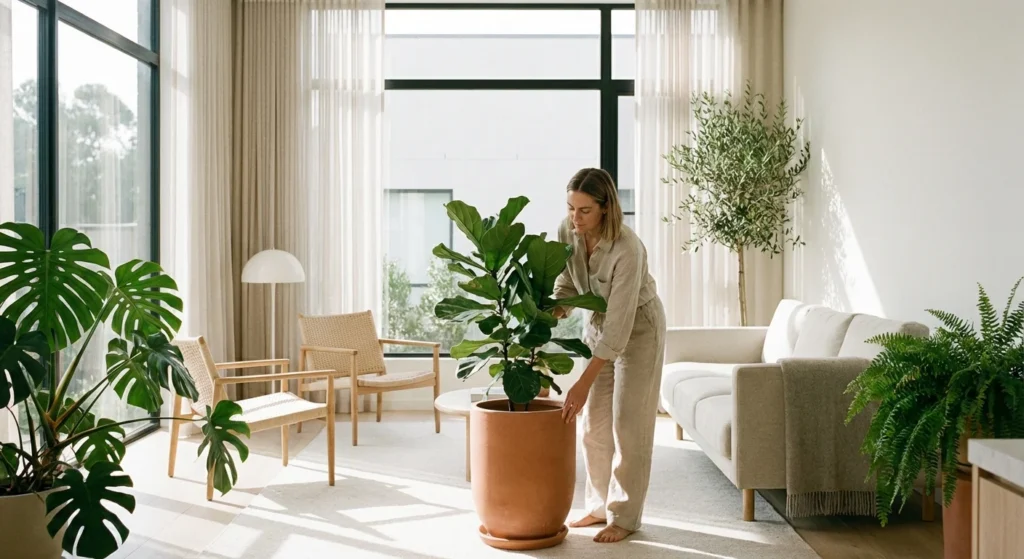
Interacting with your home should never require painful bending, twisting, or heavy lifting. As you design for aging in place, it is vital to evaluate how you display and maintain your greenery. Large floor plants housed in heavy glazed ceramic pots can weigh upwards of fifty pounds after watering. Moving them to clean the floor or adjusting them for better sun exposure puts immense strain on the lower back.
Transition to ergonomic plant staging by bringing your garden to waist height. Utilize mid-century modern plant stands, sturdy floating shelves, and reinforced console tables to elevate your collection. This allows you to inspect leaves for pests, prune dead foliage, and water your plants while standing comfortably straight. To further reduce physical strain, swap out heavy clay containers for high-quality, lightweight fiberglass or resin planters. You can also significantly reduce the overall weight of large floor containers by filling the bottom third of the pot with empty, crushed plastic water bottles before adding your potting mix. This trick lightens the load and improves drainage simultaneously.
4. Clear Pathways and Zero-Threshold Transitions
Navigating your home should feel effortless. Cluttered walkways are a primary culprit in household accidents, and indoor gardens often contribute to the problem. The trailing vines of a golden pothos or string of pearls look undeniably romantic when cascading onto the floor, but they essentially act as organic trip wires. Similarly, extension cords powering humidifiers or supplemental lighting create major tripping hazards.
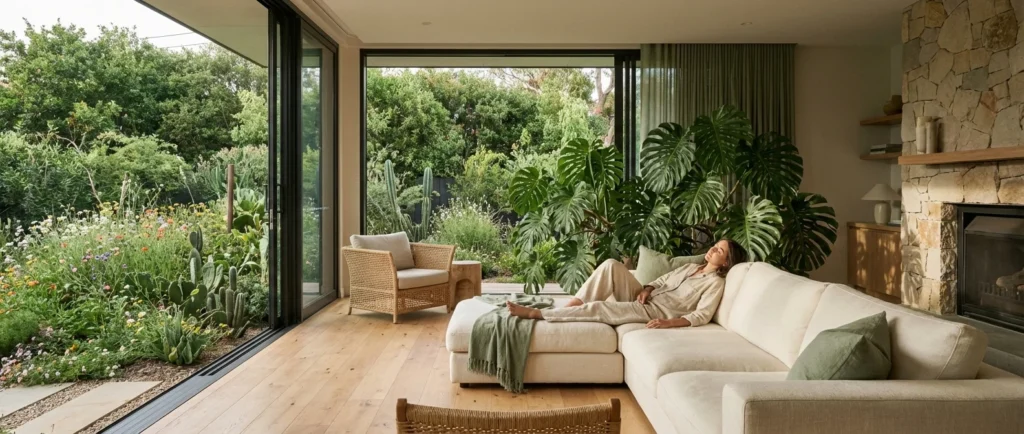
Maintain clear, unobstructed pathways that are at least thirty-six inches wide to accommodate comfortable movement and potential mobility aids. Instead of allowing vines to trail on the floor, train them upward using aesthetically pleasing moss poles, bamboo stakes, or wall-mounted wooden trellises. Manage all electrical cords using cable concealers mounted securely along the baseboards. If your indoor space flows into an outdoor patio or balcony garden, consider investing in a zero-threshold entryway. Removing the raised lip of a traditional sliding door eliminates a common tripping point, creating a seamless, accessible transition between your interior living space and your outdoor oasis.
5. Automated and Lightweight Watering Systems
Water is surprisingly heavy; a single gallon weighs over eight pounds. Carrying a sloshing, two-gallon watering can from the kitchen sink to the living room requires balance, grip strength, and core stability. For homeowners focused on aging in place, eliminating this repetitive, heavy labor is a massive upgrade to daily home safety.
Integrate automated and low-strain watering systems into your plant care routine. Self-watering planters featuring built-in sub-irrigation reservoirs allow plants to draw up moisture through capillary action. You only need to top off the reservoir occasionally, drastically reducing the frequency of your watering chores. For larger indoor collections, consider setting up an indoor micro-drip irrigation line connected to a smart water timer at the sink. If you prefer to manually tend to each plant, invest in a lightweight, long-spout watering can made of high-grade plastic, and use a rolling utility cart to transport your water and pruning tools from room to room. This keeps the weight supported by wheels rather than your spine.
6. Curating Non-Toxic and Low-Allergen Greenery
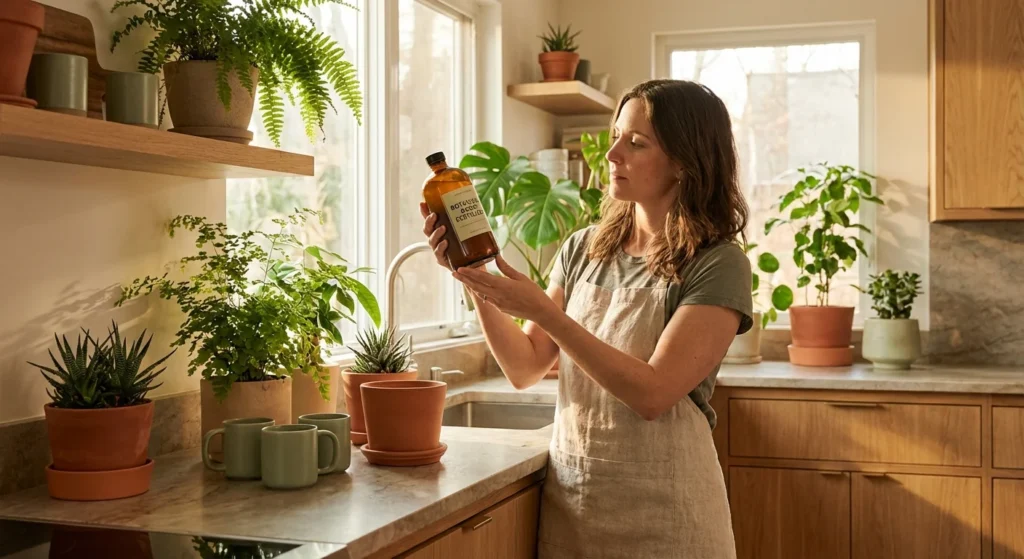
A safe home environment encompasses air quality and toxin management just as much as it involves physical fall prevention. As we optimize our homes for long-term living, we frequently welcome young grandchildren, curious pets, or friends with sensitivities into our spaces. Pet safety is a particularly crucial aspect of home curation; a beautiful plant is never worth a trip to the emergency vet.
Audit your current plant collection and make intentional swaps to ensure your indoor environment is entirely safe. Highly toxic species like Dieffenbachia, true lilies, and Sago palms pose severe risks if ingested by cats, dogs, or toddlers. Instead, curate a lush display using certified pet-safe varieties such as the striking Calathea, the resilient spider plant, or the trailing Peperomia. Additionally, consider the impact of allergens. Plants with large, textured leaves can harbor household dust, which degrades indoor air quality. Make it a habit to wipe down broad foliage with a damp microfiber cloth safely at waist height. Avoid flowering indoor plants that produce heavy pollen, opting instead for structural foliage plants that naturally purify the air without triggering respiratory sensitivities.