Budget, Time, & Skill Considerations
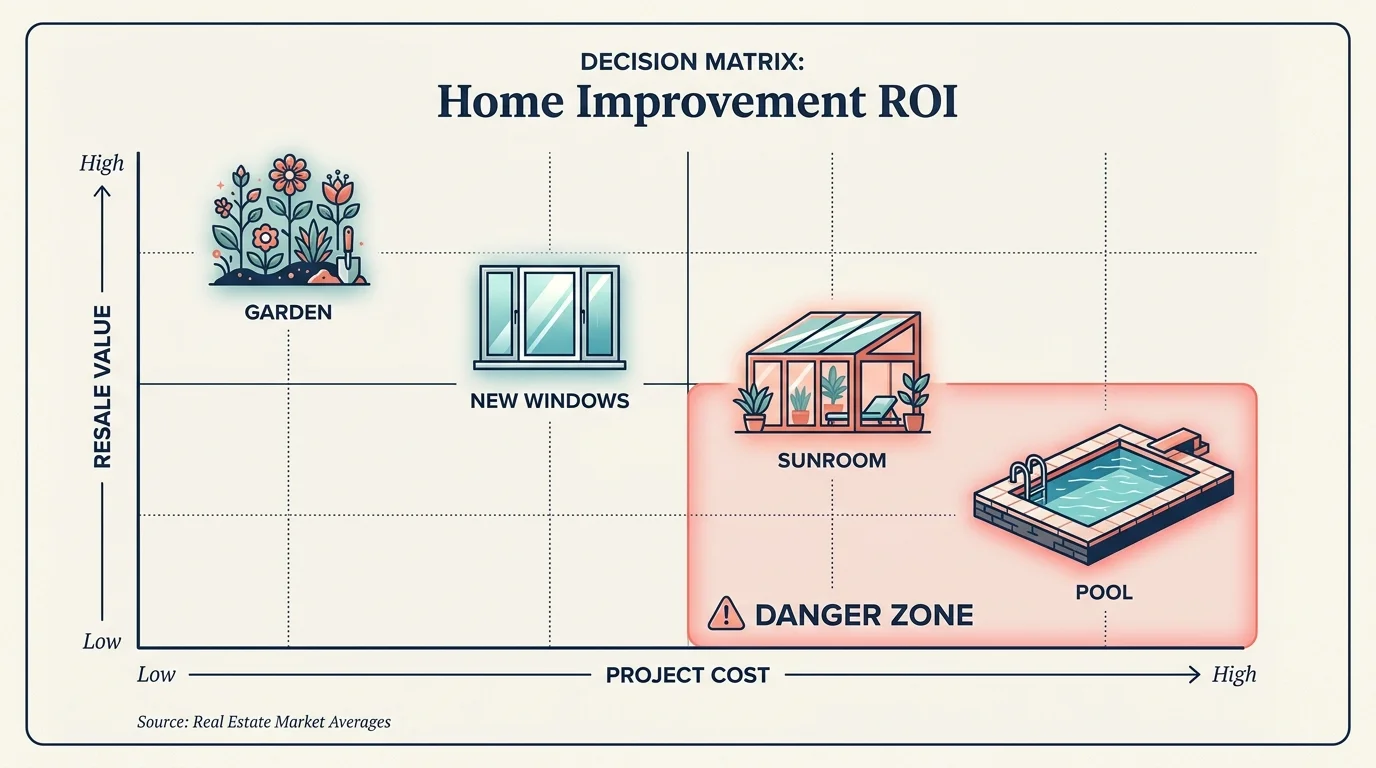
Understanding the financial mechanics behind home improvement helps you direct your budget toward projects that generate genuine value. A minor kitchen update—such as refacing cabinets and upgrading appliances—frequently recoups over eighty percent of its cost. In stark contrast, a highly specialized project like an upscale primary suite expansion often stalls out at a mere forty-five percent return. When planning any major upgrade, you must calculate the initial installation costs alongside the long-term maintenance burdens you leave for the next owner.
Skill level plays a massive role in how a renovation ages over time. DIY projects gone wrong form a significant portion of bad renovations. Attempting to install complex plumbing for a specialized indoor water feature or modifying load-bearing walls without engineering expertise severely damages your home’s structural integrity. Buyers hire aggressive inspectors who easily spot amateur craftsmanship. When they discover unpermitted work or poorly executed modifications, they either demand massive price reductions or walk away from the deal entirely.
Time also dictates the true cost of over-personalizing your home. If you install an extravagant, high-maintenance garden that requires specialized pruning techniques, you bind your weekend schedule to yard work. When you eventually sell, a buyer will calculate the cost of hiring professional landscaping crews to maintain that standard. If they find the maintenance intimidating, they will simply submit a lower offer to cover the cost of tearing out your beloved plants and replacing them with basic turf grass. Keep your permanent installations simple, expertly crafted, and broadly appealing.
For authoritative guidance, refer to cooperative extension resources like the PennState Extension and the Clemson Home & Garden Information Center. Botanical gardens and university horticulture programs are also excellent references.