Frequently Asked Questions
What is the best paint finish for kitchen cabinets?
Satin or semi-gloss finishes provide the ideal balance of aesthetics and durability. These sheens reflect just enough light to highlight the depth of the color without looking overly plastic. More importantly, satin and semi-gloss surfaces allow you to easily wipe away grease, spills, and the occasional splash of potting soil.
Are certain cabinet paints safer for pets and indoor plants?
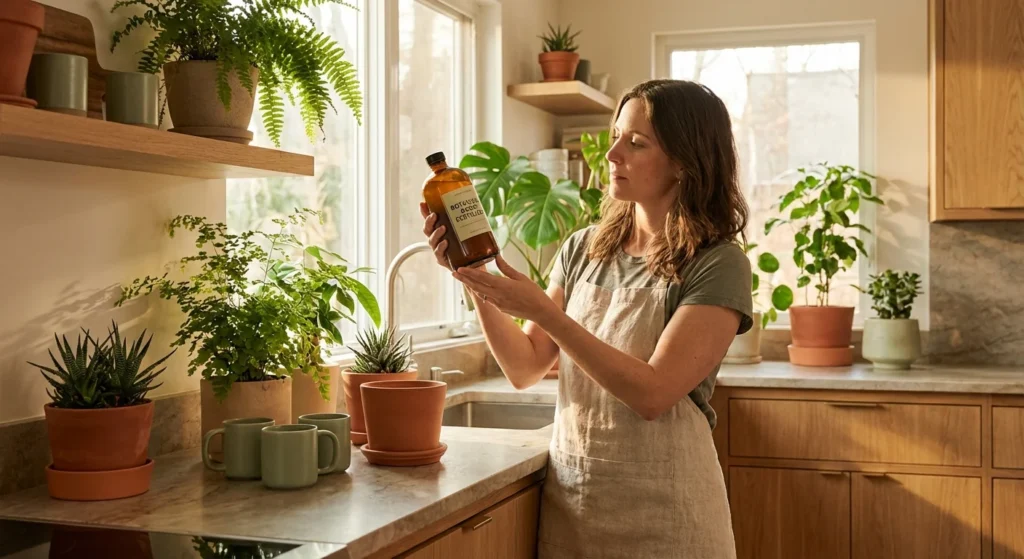
Absolutely. Standard paints often off-gas Volatile Organic Compounds (VOCs) for months after application. These fumes can be harmful to you, your pets, and your sensitive tropical plants. Always select paints clearly labeled as “Zero-VOC” or “Low-VOC.” Additionally, ensure you physically relocate your delicate houseplants to another room during the prep and painting phases to protect them from sanding dust and stray chemical droplets.
How does natural light alter cabinet colors?
Light dramatically influences color perception. South-facing windows flood the room with intense, warm light that makes colors appear brighter and brings out red or yellow undertones. North-facing windows provide cooler, softer light that enhances blue and gray undertones. You must test large painted swatches on your cabinet doors and observe them throughout the day to ensure the color remains appealing as the sun moves across your home.
Do dark cabinets make a small kitchen look even smaller?
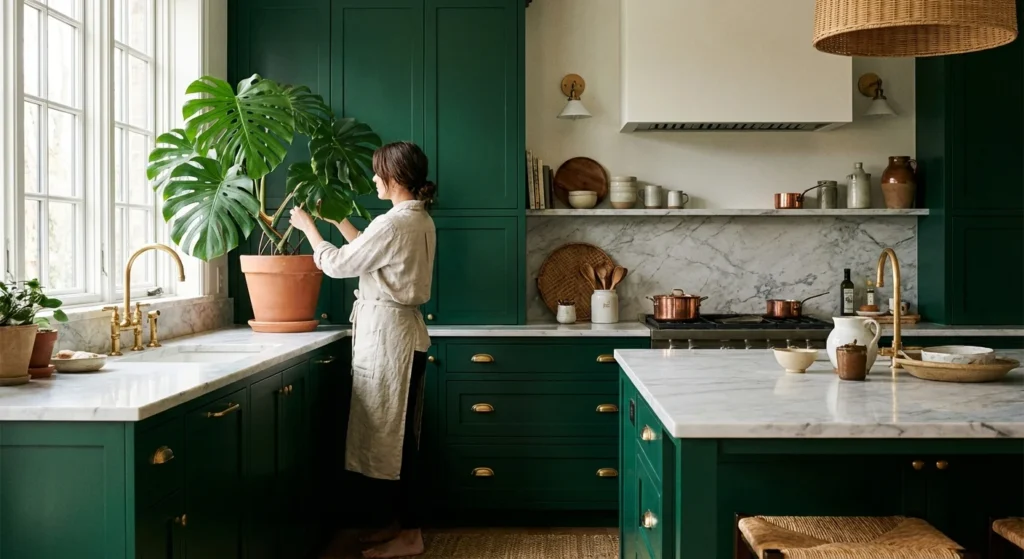
Dark cabinets do not inherently shrink a space if you balance them correctly. While a deep navy or emerald green adds visual weight, you can counteract this by installing bright countertops, maximizing under-cabinet lighting, and using reflective hardware. Grounding the lower half of the kitchen with a dark color while keeping the upper walls light can actually make the ceiling feel taller.