Maintaining a vibrant, design-forward home requires more than just a brilliant eye for color and a deep love for trailing pothos; it demands thoughtful, intentional maintenance. You invest significant time selecting the perfect mid-century walnut credenza, upgrading to luxury flooring, and nurturing your indoor jungle, so you naturally want those elements to shine. However, the urge to achieve a sparkling space often leads us down the wrong path. We carry routines passed down through generations, rarely stopping to ask if they actually serve our modern living spaces.
Many traditional cleaning mistakes actively damage the very finishes and foliage you work so hard to protect. We often equate the heavy, artificial scent of bleach with cleanliness, or believe that saturating a floor is the only way to lift stubborn grime. These deeply ingrained habits do not just degrade your expensive design upgrades; they create an unhealthy indoor environment. When you use the wrong tools or harsh chemicals, you compromise the air quality for yourself, your pets, and your beloved houseplants.
Creating a beautiful sanctuary means aligning your housekeeping routines with the science of home care and horticulture. By identifying the practices that quietly sabotage your space, you clear the way for a healthier, more resilient home that supports your lifestyle for years to mind.
Setting the Stage
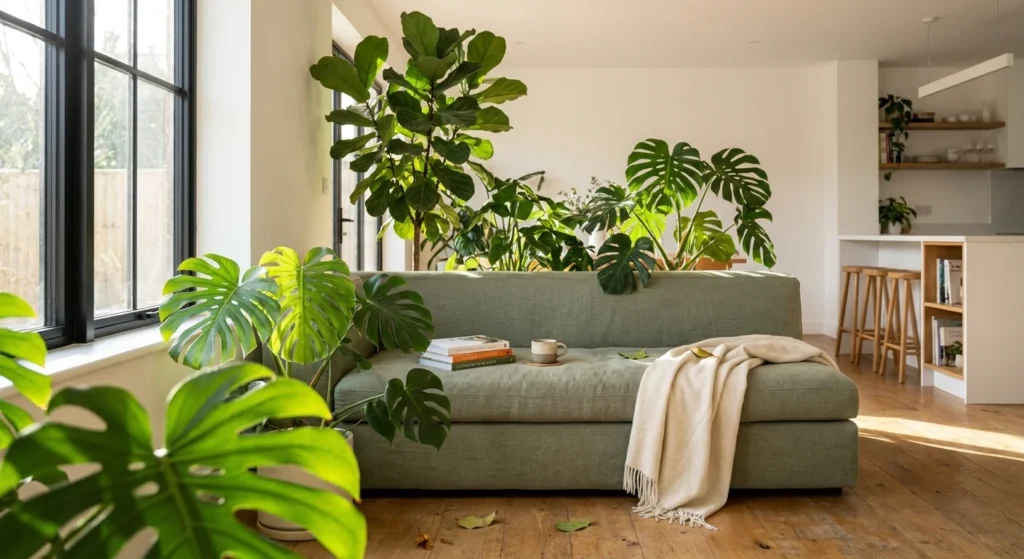
Imagine walking into your living room on a quiet Saturday morning. The sun streams through the windows, highlighting the lush, green leaves of your Monstera deliciosa and warming the surface of your gleaming hardwood floors. This peaceful scene is the ultimate goal of careful home curation. Yet, behind the scenes, your weekly chores might be slowly eroding this exact picture. The intersection of interior design, plant care, and long-term home maintenance is a delicate ecosystem.
Outdated housekeeping tips from decades ago often fail to account for the modern materials used in whole-home design upgrades today. Contemporary sealants, engineered woods, and delicate tropical houseplants require a gentler, more targeted approach. Aggressive scrubbing and chemical saturation strip away protective layers, leaving surfaces vulnerable to rot and discoloration. Furthermore, many conventional cleaning habits prioritize temporary visual shine over actual environmental health.
When you shift your perspective, you realize that cleaning should be an act of preservation. This is especially true as you plan for the future. Implementing smarter routines today prevents premature wear and tear on your home, making it easier to maintain as you age. Establishing safe, non-toxic, and ergonomically friendly habits is a cornerstone of intelligent home management. By reevaluating how you tackle dirt and dust, you protect your investments and cultivate an environment where both you and your indoor garden can truly thrive.