Step-by-Step Project Plan
Executing a comprehensive landscape audit and root mitigation strategy requires careful observation and methodical pacing. The roots of large trees often extend one and a half to three times the width of their canopy drip line. Addressing this hidden architecture demands a phased approach to ensure plant health and structural safety.
Step 1: The Initial Site Audit and Identifying the Culprits
Begin your yard planning project by walking your property line with your measuring tape and a notepad. You need to identify any large, fast-growing trees situated within twenty to thirty feet of your house. Pay special attention to these seven notorious offenders:
1. Silver Maple (Acer saccharinum): Loved for their incredibly fast growth and beautiful silver-backed leaves, these maples develop massive, shallow root systems. Their roots actively heave concrete driveways, lifting walkways and pressing heavily against foundation walls. Furthermore, their rapid growth results in brittle branches that pose a serious falling hazard during severe storms.
2. Weeping Willow (Salix babylonica): While offering unmatched romantic aesthetics near ponds, weeping willows possess an insatiable thirst. Their aggressive root systems travel up to one hundred feet seeking moisture. If you have an older home with minute leaks in underground sewer or water pipes, willow roots will infiltrate, expand, and shatter the plumbing, directly undermining the surrounding soil.
3. Poplar Trees (Populus spp.): Including both Cottonwoods and Lombardy poplars, these trees are exceptionally fast growers. Their expansive roots quickly drain surrounding clay soils of all moisture, triggering dramatic soil shrinkage that destabilizes nearby building footings.
4. American Elm (Ulmus americana): A historically beloved shade tree, the American Elm develops a heavy, sprawling root network. If planted too close to a house, the sheer physical mass of the maturing roots can exert enough lateral pressure to crack basement walls. Additionally, their susceptibility to Dutch Elm disease often necessitates early removal, which can leave decaying root voids in the soil.
5. Sweetgum (Liquidambar styraciflua): Sweetgums are infamous for their surface roots that breach the topsoil, ruining lawnmower blades and shattering adjacent concrete slabs. They also drop hundreds of spiky, woody seed pods. These gumballs present a severe tripping hazard for homeowners and can cause painful injuries to the sensitive paw pads of your dogs and cats.
6. Ash Trees (Fraxinus spp.): Ash trees produce wide-reaching lateral roots to support their dense canopies. Beyond their structural threat to your home, the ongoing devastation caused by the Emerald Ash Borer insect makes them high-risk additions to residential landscapes. An infested Ash tree quickly becomes brittle, creating an immediate structural threat from falling limbs.
7. Bradford Pear (Pyrus calleryana): Widely planted for their spring blossoms, Bradford Pears are now recognized as an invasive species with terrible structural integrity. They split easily in high winds. Beneath the soil, they possess dense root systems that aggressively compete for water, dehydrating the soil matrix closest to your foundation.
Step 2: Trenching and Installing Root Barriers
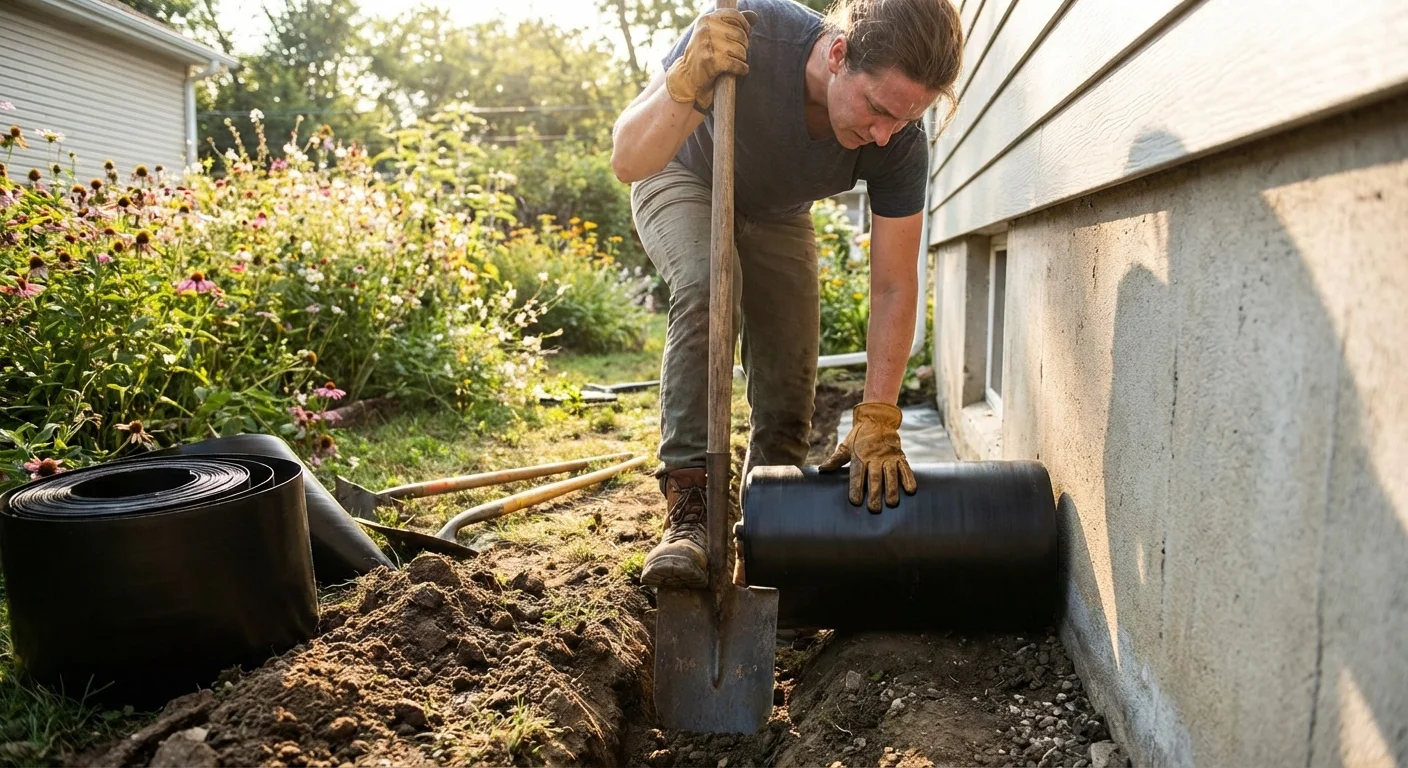
If an arborist determines that a problematic tree is healthy and situated just far enough away to be saved, you can install a physical root barrier. Dig a trench twenty-four to thirty-six inches deep along the edge of the tree canopy, ensuring you remain entirely on your side of the utility markings. Slide your high-density polyethylene panels into the trench, locking them together to form an impenetrable wall. Backfill the trench firmly with native soil. This process forces future root growth downward, safely below your home footing.
Step 3: Safe Removal and Soil Remediation
When a high-risk tree sits too close to your house for a barrier to be effective, removal becomes your only safe option. Hire licensed professionals to dismantle the canopy piece by piece, protecting your roof and siding. Once the tree is down, insist on mechanical stump grinding. After grinding, fill the resulting hole with a mixture of native topsoil and compost. Water the remediated area thoroughly to help the new soil settle, eliminating subterranean air pockets that could cause future sinkholes near your exterior walls.