Smart Strategies & Upgrades
1. Ergonomic Pull-Out Pantry Shelving
Reaching into the dark recesses of a deep cabinet places unnecessary stress on your back and knees. Install pull-out shelving and heavy-duty gliding drawers to eliminate this physical strain entirely. Modern drawer glides support up to 100 pounds, allowing you to store heavy Dutch ovens, stand mixers, and large bags of potting soil for your indoor garden without fear of the hardware failing.
Pull-out shelves bring your ingredients directly into the light. You see exactly what you have, which cuts down on food waste and prevents you from buying duplicate spices. For maximum home efficiency, retrofit your lower base cabinets with deep drawers rather than doors and fixed shelves. This simple structural update keeps you standing comfortably while retrieving everything you need.
2. Touchless and Voice-Activated Faucets
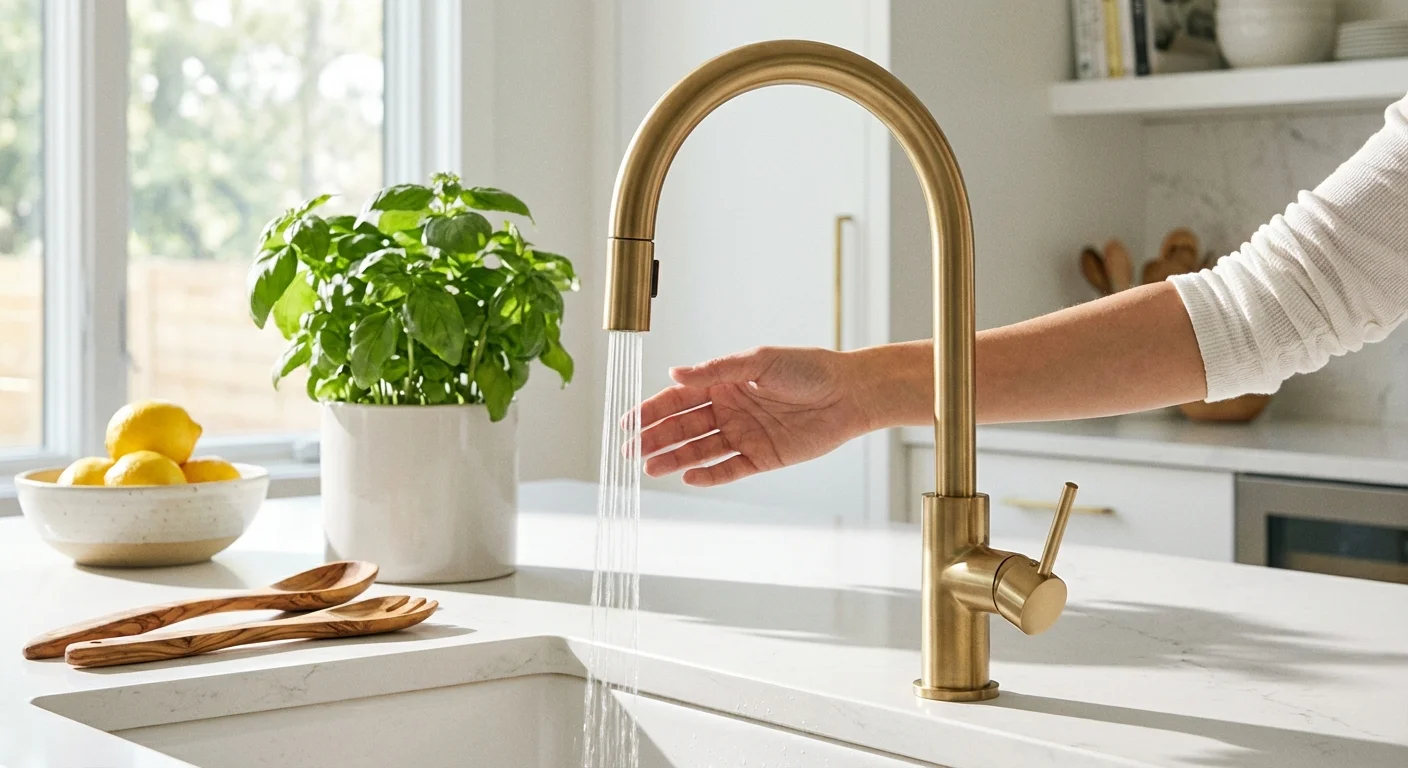
Hygiene and convenience intersect beautifully with touchless faucets. When you repot a thriving pothos or divide kitchen herbs, your hands inevitably become covered in organic matter. Instead of smudging soil across your hardware, you simply wave your hand over a motion sensor to start the water flow. This also proves invaluable when handling raw poultry or messy marinades, effectively preventing cross-contamination.
Smart appliances continue to evolve, and voice-activated faucets take this efficiency a step further. You can command the faucet to dispense exactly two cups of water for a recipe, freeing up your hands to chop vegetables or stir a simmering sauce. Many models run on a simple battery pack, making installation a straightforward weekend project without the need for complex hardwiring.
3. Dedicated Indoor Herb Station with Grow Lights
Nothing enhances a meal quite like fresh herbs, and growing them indoors brings vibrant life to your countertops. Dedicate a specific zone in your kitchen for an indoor culinary garden. To guarantee robust growth, install full-spectrum LED grow lights beneath your upper cabinets. Culinary favorites like rosemary, thyme, and basil require 14 to 16 hours of bright light daily, which most standard kitchen windows cannot provide year-round.
When establishing your herb station, prioritize proper soil composition. Use a well-draining potting mix amended with plenty of perlite to ensure the roots receive adequate oxygen. Allow the top inch of soil to dry completely between watering sessions to prevent root rot and deter fungus gnats. Always consider pet safety when selecting your plants. While basil, cilantro, and thyme are non-toxic to cats and dogs, garlic and chives contain compounds that are highly poisonous to curious pets. Keep toxic varieties entirely out of reach or omit them from your indoor garden.
4. Layered, High-Output Task Lighting
A single overhead fixture casts frustrating shadows exactly where you need clear visibility. Upgrade to layered task lighting to instantly improve safety and reduce eye strain. Install continuous LED strip lights directly under your upper cabinets to illuminate your cutting boards and mixing bowls. Choose bulbs with a color temperature between 3000K and 4000K; this range provides crisp, clean light that mimics natural daylight without feeling overly clinical.
Excellent lighting also helps you monitor the health of your indoor plants. Bright task lighting allows you to quickly spot early signs of distress, such as fading leaves or tiny pests like spider mites, ensuring your greenery remains as vibrant as your kitchen space. Additionally, aging eyes require significantly more light to focus, making this upgrade a fundamental component of senior living design.
5. Smart Induction Cooktops
Traditional gas ranges release indoor pollutants and pose fire risks, while standard electric coils respond slowly to temperature changes. Upgrade to a smart induction cooktop to revolutionize your cooking experience. Induction uses electromagnetic energy to heat the cookware directly, transferring roughly 90 percent of the energy to the pan. This efficiency boils water up to 50 percent faster than a gas stove.
Beyond speed, induction offers unmatched safety. The glass surface remains relatively cool to the touch, minimizing the risk of severe burns. This feature proves incredibly valuable if you have cats that occasionally jump onto the counters. Because the surface is entirely smooth, cleaning requires nothing more than a quick wipe with a damp microfiber cloth—eliminating the tedious chore of scrubbing baked-on spills from heavy grates.
6. Accessible D-Ring Cabinet Hardware
Small, round cabinet knobs force your hand into a tight pinching motion, which becomes painful if you experience arthritis or joint fatigue. Swap out your traditional knobs for wide, D-shaped drawer pulls. This minor structural change drastically improves accessibility. D-pulls allow you to hook your entire hand—or even just a loop of your arm—behind the hardware to effortlessly glide the drawer open.
Select pulls with a minimum clearance of one and a half inches between the handle and the cabinet face. This spacing provides ample room for hands of all sizes, preventing scraped knuckles. This budget-friendly cooking tip upgrades the aesthetic of your kitchen while seamlessly integrating aging-in-place principles.
7. Under-Counter Drawer Appliances
Traditional dishwashers force you to bend all the way to the floor to load and unload heavy ceramic plates. Refrigerator freezers often place the most-used items completely out of comfortable reach. Drawer-style appliances solve these ergonomic nightmares. Install a drawer dishwasher directly flanked next to your sink; you can load it by simply dropping dishes in from above.
Microwave drawers offer similar benefits. Placed just below countertop height, they allow you to stir hot liquids and lift heavy glass bowls safely without reaching dangerously above your head. By keeping heavy and hot items at waist level, you significantly decrease the likelihood of dropping dishes and injuring yourself, maximizing both safety and home efficiency.
8. Anti-Fatigue Flooring and Seamless Mats
Standing on rigid ceramic tile or concrete for an hour while chopping vegetables sends shockwaves directly through your heels, knees, and lower back. Introduce softer, resilient flooring materials to cushion your joints. Cork flooring and high-quality linoleum provide excellent give underfoot while remaining highly durable and easy to clean.
If replacing your entire floor falls outside your current budget, invest in commercial-grade gel anti-fatigue mats. Place one directly in front of your stove and another at the sink. These mats promote subtle muscle movements in your legs and feet, which increases blood flow and prevents the deep ache associated with prolonged standing. Choose mats with beveled edges to prevent tripping hazards, ensuring your kitchen remains safe for everyone.
9. The Pot Filler Faucet
Water is surprisingly heavy; a single gallon weighs over eight pounds. When you fill a large stockpot for boiling pasta or blanching vegetables, carrying it from the sink to the stove requires immense upper body strength and compromises your balance. A pot filler—an articulated faucet installed on the backsplash directly above your cooktop—eliminates this heavy lifting entirely.
You simply place your empty pot on the induction burner, extend the pot filler arm, and fill the vessel right where it will be heated. When planning this upgrade, structural cautions apply: you must hire a licensed plumber to run a cold water line behind your stove and install the appropriate shut-off valves to prevent leaks and ensure compliance with local building codes.