Budget, Time, & Skill Considerations
Embarking on a journey to modify your living space requires a realistic assessment of your budget, your timeline, and your DIY capabilities. It is incredibly tempting to want to execute all of these upgrades simultaneously, but taking a phased, deliberate approach will save you from unnecessary stress and financial strain. Prioritization is the key to successfully navigating these projects.
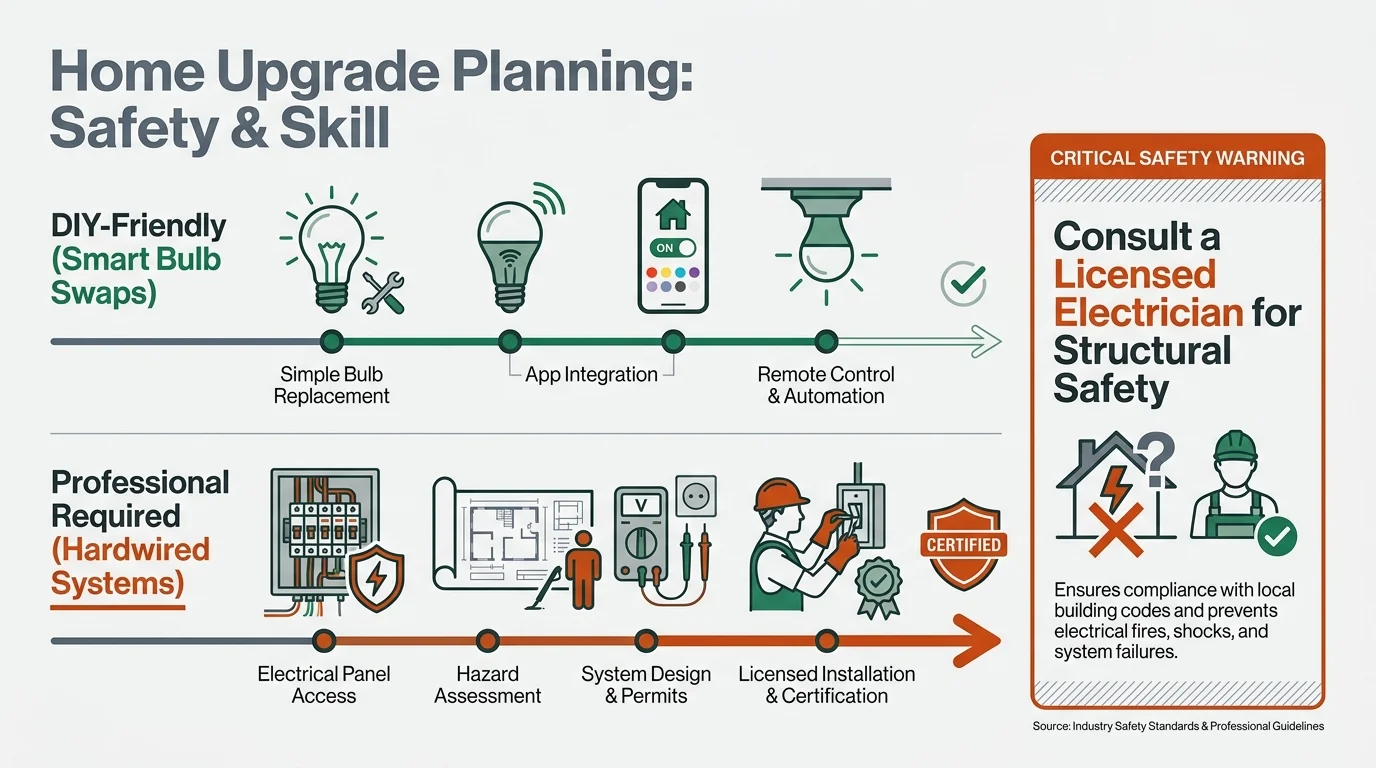
Begin with the low-hanging fruit—the accessible, high-impact changes that you can implement over a single weekend. Swapping out cabinet pulls, installing lever-style door handles, and replacing your standard light bulbs with smart, voice-controlled LED and grow lights are highly achievable DIY tasks. These easy renovations require minimal specialized tools, carry very low structural risk, and immediately elevate your daily comfort.
Mid-range projects, such as assembling and installing an ergonomic indoor potting station or anchoring heavy-duty shelving into wall studs, require a bit more planning. If you are comfortable using a stud finder and a power drill, you can safely tackle these tasks. Always prioritize structural integrity over aesthetics; a beautifully styled shelf is useless if it cannot safely support the weight of wet soil and heavy ceramic pots.
For the larger, structural upgrades—such as tearing out old tile to install continuous luxury vinyl plank flooring, upgrading your home’s electrical panel, or integrating whole-home air purification—you must hire licensed, bonded professionals. Electrical and plumbing work carry significant safety risks and strict code requirements. Attempting to DIY a complex hardwiring job just to save a few dollars is never worth the potential hazard. Allocate the largest portion of your renovation budget toward these professional services, ensuring that the foundation of your comfortable, plant-filled home remains safe and sound for decades.