Smart Strategies & Upgrades
1. Transition to Continuous Hard-Surface Flooring
Wall-to-wall carpeting traps dust, harbors pet dander, and creates a nightmare when you inevitably spill water or drop a handful of potting soil. By replacing carpets with continuous hard-surface flooring—such as luxury vinyl plank (LVP), engineered hardwood, or textured ceramic tile—you instantly modernize your space while slashing your cleaning time.
Hard flooring offers profound benefits for both home care and accessibility. Smooth, threshold-free transitions between rooms eliminate tripping hazards, making the space vastly safer for aging in place. If you rely on mobility aids in the future, a seamless floor plan provides unimpeded movement.
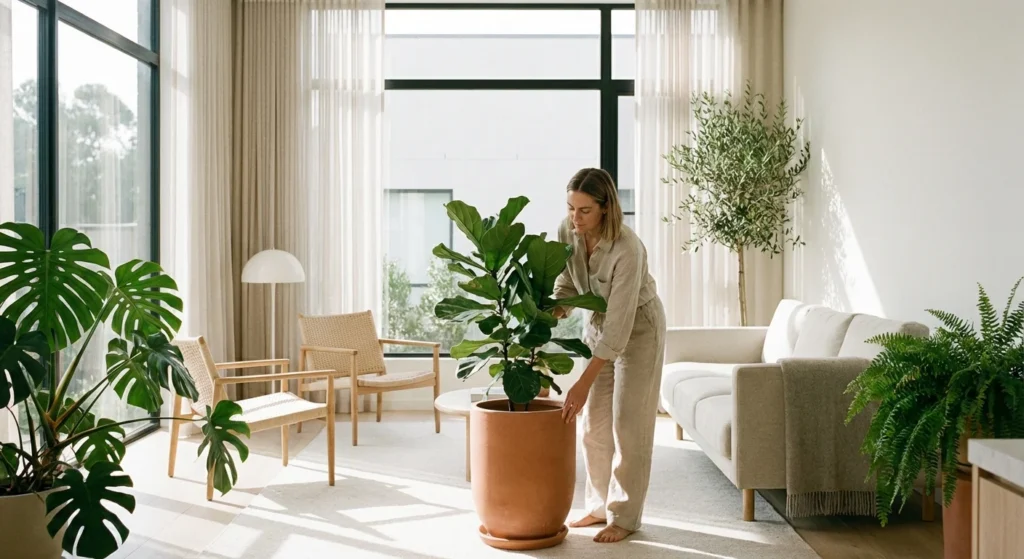
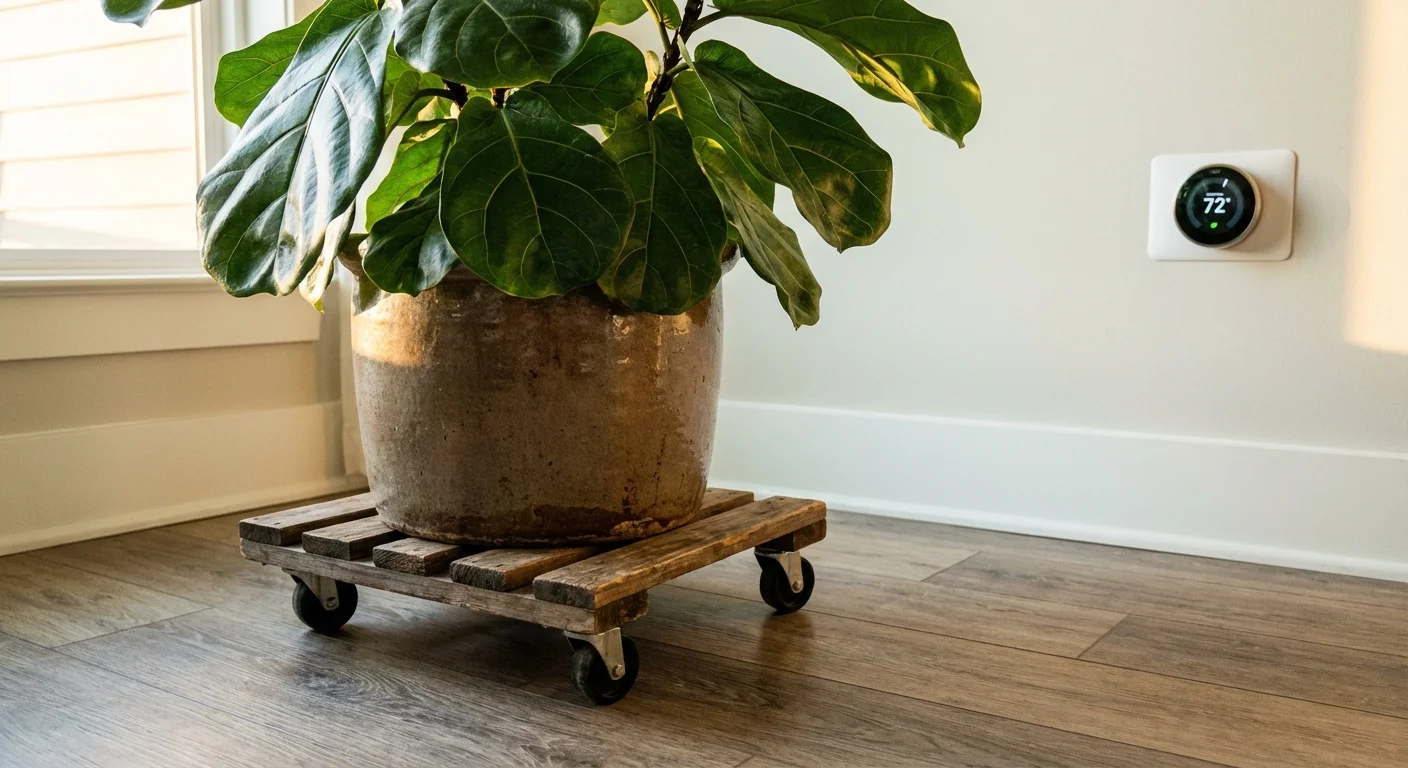
For the indoor gardener, this update is a game-changer. Hard surfaces allow you to place heavy, mature plants on wheeled caddies. Instead of struggling to lift a massive fiddle leaf fig or a dense rubber tree, you simply roll the planter across the room to clean underneath or rotate the plant for even light exposure. When dealing with large containers, always consider structural cautions; a large ceramic pot filled with thoroughly saturated soil can weigh well over a hundred pounds. Continuous hard flooring distributes this weight better than soft, padded carpeting and makes moving these botanical giants completely effortless. Furthermore, choosing a water-resistant material like LVP ensures that minor spills during your weekly watering cadence wipe up in seconds without leaving lingering dampness or mold.
2. Install Automated Smart Climate and Irrigation Systems
Technology offers some of the most effective solutions for a low maintenance home. Upgrading your house with smart climate control and automated irrigation directly impacts both your personal comfort and the health of your plants.
Start with a smart thermostat integrated with indoor humidity sensors. Many tropical houseplants, such as Calatheas and Anthuriums, require specific ambient moisture levels to prevent brown, crispy leaf edges. A smart climate system can automatically trigger a localized humidifier when the air grows too dry, maintaining the perfect environment without your daily intervention. This stable climate control keeps your energy bills predictable while ensuring your sensitive greenery flourishes.
Extend this automation to your watering routines. Indoors, implement smart moisture meters connected to your Wi-Fi. These devices monitor the exact moisture levels deep within the soil composition, sending an alert to your phone precisely when your plants need a drink. This eliminates the guesswork and prevents overwatering—the leading cause of root rot. Outdoors, replace outdated sprinkler systems with smart drip irrigation. Drip lines deliver water directly to the root zones of your landscaping, reducing evaporation and preventing water waste. You can program the system to adjust the watering cadence based on local weather forecasts; if rain is expected, the system pauses. These smart upgrades remove the daily burden of watering, freeing you to enjoy a carefree senior lifestyle.
3. Upgrade to High-Efficiency, Accessible Windows
Windows define the character of your home and dictate the success of your indoor garden. However, older windows often feature heavy sashes that become difficult to lift, drafty seals that harm sensitive plants, and outdated glazing that allows damaging UV rays to fade your furniture. Replacing them with high-efficiency, accessible models revitalizes your home.
Consider installing casement or awning windows equipped with crank handles. These mechanisms require significantly less physical strength and dexterity to operate than traditional double-hung windows. This simple ergonomic shift heavily supports aging in place, allowing you to easily open windows for fresh air cross-ventilation.
From a horticultural perspective, window upgrades provide unparalleled control over your indoor light levels. Modern low-E (low-emissivity) glass coatings block the harmful UV spectrum that degrades upholstery while allowing Photosynthetically Active Radiation (PAR) to pass through. This means your sun-loving succulents and bright-indirect-light-craving Philodendrons receive the nourishing light they need without the risk of scorching their foliage. Additionally, tight weather seals eliminate cold drafts during winter months, protecting your delicate tropical plants from sudden temperature drops. You spend less time adjusting blinds or moving plants away from drafty sills, and more time enjoying the lush, vibrant foliage framing your views.
4. Embrace Built-In Storage and Elevated Planters
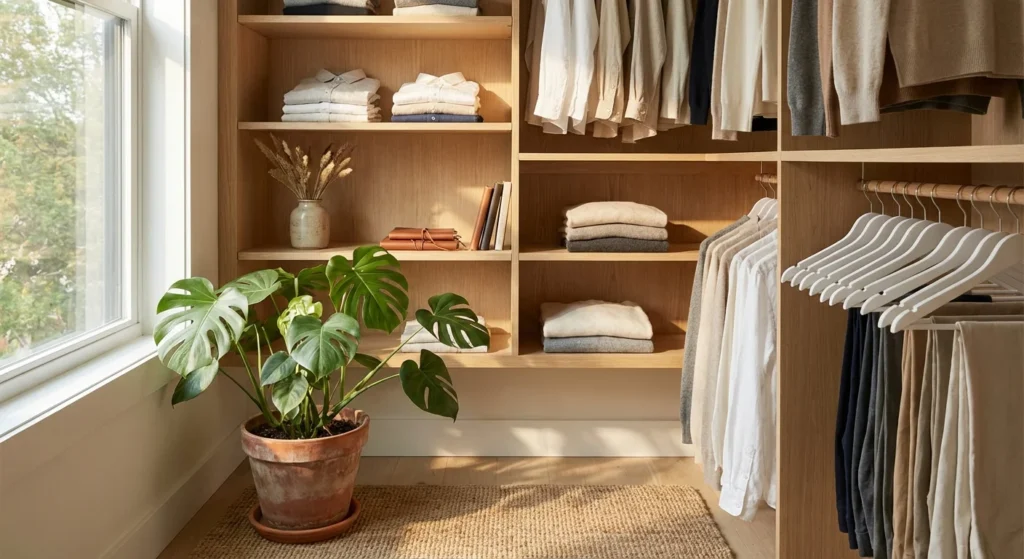
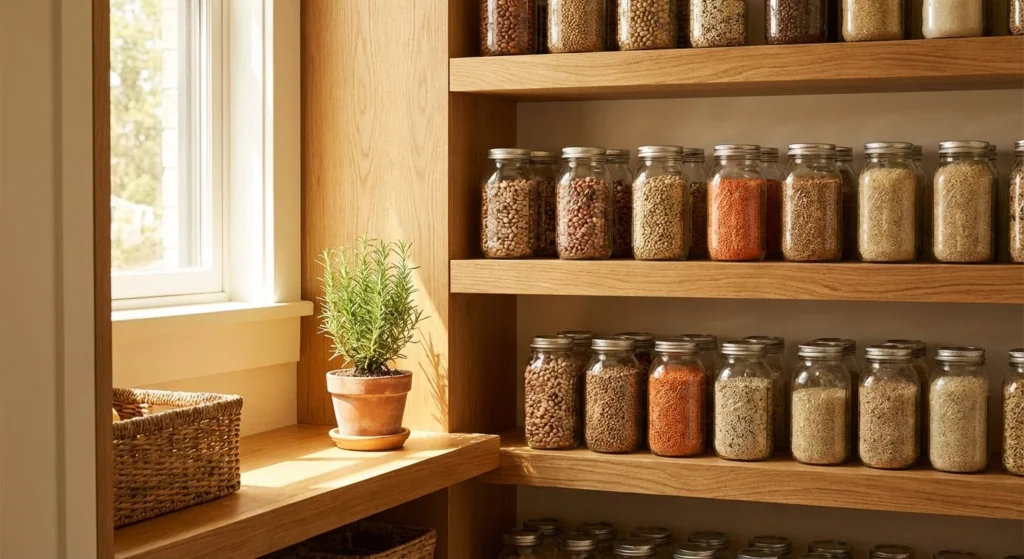
Clutter inherently makes a home harder to clean and maintain. Implementing built-in cabinetry and dedicated, ergonomic plant displays dramatically streamlines your living space. Custom shelving units provide a designated home for your watering cans, pruning shears, liquid fertilizers, and extra aroid soil mixes. Keeping these supplies organized and out of sight maintains a serene aesthetic while ensuring your tools are immediately accessible when you need them.
Elevation is a critical component of accessible design. Constantly bending over to care for plants situated on the floor strains the lower back and knees. Incorporate raised planters, sturdy plant stands, or built-in window ledges that bring your greenery to waist or chest height. This ergonomic arrangement transforms pruning, dusting leaves, and checking soil moisture into comfortable, upright tasks.
Elevating your indoor garden also addresses vital pet safety and allergen considerations. Many popular houseplants—like Pothos, ZZ plants, and Dieffenbachia—contain calcium oxalate crystals that are toxic to cats and dogs if ingested. Securing these plants on high, sturdy built-in shelves keeps them safely out of reach of curious pets. Furthermore, elevating your greenery prevents pets from digging in the potting mix, which reduces the spread of soil-borne allergens and keeps your newly installed hard floors perfectly clean.
5. Simplify Landscaping with Native Plants and Hardscaping
A low maintenance home extends beyond the exterior walls. Traditional lawns demand relentless upkeep: weekly mowing, seasonal fertilizing, and constant weeding. To achieve a truly manageable property, shift your focus toward hardscaping and native plant integration.
Expand your outdoor living areas by installing larger patios, wide paved walkways, or natural stone terraces. Hardscaping requires minimal upkeep—usually just an occasional sweep or power wash—while providing stable, level surfaces that accommodate mobility aids and outdoor dining setups.
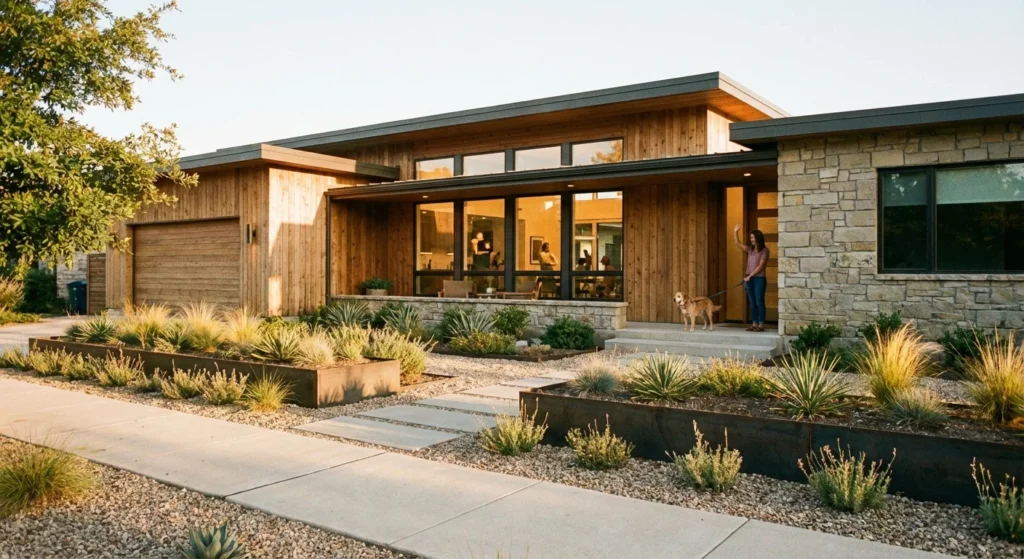
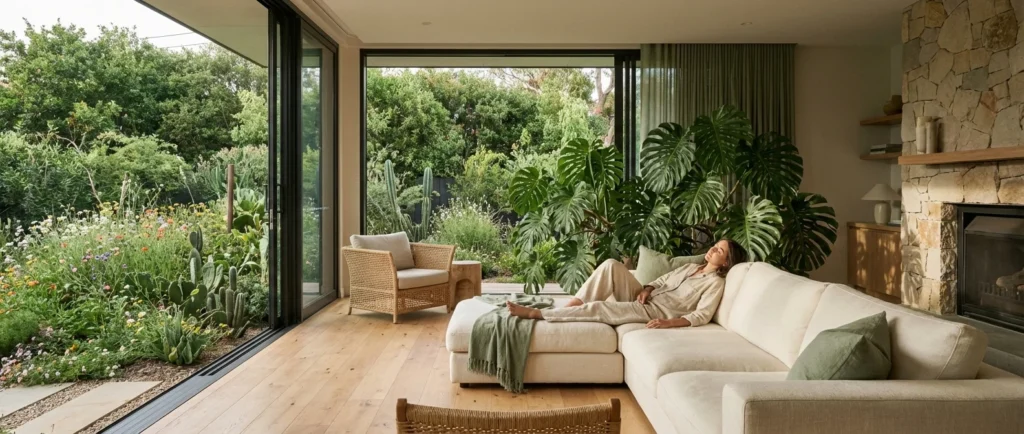
Replace thirsty, labor-intensive turf grass with native perennial borders. Plants indigenous to your region have adapted to the local climate, soil composition, and rainfall patterns over thousands of years. Once established, native species require virtually no supplemental watering, resist local pests naturally, and eliminate the need for harsh chemical fertilizers. For example, if you live in an arid climate, a xeriscape utilizing Agave, ornamental grasses, and crushed gravel dramatically reduces yard work. If you live in a temperate zone, incorporating Coneflowers, Black-eyed Susans, and native ferns provides seasonal color with zero fuss. This transition not only supports local pollinators but also drastically curtails your weekend maintenance chores, allowing you to cultivate a beautiful yard without breaking a sweat.