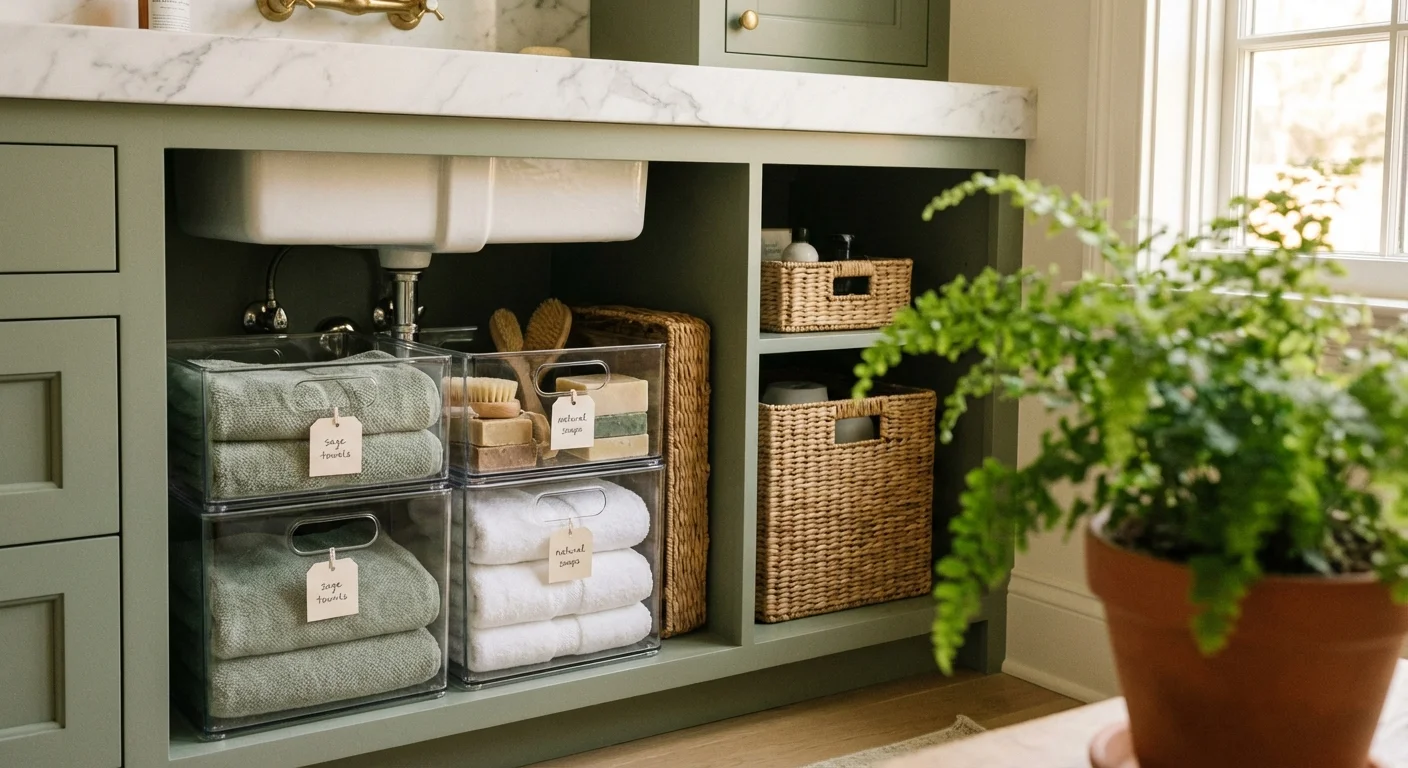
Smart Strategies & Upgrades
Creating a joyful, healthy living environment requires looking closely at where you keep your daily essentials. While it seems intuitive to stash cleaning supplies and utility items near the water source, the reality of cabinet microclimates tells a different story. Here are eight things you should immediately relocate from beneath your sink, along with practical solutions for storing them safely.
1. Harsh Household Chemicals and Bleach
Many homeowners instinctively shove industrial-strength drain cleaners, heavy-duty bleach, and ammonia-based solvents directly under the sink. This is one of the most dangerous storage mistakes you can make. The under-sink area is easily accessible to small children and foraging pets. Furthermore, these harsh chemicals frequently emit volatile organic compounds (VOCs) that build up in enclosed spaces. If a heavy bottle tips over and strikes a PVC pipe, you compromise your plumbing safety and risk a hazardous chemical spill. The toxic fumes from these leaks easily seep into your living spaces, compromising indoor air quality and triggering leaf drop on sensitive tropical houseplants. Relocate corrosive chemicals to a high, locked cabinet in a well-ventilated utility room.
2. Potting Soil and Organic Plant Amendments
As a plant enthusiast, you naturally want to keep your indoor gardening supplies handy for quick repotting sessions. However, the under-sink area is notorious for high humidity and unpredictable temperature shifts. Storing bags of premium potting soil here invites a disaster. Ambient moisture permeates the plastic packaging, causing your carefully mixed soil composition to degrade. Perlite clumps, peat moss begins to rot prematurely, and beneficial mycorrhizae die off. Worse, this damp, dark environment acts as a perfect incubator for fungus gnats. When you finally pull that bag out to pot your prized Monstera, you unknowingly introduce a swarm of pests into your home. Store your soils, orchid barks, and compost in a dry, climate-controlled utility closet.
3. Paper Towels and Cardboard Boxes
Paper products act like highly efficient sponges. Storing bulk paper towels, tissues, or items housed in cardboard boxes beneath the sink is a recipe for ruined goods. Even a minor weep from a P-trap or a microscopic drip from a faucet supply line will silently soak into paper products. This ruins your expensive paper goods and absorbs the evidence of a plumbing leak until severe water damage rots the baseboard of your cabinetry. Damp cardboard also serves as a premium food source and breeding ground for cockroaches and silverfish. True home organization requires elevating your paper goods to a high, dry shelf where they remain pristine and ready for use.
4. Liquid Fertilizers and Chemical Pest Control
Your watering cadence relies on properly formulated, highly potent nutrients to keep your indoor jungle thriving. If you store liquid kelp, fish emulsion, neem oil, or synthetic plant foods under the sink, the fluctuating temperatures radiating from hot water lines quickly degrade their active ingredients. Heat breaks down the chemical bonds in complex fertilizers, rendering them useless. If your liquid fertilizers degrade, your precise watering cadence will fail to deliver the necessary nutrition to your plants. Additionally, if a bottle of concentrated pest control leaks and mixes with residual moisture, it creates an environmental hazard. Keep all liquid plant care items in a dedicated, cool storage caddy where light levels remain consistently low to prevent algae growth inside the bottles.
5. Small Kitchen Appliances and Heavy Electronics
From an aging-in-place perspective, reaching deep into a dark, low cabinet to haul out a fifteen-pound slow cooker or a heavy food processor is terrible for your back and joints. Comfort improvements in modern kitchen design dictate that heavy, frequently used appliances belong at counter height or in easy-glide, waist-level pantry drawers. Furthermore, water and electricity are a disastrous combination. If your garbage disposal backs up or a supply line bursts, your expensive kitchen electronics will be instantly destroyed by the resulting flood. Protect your investments and your physical comfort by moving electronics away from plumbing fixtures.
6. Onions, Potatoes, and Edible Root Crops
It is a common misconception that any dark cabinet serves perfectly as a makeshift root cellar. The enclosed space beneath a sink is excessively damp and poorly ventilated. Root vegetables require cool, dry air with abundant circulation to remain fresh. When trapped under the sink, onions and potatoes release ethylene gas and absorb ambient moisture, causing them to sprout and rot at an alarming rate. Decaying organic matter rapidly attracts fruit flies, which multiply and easily migrate into the damp topsoil of your nearby houseplants. Store your root crops in wire baskets within a dry, well-ventilated pantry.
7. Pet Food and Bird Seed
Dogs, cats, and birds bring immense joy to a household, complementing the lively energy of a plant-filled room. However, storing bulk bags of dog kibble or wild bird seed under the sink acts as a dinner bell for opportunistic rodents and pantry moths. The subtle dampness of the cabinet causes dry kibble to mold, producing aflatoxins that are highly dangerous to your pets. Keeping pet food in original paper bags under plumbing fixtures is an outdated habit. Instead, transfer all animal feed into airtight, hard-plastic or metal containers and store them in a dry pantry away from water sources.
8. Flammable Aerosols and Solvents
Hairspray, aerosol room deodorizers, spray paints, and solvent-based furniture polishes pose a significant combustion risk. Many modern kitchens feature heavy-duty garbage disposals or instant hot water dispensers installed directly beneath the sink. These appliances utilize electric motors and heating elements that occasionally generate small electrical sparks during operation. An unnoticed leak from a pressurized aerosol can in an enclosed, unventilated space creates a concentrated cloud of flammable gas. Maintain foundational household tips for fire safety: strictly store flammable products and aerosols in a garage, outdoor shed, or dedicated utility cabinet completely removed from electrical components and heat sources.
For authoritative guidance, refer to cooperative extension resources like the PennState Extension and the Clemson Home & Garden Information Center. Botanical gardens and university horticulture programs are also excellent references.