
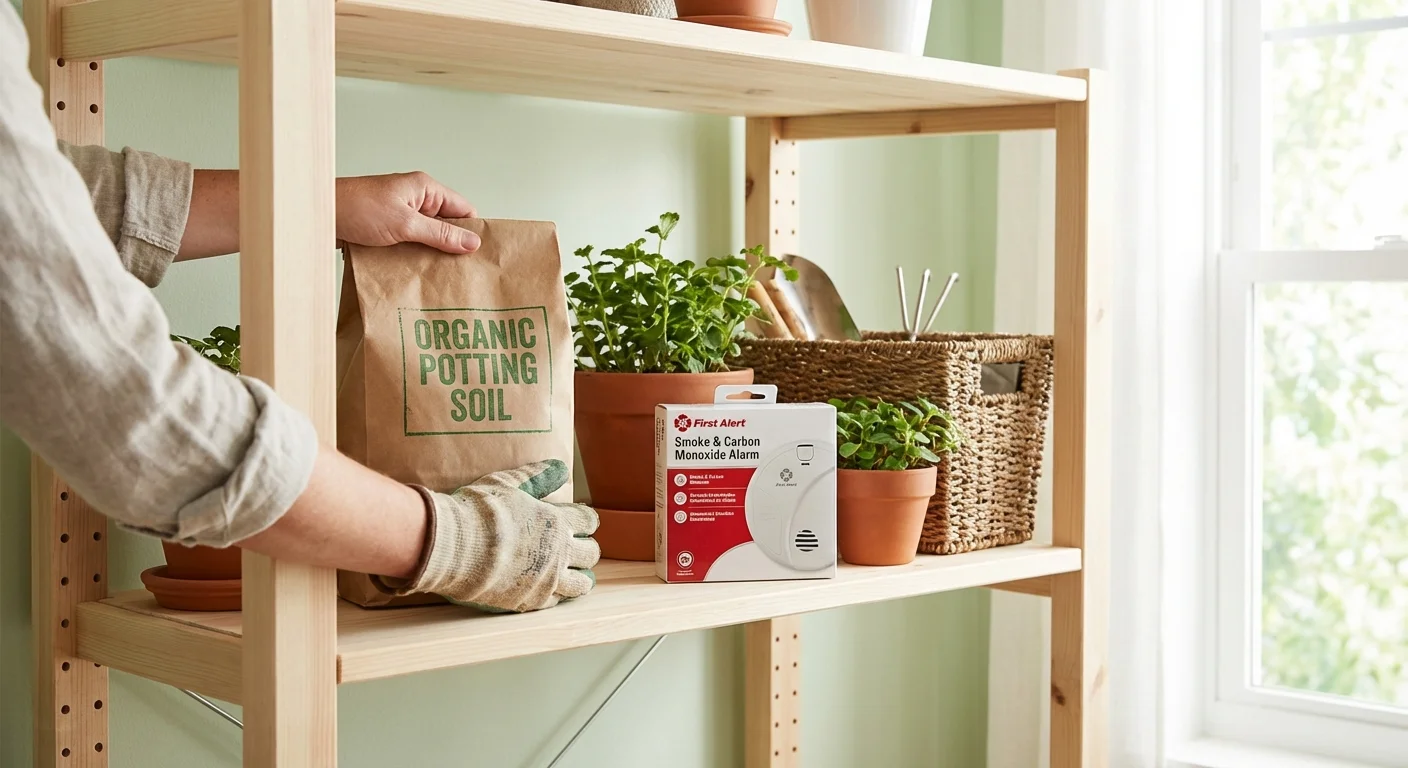
Smart Strategies & Upgrades
1. Houseplant Fertilizers and Potting Soil
As a dedicated plant enthusiast, you already understand that proper soil composition dictates the success of your indoor jungle. However, many indoor gardeners falsely assume that bags of potting mix and bottles of liquid fertilizer last indefinitely. Commercial potting soil relies heavily on peat moss, coco coir, and composted forest products. Over time, these organic materials decompose entirely. Peat moss eventually develops a waxy, water-repellent coating when left sitting in a dry garage. If you pot a delicate calathea in expired, hydrophobic soil, the water simply runs down the sides of the pot, completely bypassing the root zone and triggering severe dehydration despite a regular watering cadence.
Furthermore, old potting soil frequently becomes heavily compacted. This compaction eliminates vital air pockets within the soil structure, severely restricting oxygen flow to the roots and creating a breeding ground for root rot. Expired, damp soil also attracts fungus gnats—a prolific pest that not only damages delicate seedlings but also serves as a frustrating indoor allergen. Similarly, synthetic liquid houseplant fertilizers degrade over time. The active mineral salts precipitate out of the solution, crystallizing at the bottom of the bottle. When you pour this expired fertilizer into your watering can, you deliver water lacking essential macronutrients, leaving your plants undernourished. Always purchase soil and fertilizer in quantities you can consume within one growing season. If you find old bags in your shed, repurpose them into outdoor garden beds where natural soil food webs can break down the organic matter safely.
2. Smoke and Carbon Monoxide Alarm Sensors
You cannot compromise on home safety. You likely test the batteries in your smoke alarms twice a year, but you might not realize that the internal detection sensors physically degrade over time. Industry standards require homeowners to replace the entire smoke alarm unit every ten years, and carbon monoxide detectors every five to seven years. Inside an ionization smoke detector, a minute amount of the radioactive isotope americium-241 actively ionizes the air to detect smoke particles. Over a decade, dust accumulation, humidity, and the natural decay of the components render the sensor unresponsive to smoldering fires. Electrochemical carbon monoxide sensors suffer a similar fate; the chemical paste inside them gradually dries out, completely eliminating their ability to detect the odorless, lethal gas.
For individuals focusing on senior awareness and accessible home design, reliable alarms provide indispensable peace of mind. Check the back of every alarm unit in your home today. Manufacturers stamp the exact production date on the plastic casing. If you cannot find a date, or if the date indicates the unit is more than a decade old, replace the entire device immediately. When upgrading, select modern, interconnected smart alarms that send alerts directly to your smartphone. These design-forward units feature sleek, low-profile aesthetics that blend seamlessly into your ceiling while offering superior, reliable protection.
3. Liquid Bleach and Disinfecting Cleaning Supplies
Routine cleaning supplies play a vital role in preventing the spread of household germs and protecting your indoor garden. Whenever you prune a diseased monstera leaf or divide a rootbound snake plant, you must sanitize your pruning shears to prevent the transmission of bacterial leaf spot. Many homeowners reach for a trusty bottle of liquid household bleach to tackle these sanitation tasks. Surprisingly, sodium hypochlorite—the active chemical compound in household bleach—is notoriously unstable. Once you open a bottle of bleach, it immediately begins degrading. Within six months, the chemical structure completely breaks down, leaving you with a bottle of slightly cloudy salt water.
Using expired bleach leaves your home vulnerable. You might believe you are actively disinfecting your kitchen countertops or sterilizing your gardening tools, but you are actually spreading live pathogens around your living space. Furthermore, relying on ineffective, expired cleaners allows mildew and mold to thrive in damp areas like bathrooms and laundry rooms, creating severe allergen considerations for sensitive family members and pets. Audit your cleaning caddy every spring. Dispose of old bleach by pouring it down the drain with plenty of running water. Transition toward pet-safe, environmentally friendly cleaning alternatives, or purchase smaller bottles of potent disinfectants to ensure you utilize the active chemicals before they permanently expire.
4. Fire Extinguishers
A residential fire extinguisher acts as the ultimate failsafe against sudden kitchen flare-ups or electrical shorts. However, an extinguisher does not last a lifetime. Over time, the internal seals around the neck of the canister degrade, allowing the pressurized nitrogen propellant to slowly leak out into the atmosphere. Without sufficient pressure, the chemical fire retardant remains trapped inside the canister during an emergency. Most traditional household fire extinguishers possess a reliable lifespan of roughly ten to twelve years.
You must actively verify the readiness of your fire extinguishers. Examine the pressure gauge located near the handle; the indicator needle must sit perfectly within the designated green zone. If the needle drops into the red zone, the extinguisher has lost pressure and requires immediate replacement or professional servicing. When considering whole-home design upgrades, rethink how you store your extinguishers. Do not bury them behind stacks of pots and pans. Mount them securely on the wall at an accessible height—an essential strategy for aging-in-place ergonomics. Exercise structural caution during installation; always utilize heavy-duty wall anchors and mount the bracket directly into a wooden stud to support the significant weight of the metal canister.
5. Ground Spices and Pantry Staples
A beautifully organized kitchen elevates your culinary experience, but hidden behind those aesthetically pleasing matching jars lie expired, flavorless ingredients. Implementing smart pantry tips not only improves the taste of your meals but also safeguards your health. Ground spices rely on highly volatile aromatic oils for their intense flavor and color. When exposed to light, heat, and oxygen, these volatile compounds evaporate rapidly. Ground cinnamon, cumin, and paprika typically lose their culinary potency within six to eight months. While consuming an old spice rarely causes severe physical harm, it fundamentally ruins the flavor profile of your carefully prepared dishes.
More importantly, holding onto expired baking essentials like all-purpose flour, grains, and cornmeal introduces genuine allergen and pest risks into your home. Microscopic pantry moth eggs frequently hitch a ride into your kitchen via bags of commercial grain. If you leave these items sitting in a dark, warm pantry for over a year, you invite a full-blown pest infestation. Pantry moths spread rapidly, contaminating entire shelves and triggering respiratory allergens. To upgrade your pantry effectively, transfer all newly purchased flours and grains into airtight, clear acrylic or glass containers. Label the bottom of each container with the original purchase date. This simple design upgrade modernizes your kitchen aesthetics while establishing an impenetrable barrier against opportunistic household pests.