Smart Strategies & Upgrades
1. Install a Double Hang Rod
Most standard closets feature a single horizontal rod with acres of wasted space beneath the hanging garments. Installing a second rod immediately doubles your hanging capacity. Mount the top rod higher for shirts and jackets, and place the lower rod about three feet above the floor for pants and skirts. This modification represents a brilliant home improvement strategy for aging-in-place, as it brings frequently worn items down to a more accessible, ergonomic level, eliminating the need to stretch or strain your shoulders.
2. Maximize the Door with Over-the-Door Organizers
The back of your closet door offers prime real estate that often sits entirely unused. Hang a sturdy canvas over-the-door organizer with clear or mesh pockets. While traditionally used for shoes, these versatile pockets hold rolled belts, rolled scarves, or small accessories. For the multi-tasking homeowner, this door space easily accommodates specialized gear. Dedicate a few pockets to your indoor gardening kit—tuck away pruning shears, misting bottles, and moisture meters so you can easily maintain your proper watering cadence without digging through heavy toolboxes.
3. Use Clear, Stackable Acrylic Bins
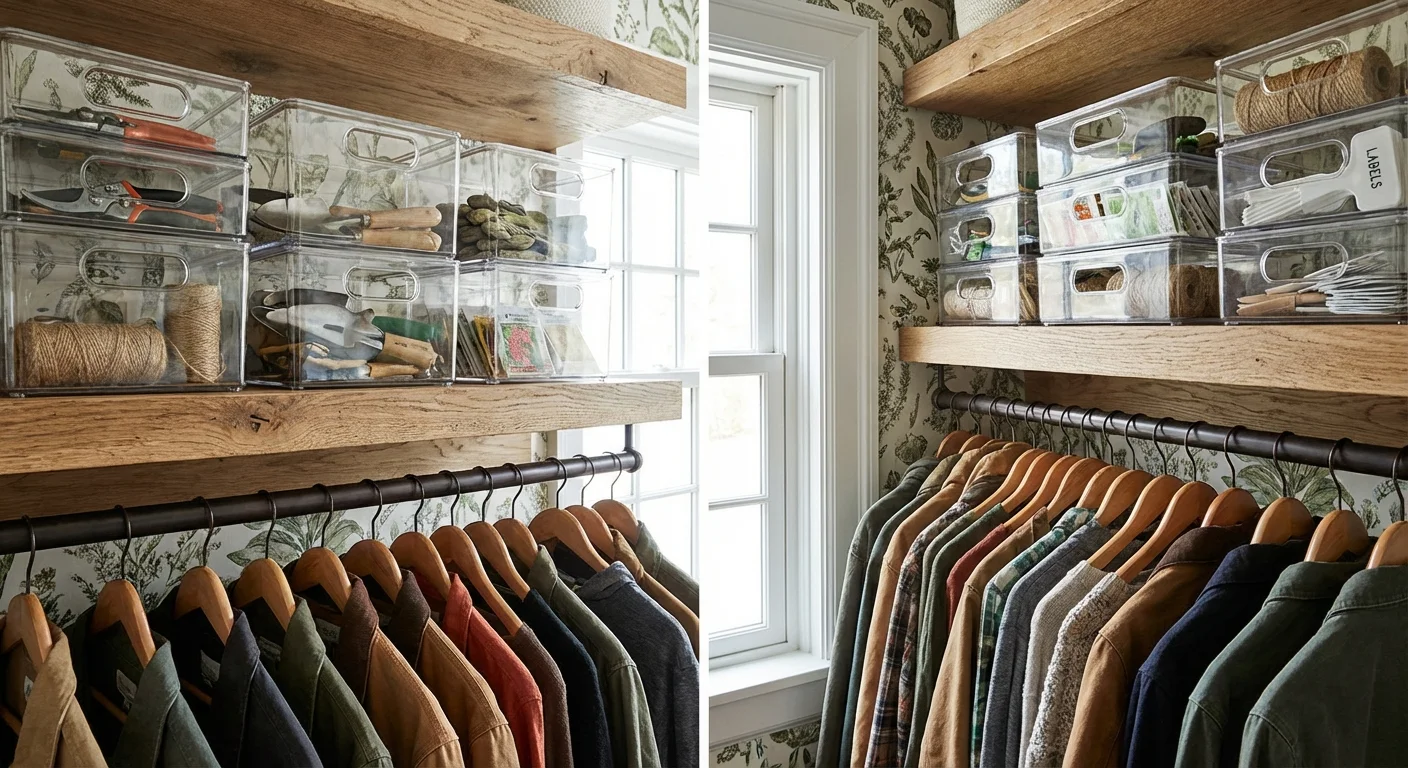
Ditch the mismatched cardboard boxes that obscure their contents and attract pests. Invest in clear, stackable acrylic bins with secure, latching lids. Transparent storage allows you to locate your favorite winter sweater or extra pillowcases instantly. Furthermore, secure bins provide vital pet safety; if you use your utility closet to store concentrated liquid fertilizers or sharp home repair tools, heavy-duty latching bins keep curious cats and dogs completely safe. Stack the heaviest bins on the floor and place lighter items on the upper shelves.
4. Slide-Out Baskets for Deep Shelves
Deep shelves frequently become black holes where items get pushed to the back and forgotten. Retrofitting your existing shelves with slide-out wire or solid baskets solves this accessibility issue. By mounting tracks directly onto the shelving material, you can pull the entire contents of the shelf out into the light. This upgrade heavily supports joint health and mobility, reducing the need to bend awkwardly or blindly reach into dark corners to retrieve your belongings.
5. Optimize Climate with Silica Gel and Cedar
A closed, cramped space naturally traps humidity, which damages clothing and invites mold. Traditional mothballs contain toxic chemicals that pose severe allergen considerations and pet safety risks. Instead, control the closet climate naturally. Hang cedar blocks to deter fabric-eating insects, and place reusable silica gel packets in the corners to absorb excess moisture. If you use your closet to overwinter dormant plant bulbs—like dahlias or caladiums—managing this humidity is crucial. The bulbs require a cool, dry, dark environment to prevent rotting before the spring planting season.
6. Introduce Wire Shelf Dividers
Stacks of folded jeans or plush sweaters inevitably topple over, creating a messy shelf. Slide-on wire shelf dividers act as structural walls that keep your stacks perfectly vertical and sharply separated. These dividers also work wonders for utility closets. If you store bags of specialized potting mix, you know that managing different soil composition blends—like chunky orchid bark versus fine seed-starting mix—gets messy. Shelf dividers keep those heavy, shifting bags upright and neatly compartmentalized.
7. Vacuum-Seal Bulky Seasonal Items
When the weather warms up, heavy down comforters, thick wool coats, and ski gear consume an unreasonable amount of your limited storage volume. Vacuum-sealing these bulky items compresses them down to a fraction of their original size. Beyond merely saving space, vacuum bags offer significant allergen considerations. Sealing seasonal fabrics tightly prevents dust mites, pollen, and pet dander from settling into the fibers while they sit unused for six months.
8. Mount Pegboards on Bare Sidewalls
If your closet has a few inches of bare wall space on the left or right returns, install a custom-cut pegboard. This inexpensive home improvement project turns blank drywall into a highly customizable storage grid. Insert metal hooks to hang belts, necklaces, ties, or lightweight handbags. Plant lovers can use this vertical space to hang watering cans, delicate macrame plant hangers, or dried botanical bundles like lavender and eucalyptus, which naturally freshen the stagnant closet air.
9. Utilize Vertical Tension Rods
Spring-loaded tension rods are not just for shower curtains. Install short tension rods vertically between two horizontal shelves to create custom cubbies for tall, floppy items like winter boots or rolled architectural blueprints. You can also wedge a tension rod horizontally in a narrow gap to hang spray bottles by their triggers, clearing off valuable shelf space. Because they require no drilling or hardware, tension rods are perfect for renters who want high-impact organization tips without damaging the walls.
10. Cascade Garments with S-Hooks and Chains
If you have an abundance of shirts and a severe lack of horizontal rod space, leverage the vertical drop. Hang a sturdy metal chain from a secure S-hook on your main closet rod. Then, slip the hooks of your hangers through the descending links of the chain. This cascading method allows you to hang five or six garments in the horizontal space previously occupied by just one. Ensure you use strong, velvet-flocked hangers to keep garments from slipping off the chain.
11. Install Motion-Sensor LED Lighting
You cannot organize what you cannot see. Small closets rarely feature adequate hardwired lighting. Stick-on, battery-operated motion-sensor LED light strips provide a massive upgrade to your daily routine. As soon as you open the door, the space floods with bright, clean light. LEDs are essential here; they provide excellent light levels without generating the dangerous heat associated with incandescent bulbs. Heat buildup in a small closet damages delicate fabrics, poses a fire risk, and can trick any stored overwintering plants into breaking dormancy prematurely.
12. Elevate Floor Items with Risers
Leaving shoes and boxes directly on the closet floor creates a tripping hazard and makes sweeping impossible. Place low-profile floor risers or a simple slatted shoe bench at the bottom of the closet. Elevating your items by just six inches protects them from potential water leaks or scuff marks from the door sweep. A slatted wood riser also promotes essential airflow beneath your belongings, preventing stale odors and discouraging pests from nesting in dark, undisturbed corners.