Smart Strategies & Upgrades
1. Wi-Fi Enabled Soil Moisture and Nutrient Monitors
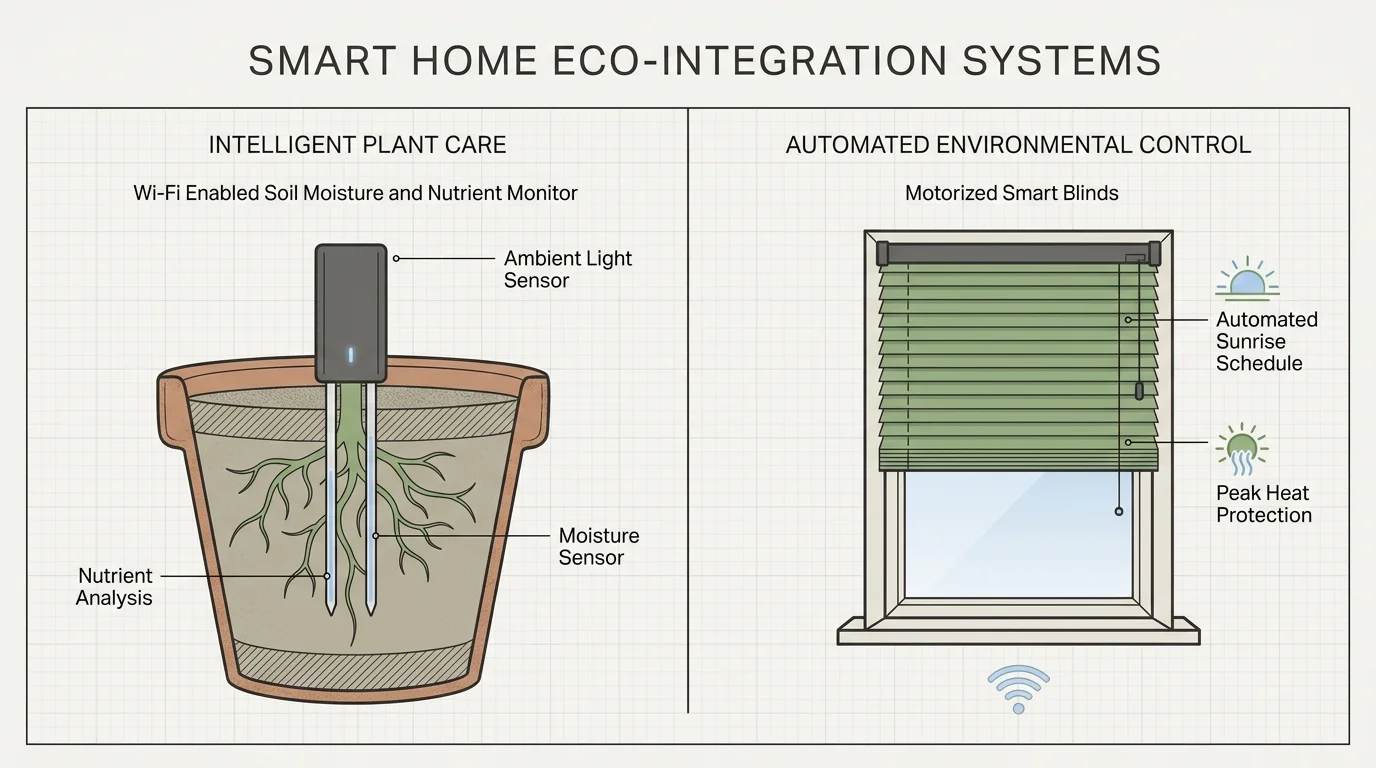
Determining the precise watering cadence for your houseplants often involves crouching, bending, and digging your fingers into the dirt. Smart soil monitors eliminate this physical strain entirely. You simply insert these slender, unobtrusive prongs directly into the potting vessel. The sensors continuously analyze soil composition, moisture levels, and ambient light, sending real-time data straight to your smartphone or tablet. If your delicate Calathea is drying out or your drought-tolerant Sansevieria is sitting in waterlogged soil, the system immediately alerts you.
This technology fundamentally changes how you approach plant care. Overwatering remains the leading cause of root rot in indoor plants, especially in homes with varying temperatures. By relying on precise metrics rather than guesswork, you protect your botanical investments while sparing your knees and back. When selecting a monitor, look for models that accommodate different soil compositions; a chunky, well-draining aroid mix reads differently than dense, peat-heavy potting soil, and the best smart devices 60+ users rely on will offer customizable plant profiles.
2. Motorized Smart Blinds and Shades
Regulating light levels is essential for both your personal comfort and the photosynthetic health of your houseplants. Sun-loving succulents require intense direct rays, while tropical understory plants like the Monstera deliciosa thrive in bright, indirect light. Motorized smart blinds allow you to orchestrate the exact amount of sunlight entering your rooms without ever stepping on a footstool or wrestling with tangled pull cords. You can program your shades to open automatically at sunrise and lower during the peak heat of the afternoon.
Beyond plant health, automated window treatments provide significant safety and security benefits. Reaching across deep window sills or behind large planters poses a notable fall risk. By controlling your home’s natural light via a remote control or voice command, you eliminate hazardous movements. Structural caution: Motorized roller shades contain heavy battery packs and motors. Always ensure your installation brackets are securely anchored directly into wall studs rather than relying solely on drywall anchors.
3. Voice-Activated Smart Hubs and Displays
A voice-activated smart hub serves as the central nervous system for your easy tech home. Devices with large, high-contrast displays allow you to control your entire ecosystem using simple spoken commands. You can instruct your digital assistant to adjust the thermostat, dim the living room lights, or set recurring reminders for your fertilization and watering cadence. For seniors managing multiple daily tasks, transferring the mental load of plant care and home security to a smart display provides immense relief.
These hubs also offer immediate access to expert horticultural advice. If you spot yellowing leaves on your Philodendron, you can simply ask your smart display to pull up a video tutorial on nutrient deficiencies. When setting up your hub, place it in a central, easily accessible location like the kitchen counter or living room side table. Make sure all connected power cables are safely routed behind heavy furniture to ensure pet safety and keep walkways completely clear of tripping hazards.
4. Smart Thermostats with Integrated Humidity Control
Maintaining a stable indoor climate proves critical for aging bodies and sensitive tropical plants alike. Traditional heating and cooling systems often create drastic temperature swings and strip moisture from the air, leading to dry skin, respiratory irritation, and crispy plant foliage. Upgrading to a smart thermostat paired with integrated humidity sensors allows you to create a perfectly balanced microclimate. You can easily program the system to maintain a comfortable 70 degrees Fahrenheit with a restorative 45 to 50 percent ambient humidity level.
The tech for elderly individuals should always prioritize preventative health. Optimal humidity reduces the transmission of airborne viruses and prevents dust from circulating freely. For your indoor garden, consistent moisture prevents the dreaded spider mite infestations that plague dry winter homes. If your HVAC system does not feature a whole-home humidifier, you can easily connect standalone smart humidifiers to smart plugs, allowing your central thermostat to toggle them on and off automatically based on real-time air quality readings.
5. Automated LED Grow Lights and Pathway Illumination
Integrating supplemental lighting transforms dark corners into focal points while significantly improving nighttime navigation. Automated LED grow lights have evolved far beyond the harsh, purple industrial fixtures of the past. Today, you can install elegant, full-spectrum architectural bulbs that seamlessly blend into your existing decor. By plugging these fixtures into smart timers, you provide your light-starved African Violets with a consistent 12-hour photoperiod without ever having to manually flip a switch.
Simultaneously, you should integrate motion-activated smart lighting along your hallways, staircases, and patio entryways. Navigating your home at night to fetch a glass of water or let the dog out requires reliable visibility. Motion sensors automatically illuminate your path with a soft, warm glow that will not disrupt your circadian rhythm. When selecting smart bulbs, pay close attention to the color temperature; a warm white between 2700K and 3000K flatters interior spaces, provides sufficient lumens for low-light plants, and remains gentle on sensitive eyes.
6. HEPA-Equipped Robotic Vacuums with Object Avoidance
Keeping your floors pristine requires constant vigilance, especially when managing shedding pets and a sprawling indoor garden. Fallen Ficus leaves, spilled perlite, stray potting soil, and pet dander accumulate quickly, creating both aesthetic messes and potential slipping hazards. Pushing a heavy upright vacuum triggers joint pain and fatigues the lower back. A smart robotic vacuum handles daily sweeping and mopping tasks effortlessly, preserving your energy for more enjoyable gardening pursuits.
Modern robotic vacuums feature advanced laser navigation and object avoidance technology. This means the vacuum intelligently maneuvers around heavy ceramic pots, avoids tangling itself in trailing Pothos vines, and safely steers clear of sleeping pets. When dealing with allergen considerations, always select a model equipped with a true HEPA filter. This ensures that microscopic dust mites, pollen, and mold spores are permanently trapped inside the dustbin rather than exhausted back into the air you breathe.