Smart Strategies & Upgrades
1. Seal Drafts to Protect Your Climate and Your Plants
Unwanted drafts are the invisible enemies of home efficiency. When conditioned air escapes through poorly sealed windows and doors, your heating, ventilation, and air conditioning system must work overtime to compensate. This constant struggle dramatically increases your power consumption. Beyond the financial impact, cold winter drafts or dry summer air seeping into your home can devastate sensitive tropical plants like Ficus lyrata (fiddle-leaf fig) or delicate Calathea varieties, causing their leaves to brown and drop prematurely.
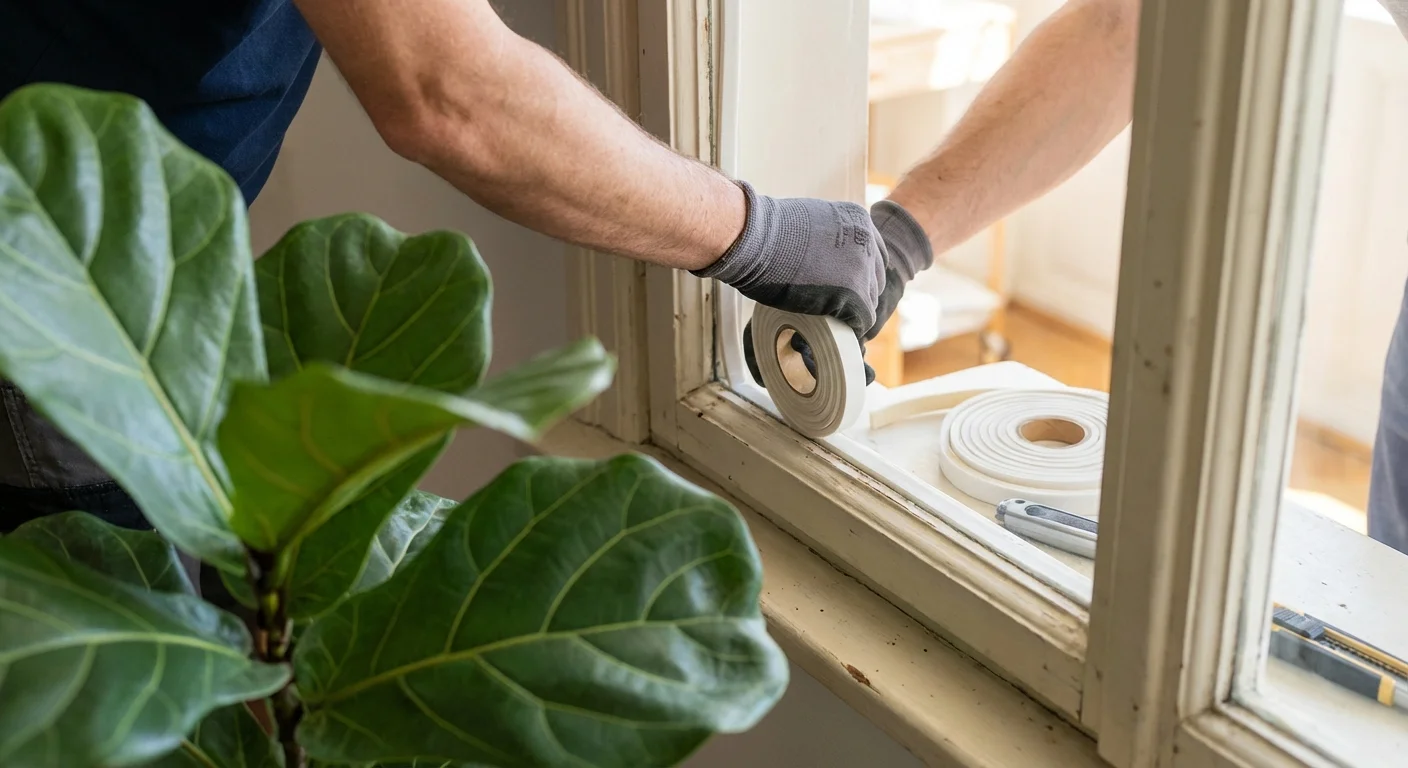
You can easily identify invisible air leaks using a simple lit incense stick or a candle. Hold the smoke source near window frames, door sweeps, and baseboards on a windy day; if the smoke wavers horizontally, you have located a draft. Apply weatherstripping tape along window sashes and install sturdy door sweeps at your exterior entrances. For stationary gaps around trim or siding, use a high-quality silicone caulk to seal the perimeter. The United States Department of Energy estimates that simple air sealing strategies can yield energy savings of ten to twenty percent on your monthly heating and cooling bills.
2. Master Your Thermostat and Air Circulation
Your HVAC system is likely the largest consumer of electricity in your home. Relying on manual thermostat adjustments often leads to human error, such as forgetting to turn down the heat before leaving for work. Upgrading to a programmable or smart thermostat allows you to establish a schedule that aligns with your daily routine. Set your system to automatically reduce heating or cooling efforts while you sleep or while the house is empty. For individuals focused on long-term cost cutting, this single upgrade offers one of the most reliable returns on investment.
Do not underestimate the power of ceiling fans to supplement your climate control. Fans do not actually lower the temperature of a room; they cool the people and pets inside it through the wind-chill effect. In the summer, ensure your fan blades rotate counterclockwise to push cool air downward. In the winter, reverse the direction to clockwise on a low speed to gently pull cold air up and push the trapped warm air down from the ceiling. Maintaining steady, gentle air circulation also prevents the stagnant, humid pockets of air that invite fungal diseases—like powdery mildew—onto your houseplant foliage.
3. Upgrade to LED Lighting and Efficient Grow Systems
If you are still illuminating your home with traditional incandescent or early-generation compact fluorescent bulbs, you are burning unnecessary energy. Incandescent bulbs release up to ninety percent of their energy as heat rather than light. Swapping your most frequently used fixtures to Light Emitting Diode (LED) bulbs instantly reduces your lighting energy consumption by up to eighty-five percent. LEDs boast incredibly long lifespans, meaning you spend less time balancing on step stools to replace burned-out bulbs—an important consideration for aging-in-place safety.
Plant enthusiasts often worry about the electricity required to run supplemental grow lights during the dark winter months. Fortunately, modern full-spectrum LED grow lights consume a fraction of the wattage required by older high-pressure sodium or fluorescent shop lights. Furthermore, LED plant lights emit very little ambient heat, making them exceptionally safe to place near delicate foliage and entirely safe for curious pets who might brush against the fixtures. Put your plant lights on a simple digital timer to ensure they only run for the necessary twelve to fourteen hours a day, optimizing growth while capping your electric bill.
4. Leverage Passive Solar Heating and Window Treatments
The sun provides free, abundant energy; you simply need to harness it correctly. Passive solar management involves actively adjusting your blinds, curtains, and shades to manipulate natural light and heat. During the frigid winter months, throw open your south-facing curtains during daylight hours to allow radiant thermal energy to warm your rooms naturally. As the sun sets, close heavy thermal curtains or cellular shades to trap that free heat inside. This daily rhythm reduces the burden on your furnace and supports incredible energy savings.
Conversely, during the blistering summer, blocking the sun prevents the greenhouse effect from turning your living room into an oven. Use blackout curtains or UV-blocking window films on east and west-facing windows to deflect morning and afternoon solar radiation. You must strike a careful balance here if you maintain a collection of sun-loving succulents or cacti. Group your high-light plants near a single, unshaded window so you can effectively insulate the rest of your house without depriving your greenery of the photons they need to thrive.
5. Plant Strategic Shade Landscaping
Energy efficiency extends beyond the physical walls of your home. Strategic landscaping offers a beautiful, organic method to lower utility bills over time. Planting deciduous trees—trees that lose their leaves in the autumn—on the south and west sides of your property provides profound seasonal benefits. In the summer, the dense canopy creates a living umbrella that shades your roof and exterior walls, significantly reducing the temperature of the air immediately surrounding your home and easing the strain on your air conditioner.
When winter arrives and the leaves fall, the bare branches allow the warming sunlight to reach your home’s exterior, offering free passive heating. When planning your landscape, you must observe crucial structural cautions. Always research the mature root spread of the species you select. Avoid planting large trees too close to your foundation, underground utility lines, or plumbing pipes, as aggressive roots can cause expensive structural damage. Check with local utility companies before digging any large holes in your yard.
6. Tame Vampire Power with Smart Power Strips
Take a look around your living room and home office. Your television, gaming consoles, desktop computers, and smart speakers are likely plugged into the wall, patiently waiting for a command. Even when powered down, these devices draw a continuous trickle of electricity known as vampire power or phantom load. According to the Natural Resources Defense Council, this idle power consumption can add up to hundreds of dollars a year to a household’s utility bills, representing a massive leak in your budget.
You can effortlessly stop this invisible drain by utilizing advanced power strips. These smart strips detect when a primary device—like your television—is turned off, and automatically cut power to the peripheral devices, such as the soundbar and streaming box. Use heavy-duty smart strips for your indoor plant stations as well, ensuring that water pumps for indoor fountains, humidifiers, and heating mats are completely powered down when not actively needed. This simple upgrade acts as an automated cost cutting tool that requires zero daily effort to maintain.
7. Tune Up Your HVAC and Filter Your Air Naturally
A neglected heating and cooling system operates inefficiently, burning excess electricity to push air through clogged filters and dirty ducts. Commit to inspecting your HVAC filters every thirty days, replacing them at least every three months—or more frequently if you have shedding pets or live in a dusty environment. A clean filter allows the blower motor to operate smoothly, requiring less voltage and extending the lifespan of the equipment. Clean filters also trap airborne pet dander and seasonal pollen, addressing significant allergen considerations for your family.
Schedule an annual professional tune-up for your central air system to check refrigerant levels and clean the condenser coils. While the machinery does the heavy lifting for temperature control, you can enlist your houseplants to help freshen the indoor environment. Species like the spider plant (Chlorophytum comosum) and the Boston fern (Nephrolepis exaltata) are not only entirely non-toxic to cats and dogs, but they also naturally transpire moisture into dry winter air. This subtle humidity boost makes ambient temperatures feel warmer to the human skin, allowing you to comfortably lower the thermostat a degree or two.