Smart Strategies & Upgrades
1. Cultivate a Thriving, Layered Container Garden
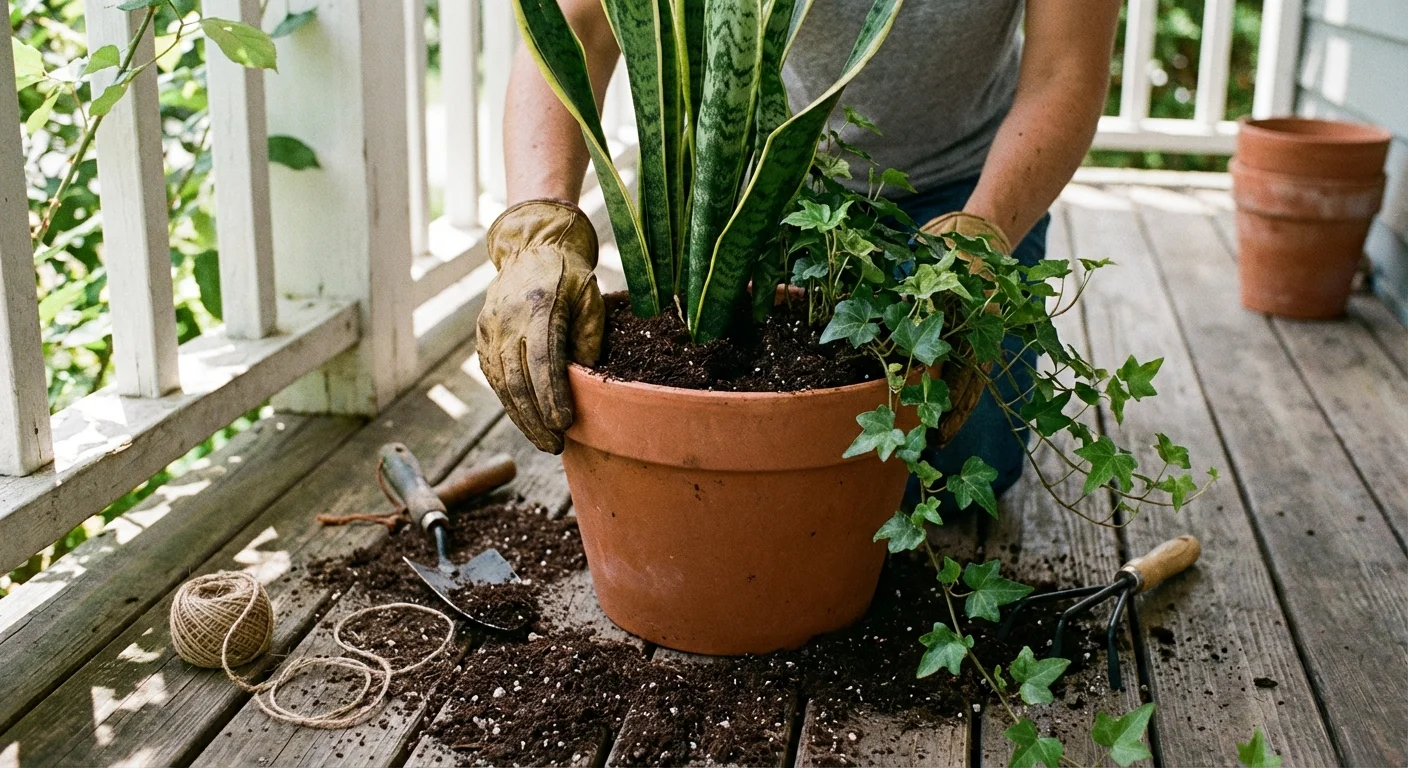
Nothing softens a home exterior quite like lush, healthy foliage. Creating a layered container garden provides an immediate visual impact and allows you to easily control soil conditions and watering schedules. When building your planters, rely on the proven thriller, filler, and spiller method. Place a tall, dramatic plant—like an upright elephant ear or a structural snake plant—in the center to serve as your thriller. Surround it with mid-height fillers such as vibrant coleus or delicate heuchera, and finish the edge with trailing spillers like creeping jenny or sweet potato vine to cascade gracefully over the sides of the pot.
Plant health directly depends on matching your selections to your specific microclimate. If your welcoming entry faces east and receives gentle morning sunlight, delicate ferns and brightly colored caladiums will thrive beautifully. However, if your porch endures the scorching, direct afternoon heat of a west-facing exposure, you must select heat-tolerant varieties like lantana, portulaca, or drought-resistant succulents. Always verify the toxicity of your chosen plants if neighborhood cats or your own pets frequent the area. Highly toxic plants like sago palms and true lilies pose severe risks; swap them for pet-safe alternatives such as Boston ferns, spider plants, or cast iron plants.
Soil composition and drainage dictate the long-term survival of your container garden. Avoid heavy garden dirt; instead, fill your pots with a high-quality, lightweight potting mix heavily amended with perlite to guarantee swift drainage. Ensure every container features clear drainage holes at the bottom. Without proper drainage, water pools at the roots, inviting fungal diseases and rapid root rot. Choose your pot materials wisely—unglazed terracotta breathes exceptionally well but dries out rapidly in the summer heat, while heavy glazed ceramics retain vital moisture but demand careful winter storage to prevent freezing and cracking.
2. Invest in Comfortable, Accessible Outdoor Seating
A porch only functions as a true living space if it offers a comfortable place to sit and linger. When selecting outdoor seating, you must look beyond mere aesthetics and deeply consider ergonomics and accessibility. Deep, low-slung couches or heavily reclined Adirondack chairs might look incredibly relaxing, but they present significant mobility challenges. As part of a smart aging-in-place strategy, you should prioritize furniture that supports independent, safe movement for guests of all generations.
Seek out sturdy seating featuring a firm, supportive seat height of roughly 18 to 20 inches from the ground. This specific height prevents the hips from dropping below the knees, making it substantially easier to stand back up. Rigid, robust armrests are non-negotiable; they provide the essential leverage older adults need when rising from a seated position. Enhance these comfort improvements by adding high-density foam cushions covered in UV-resistant, waterproof fabrics that resist fading and mold.
Arrangement matters just as much as the furniture itself. Position your chairs to encourage natural conversation without ever obstructing the primary walking paths leading to your front door. You must maintain a clear, unobstructed pathway of at least 36 inches wide to comfortably accommodate mobility aids, strollers, and everyday foot traffic. By blending supportive ergonomics with thoughtful spatial planning, you guarantee your seating area remains functional, safe, and universally inviting.
3. Upgrade Your Front Porch Decor with Purposeful Lighting
Lighting serves as the crucial element that transitions your home exterior from daytime charm to nighttime elegance and security. Relying on a single, glaring overhead bulb creates harsh shadows and an uninviting, utilitarian atmosphere. Instead, elevate your front porch decor by implementing a layered lighting strategy that balances safety with a warm, ambient glow.
Start with your ambient overhead lighting, utilizing a flush mount fixture or a damp-rated outdoor pendant to cast broad, even illumination across the primary floor space. Next, introduce task lighting by installing high-quality sconces flanking your front door. These fixtures specifically highlight your door hardware and house numbers, allowing visitors to easily orient themselves in the dark. Finally, integrate accent lighting such as low-voltage LED step lights or battery-operated lanterns near the edges of your steps. Illuminating elevation changes represents a vital aging-in-place safety measure that drastically reduces the risk of accidental trips and falls.
Pay close attention to the color temperature of your bulbs. Bulbs rated between 2700K and 3000K emit a soft, warm white light that perfectly mimics the inviting glow of traditional incandescent bulbs. Avoid bulbs with color temperatures above 4000K in your relaxation spaces; they produce a sterile, bluish daylight effect that feels abrasive and clinical. Furthermore, consider installing smart timers or motion sensors. These automated upgrades ensure your welcoming entry always remains brightly lit precisely when you need it, maximizing both energy efficiency and physical security.
4. Frame the Welcoming Entry with Climbing Vines
Introducing vertical greenery draws the eye upward, emphasizes your architectural columns, and completely transforms a flat facade into a dynamic, living ecosystem. Climbing vines provide a sense of timeless elegance, but they require careful planning to protect the structural integrity of your home exterior. Aggressive clinging vines, such as English ivy or climbing hydrangea, utilize tiny aerial roots that burrow aggressively into wood siding, mortar joints, and window frames. Over time, these plants trap moisture against the house, inevitably leading to extensive rot and expensive structural damage.
To safely incorporate vertical plants, you must utilize freestanding or bracketed trellises. Mount your trellis securely, ensuring it sits at least six inches away from the primary wall of your house. This critical six-inch gap permits essential air circulation, allowing the siding to dry completely after a heavy rainstorm and preventing damaging mold growth. Once your support structure is safely in place, select twining vines that gently wrap around the trellis rather than adhering to it.
Native species often provide the best results with the least maintenance. Consider planting coral honeysuckle, which bursts with tubular red flowers that attract local hummingbirds, or native wisteria species that offer dramatic, cascading blooms without the destructive tendencies of their invasive Asian counterparts. If your porch remains heavily shaded, a climbing false hydrangea provides beautiful foliage while thriving in lower light conditions. Train your vines patiently, using soft garden twine to gently guide new growth along the trellis framework until the plant establishes its own structural hold.
5. Incorporate Soft Textiles and Weather-Resistant Rugs
Hardscaping materials like concrete, brick, and composite decking offer incredible durability, but they visually read as cold and unyielding. You can instantly soften these rigid surfaces by layering carefully chosen textiles into your front porch decor. An outdoor rug anchors your seating arrangement, visually defining the conversational space while providing a much softer surface for bare feet.
When shopping for outdoor rugs, strictly avoid natural fibers like jute or sisal, which readily absorb moisture and quickly harbor destructive mildew. Instead, invest in high-quality polypropylene rugs. This durable synthetic material completely repels water, resists severe UV fading, and cleans up effortlessly with a simple blast from a garden hose. To ensure safety, you must place a high-quality, non-slip rubber rug pad underneath every outdoor rug. An unsecured rug poses a severe slipping hazard, particularly on smooth painted concrete or wet composite decking; securing the corners protects your visitors and aligns with essential aging-in-place safety protocols.
Expand your textile layers by introducing outdoor throw pillows and warm blankets draped casually over your chairs. Choose fabrics treated specifically for exterior use, such as solution-dyed acrylics, which lock the color pigment completely inside the fiber to prevent fading. These soft additions allow you to quickly inject seasonal colors and varying textures into your design, easily updating your welcoming entry without requiring a massive financial investment or permanent structural changes.
6. Refresh Hardware and Structural Home Exterior Details
The finest details often yield the most significant overall impact on your home exterior. Over time, constant exposure to the elements degrades your door hardware, fades your house numbers, and rusts your mailbox. Refreshing these architectural elements creates a cohesive, highly polished aesthetic that immediately broadcasts a sense of pride and active maintenance.
Begin by evaluating your house numbers. From a safety and security standpoint, your address must remain highly visible from the street, both day and night. First responders rely entirely on clear, high-contrast numbering during emergencies. Replace tiny, faded digits with large, bold numbers featuring a minimum height of five inches. Choose a metallic finish—like matte black, brushed nickel, or aged brass—that strongly contrasts with your exterior paint color. Ensure these numbers are illuminated by your porch sconces for guaranteed nighttime visibility.
Next, carefully inspect your physical entryways and perimeters. Test your handrails and stair railings for any signs of wobble or structural weakness. Wood rot around the base of a railing post compromises the entire safety of the staircase. Tighten loose brackets, replace decaying wood, and apply a fresh coat of exterior-grade sealant or paint to protect the materials from future moisture intrusion. Finally, upgrade your door handle and lockset to a heavy-duty, ADA-compliant lever style rather than a traditional round knob. Lever handles are vastly easier to operate for individuals dealing with arthritis or carrying heavy groceries, representing a simple yet profound comfort improvement for your daily life.