Your sofa anchors your living room, but daily lounging traps body oils, dust, and crumbs deep inside the fabric fibers. You can revive your seating and banish stubborn odors by mastering a few simple, proactive couch care routines.
Simple adjustments protect your upholstery from premature wear while keeping the entire living room smelling clean. Consistent micro-habits eliminate the need for harsh chemicals or frantic scrubbing sessions later on.
Developing reliable couch cushion cleaning habits transforms your living space into a healthier sanctuary for family and guests. Here are ten reliable routines that keep sofa fresh all year long.
Decode and Obey Fabric Cleaning Codes
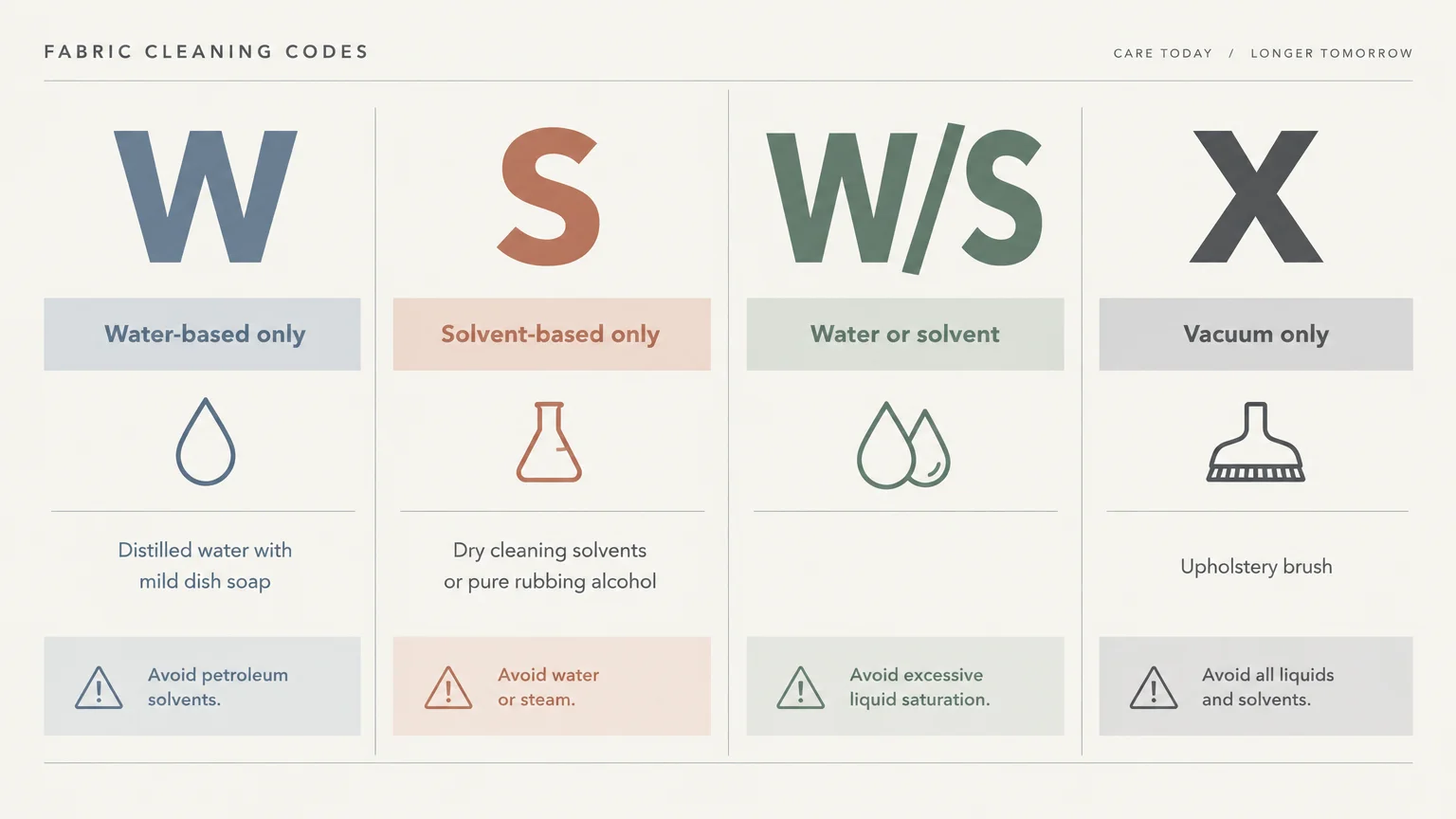
Before applying liquids or spot sprays, examine the fabric care tag hidden inside cushion zippers or underneath the frame. This manufacturer label dictates whether moisture preserves or ruins your upholstery.
Upholstery fabrics react differently to water, steam, and dry cleaning chemicals. Disregarding these standard symbols often causes permanent water rings, localized color bleeding, or severe fabric shrinkage.
According to Bob Vila, checking these manufacturer codes prevents irreversible damage during routine upholstery cleaning tips and spot removal. Keep this quick reference handy before tackling any surface stains.
| Code | Cleaning Method | Recommended Solvents | Hazards to Avoid |
|---|---|---|---|
| W | Water-based only | Distilled water with mild dish soap or foam cleaner | Petroleum-based solvent cleaners |
| S | Solvent-based only | Dry cleaning solvents or pure rubbing alcohol | Water, steam, or liquid detergents |
| W/S | Water or solvent | Mild water solutions or mild dry solvents | Excessive saturation with any liquid |
| X | Vacuum only | Upholstery brush or light vacuum extraction | Any liquid, water, foam, or solvent |
1. Vacuum Upholstery and Core Foam Weekly
Dust mites, dead skin flakes, and microscopic pollen accumulate swiftly within everyday sofa fabrics. Regular vacuuming removes these abrasive particles before normal sitting grinds them deep into the textile weave.
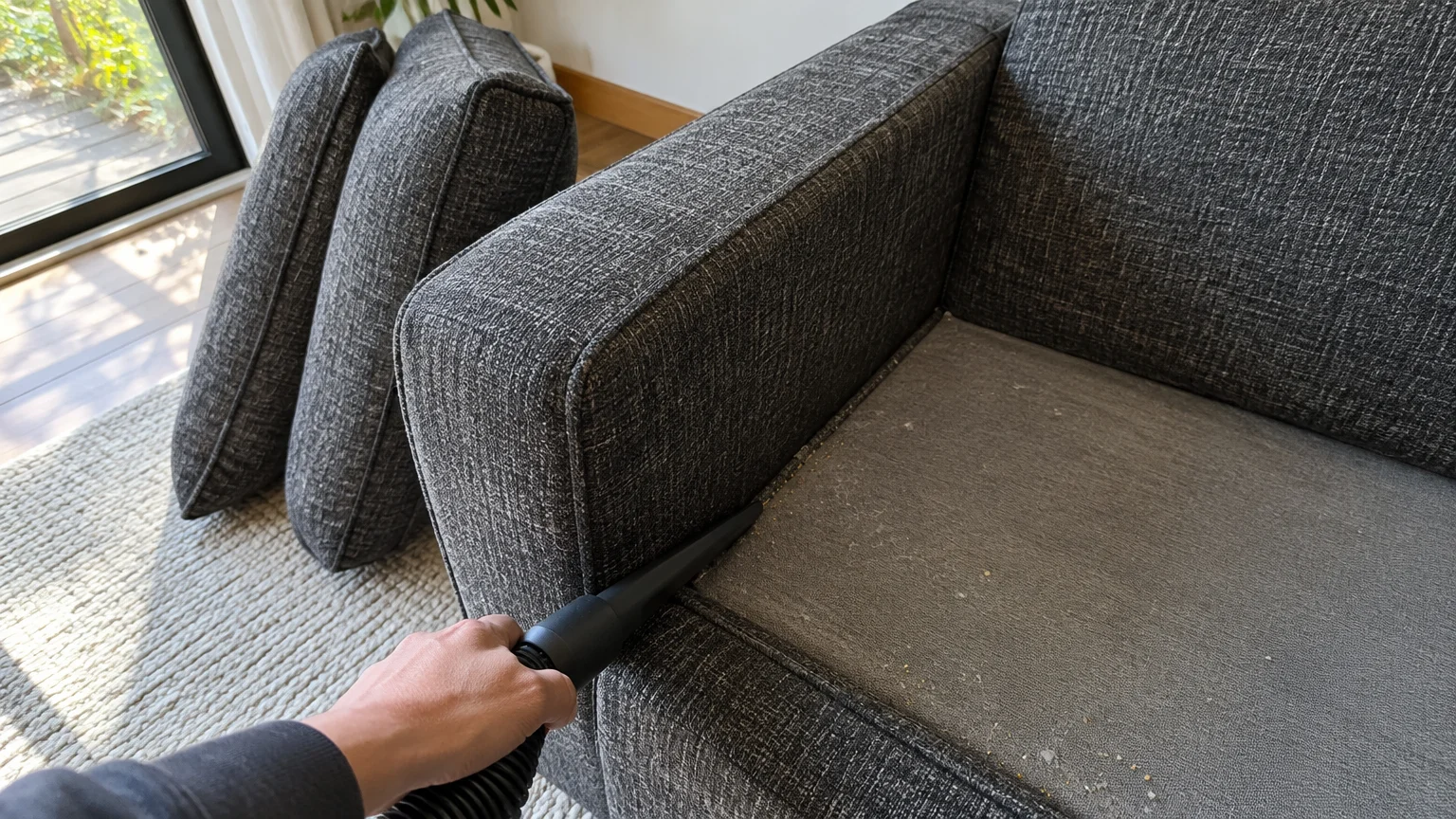
Strip off removable cushions and run a clean upholstery brush across every surface. Work methodically from top to bottom using deliberate, overlapping strokes to lift embedded dust.
Switch to a narrow crevice attachment to clear loose crumbs trapped along seams, welt cords, and button tufts. This prevents gritty buildup from slicing delicate thread fibers over time.
Vacuum the fabric platform underneath the cushions as well. Removing hidden dust underneath stops dirt from transferring right back onto the freshly cleaned cushion bottoms.
2. Rotate, Flip, and Reshape Cushions Systematically
Lounging repeatedly in the exact same spot breaks down internal foam padding unevenly. This localized stress compresses cushioning and locks body heat and moisture deep into specific sections.
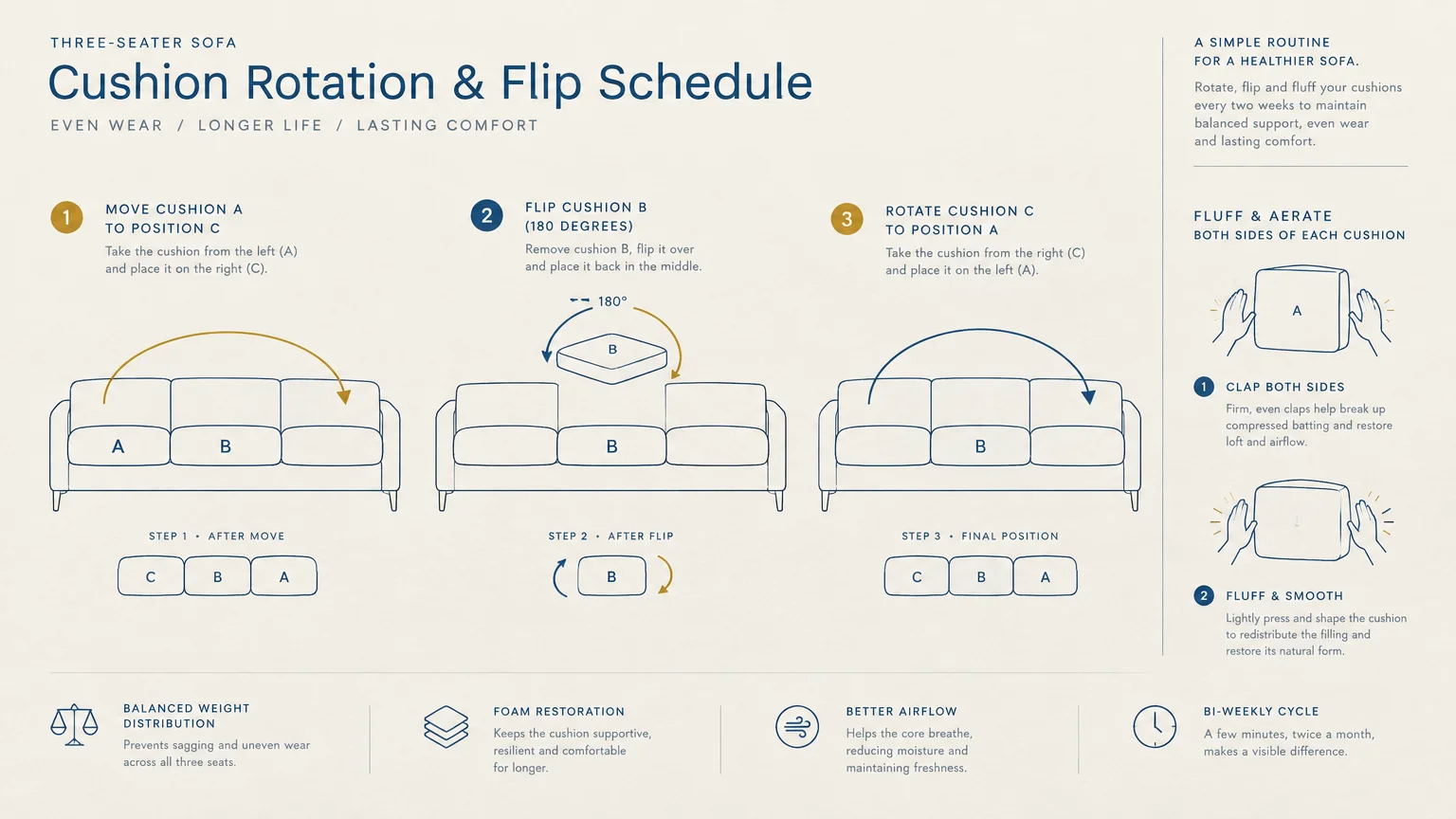
Establish an every-other-week schedule to rotate cushions across different positions on the couch frame. This simple habit balances weight distribution and prevents permanent sagging in your favorite seat.
Flip reversible cushions regularly to expose both sides equally to ambient airflow and daily friction. For down-filled or shredded foam cushions, fluff them vigorously by beating opposite sides with open hands.
Clapping the sides redistributes internal batting and draws fresh air into compressed cores. Your sofa retains its showroom loft and resists stale odors far longer.
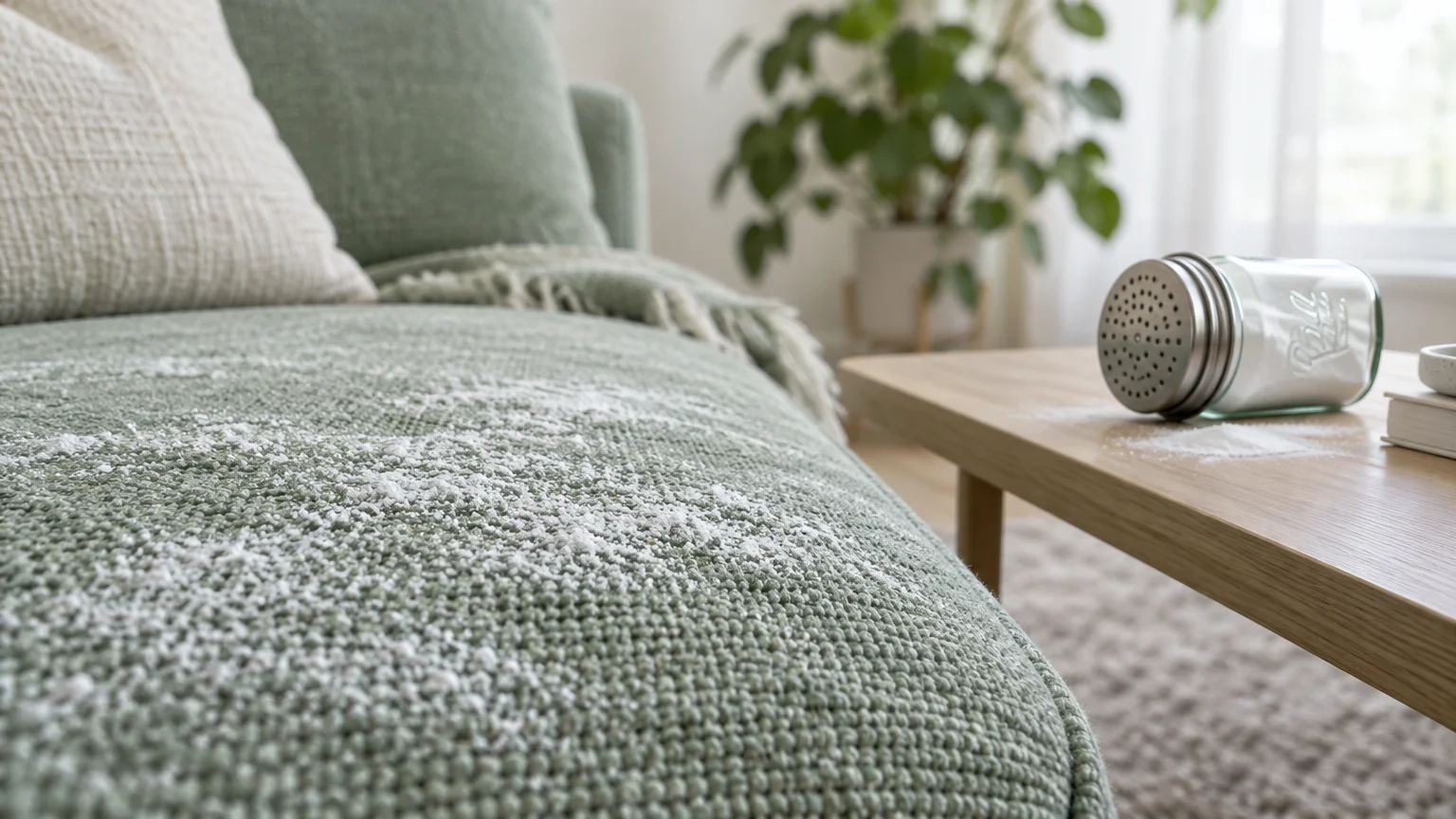
3. Deodorize Fabrics with a Dry Baking Soda Treatment
Baking soda chemically neutralizes acidic odor compounds rather than temporarily masking smells with perfumes. It acts as an affordable, non-toxic weapon for couch cushion cleaning and sofa odor removal.
Dust a light, uniform layer of dry baking soda across your cushion surfaces. Using a fine-mesh kitchen sifter helps disperse the powder smoothly without leaving large clumps behind.
Allow the powder to rest undisturbed for at least one full hour. This resting window gives the sodium bicarbonate ample time to draw out trapped moisture and stubborn odors.
Vacuum the cushions thoroughly using a clean brush attachment to extract all residue. You will immediately notice a crisp, neutral scent without synthetic fragrances lingering in your living room.
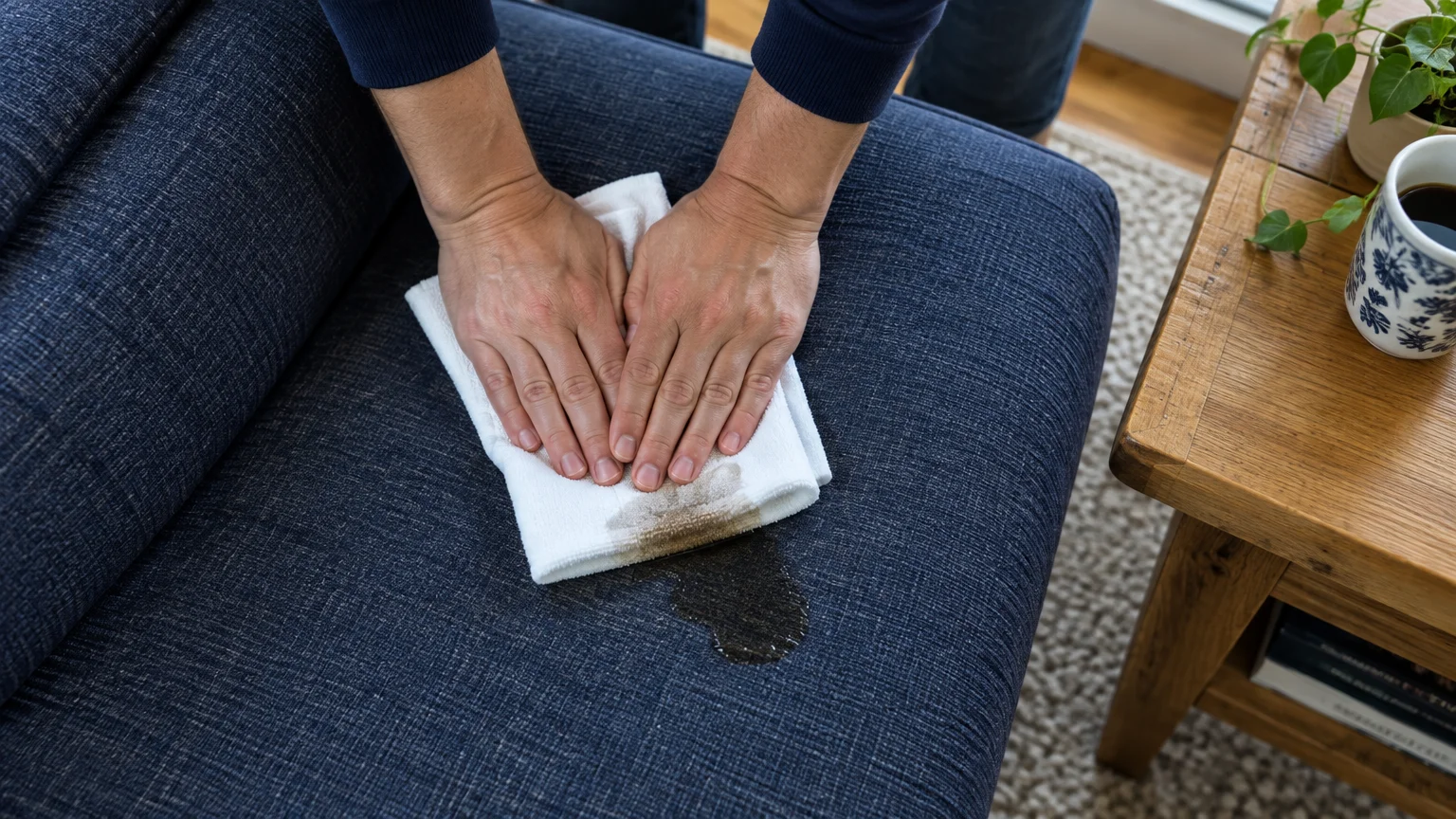
4. Blot Spills Instantly to Halt Core Saturation
Accidental liquid spills demand prompt action before liquids penetrate cushion casings and soak the core foam. Once moisture reaches high-density foam, removing deep discoloration and preventing mold becomes difficult.
Press a clean, dry microfiber cloth directly onto the spill to draw liquid upward. Never rub or scrub the spot; friction spreads the stain and damages woven surface fibers.
Work carefully from the perimeter of the stain inward toward its center. This prevents unsightly moisture rings from expanding across the visible face of your cushion.
Consult spot-treatment protocols from Clemson Home & Garden Information Center to choose safe agents for organic dyes or greasy residues. Dab the area with a damp cloth afterward to lift remaining cleaners.
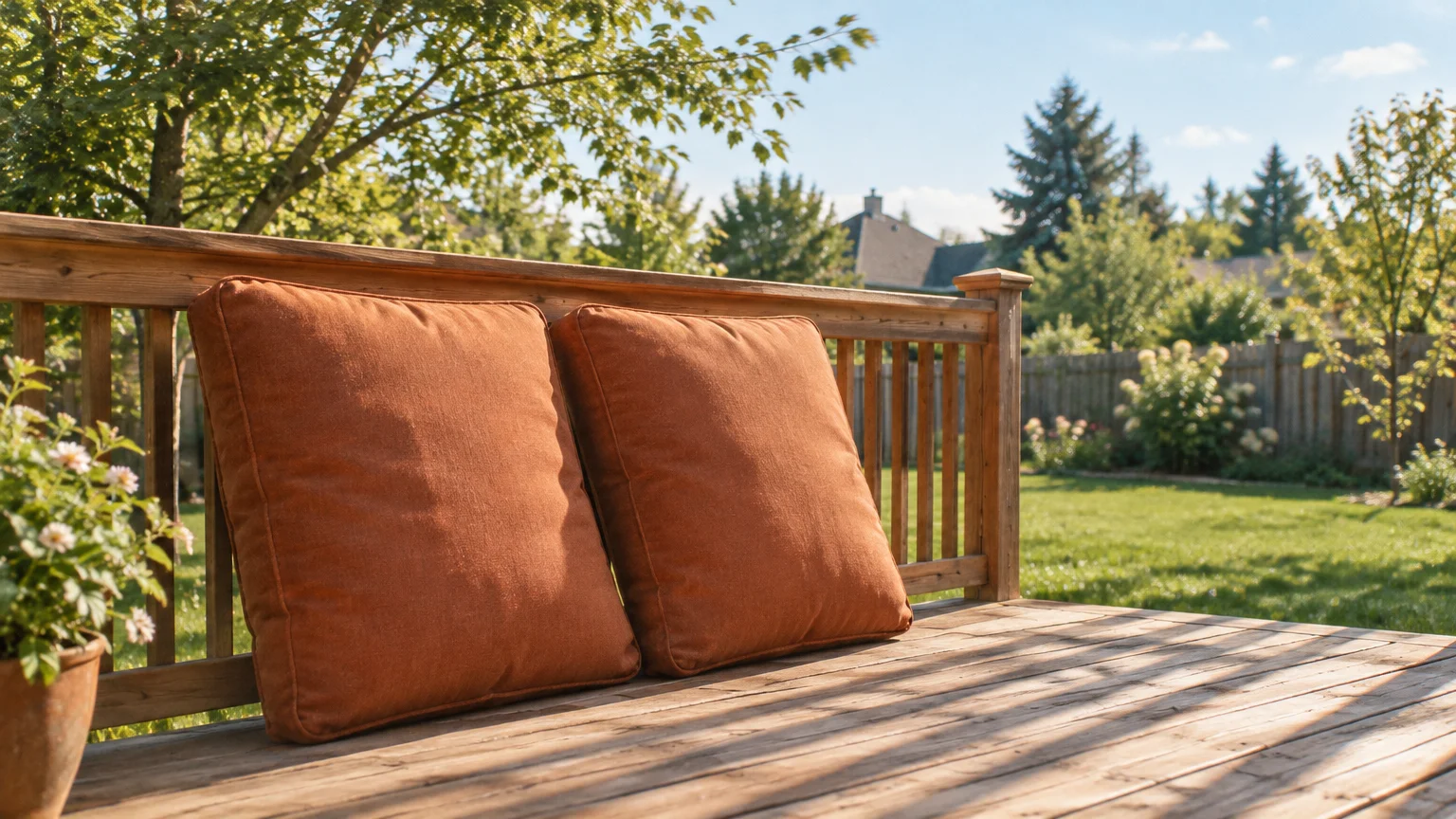
5. Sun-Air Cushions Outdoors on Low-Humidity Days
Gentle outdoor breezes and natural sunlight provide remarkable textile refreshment without commercial chemical sprays. Dry outdoor air eliminates stale interior smells while gentle solar heat lifts stubborn dampness.
Select a breezy, low-humidity afternoon to transport your removable cushions outside. Place a clean cotton sheet over an outdoor table to protect fabrics from dirty outdoor patio surfaces.
Stand cushions up on their edges to expose all sides to the circulating breeze. Limit direct sunlight exposure to sixty minutes per side to prevent UV rays from fading colorful dyes.
Bring cushions back inside before evening humidity begins to rise. They will return to your living room feeling light, dry, and thoroughly refreshed.
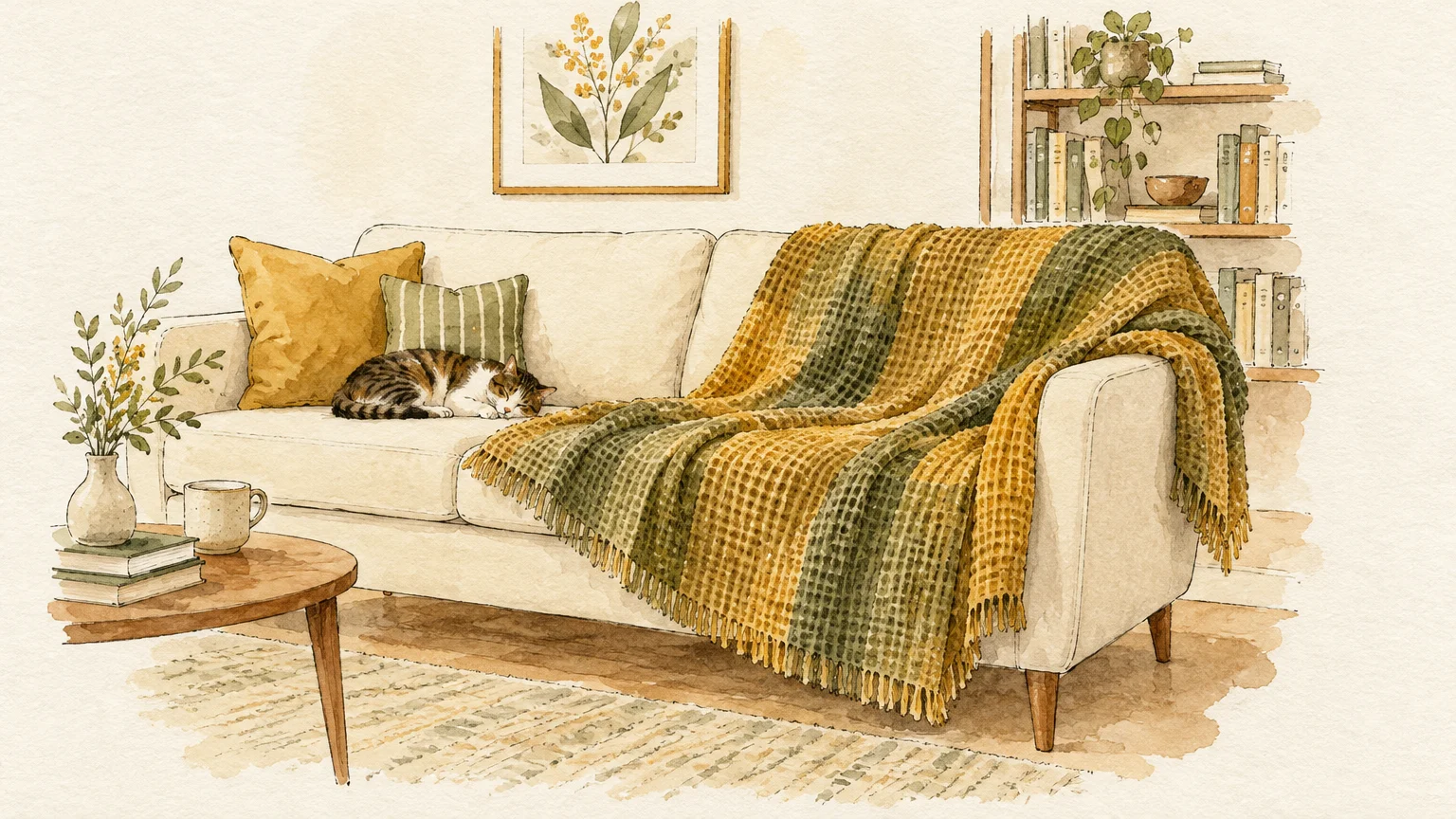
6. Shield High-Contact Zones with Washable Throws
Strategic styling creates an invisible defensive barrier between everyday family life and your couch upholstery. Washable decorative throw blankets absorb perspiration, pet grease, and snack crumbs before they hit cushions.
Tuck breathable linen, waffle-knit cotton, or plush fleece throws over heavily used seating sections. These soft textiles intercept daily debris without distracting from your room’s curated aesthetic.
Launder these protective accent blankets every two weeks alongside your regular bed linens. Frequent washing stops body oils from oxidizing and forming permanent odors inside the main furniture fabric.
Browse curated styling guides on Better Homes & Gardens to blend protective throws seamlessly with your decorative pillows. You preserve your upholstery investment while elevating everyday comfort.
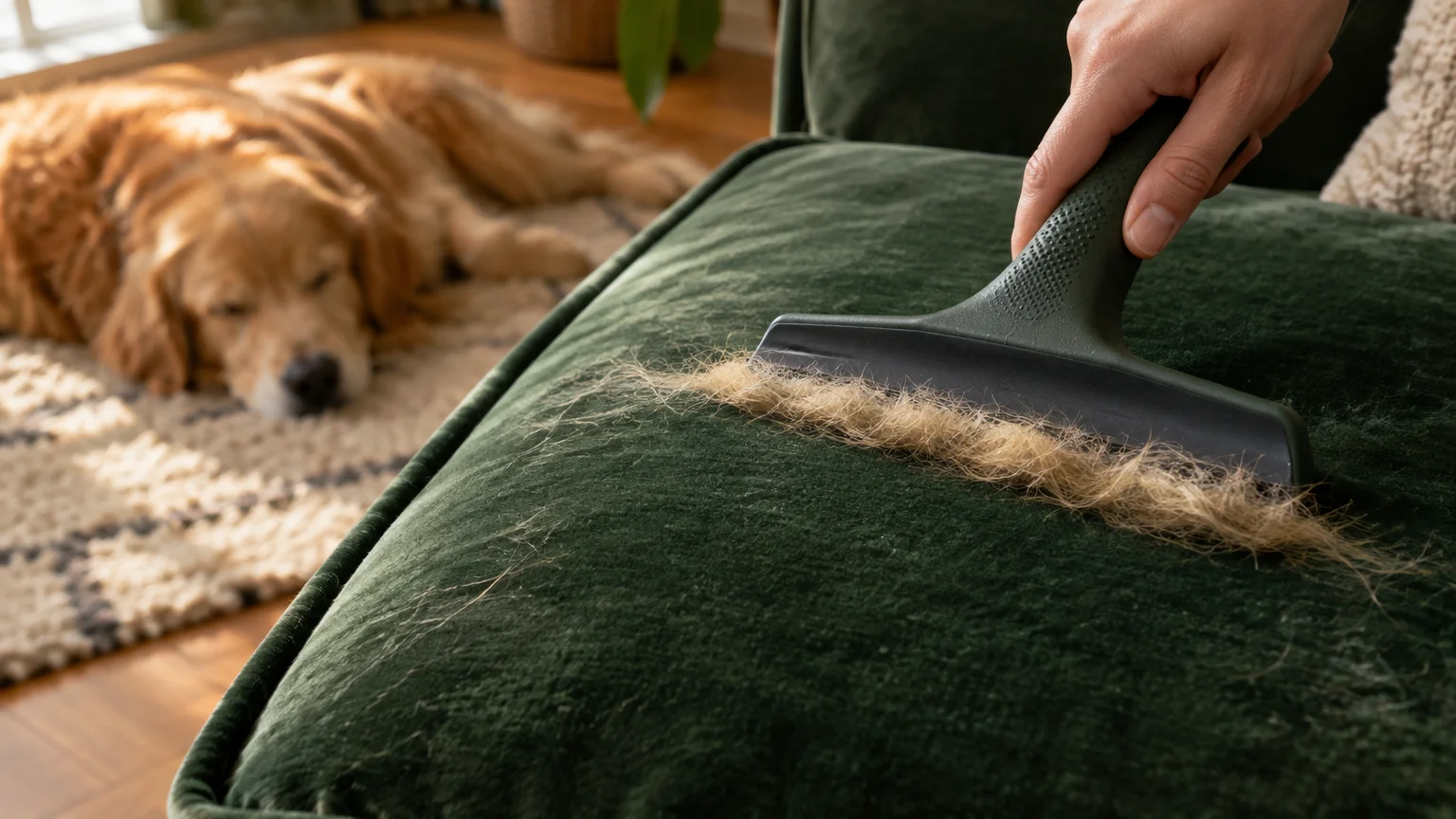
7. Lift Embedded Pet Hair Daily with Textured Rubber Tools
Pet fur weaves tightly into upholstery yarn, carrying dander and skin oils that create persistent smells. Standard vacuum passes often skate over fur strands without lifting them from the weave.
Glide a rubber pet detailing blade or textured rubber glove firmly across cushion surfaces. The rubber generates static traction that drags stubborn hairs to the surface in tight rolls.
Pull the rubber tool in short, uniform strokes moving in a single direction. Collect the hair clumps by hand and toss them directly into the trash can.
Performing this quick two-minute sweep daily stops pet dander from settling deep into cushion fibers. Your living room seating remains hair-free and smells remarkably clean.
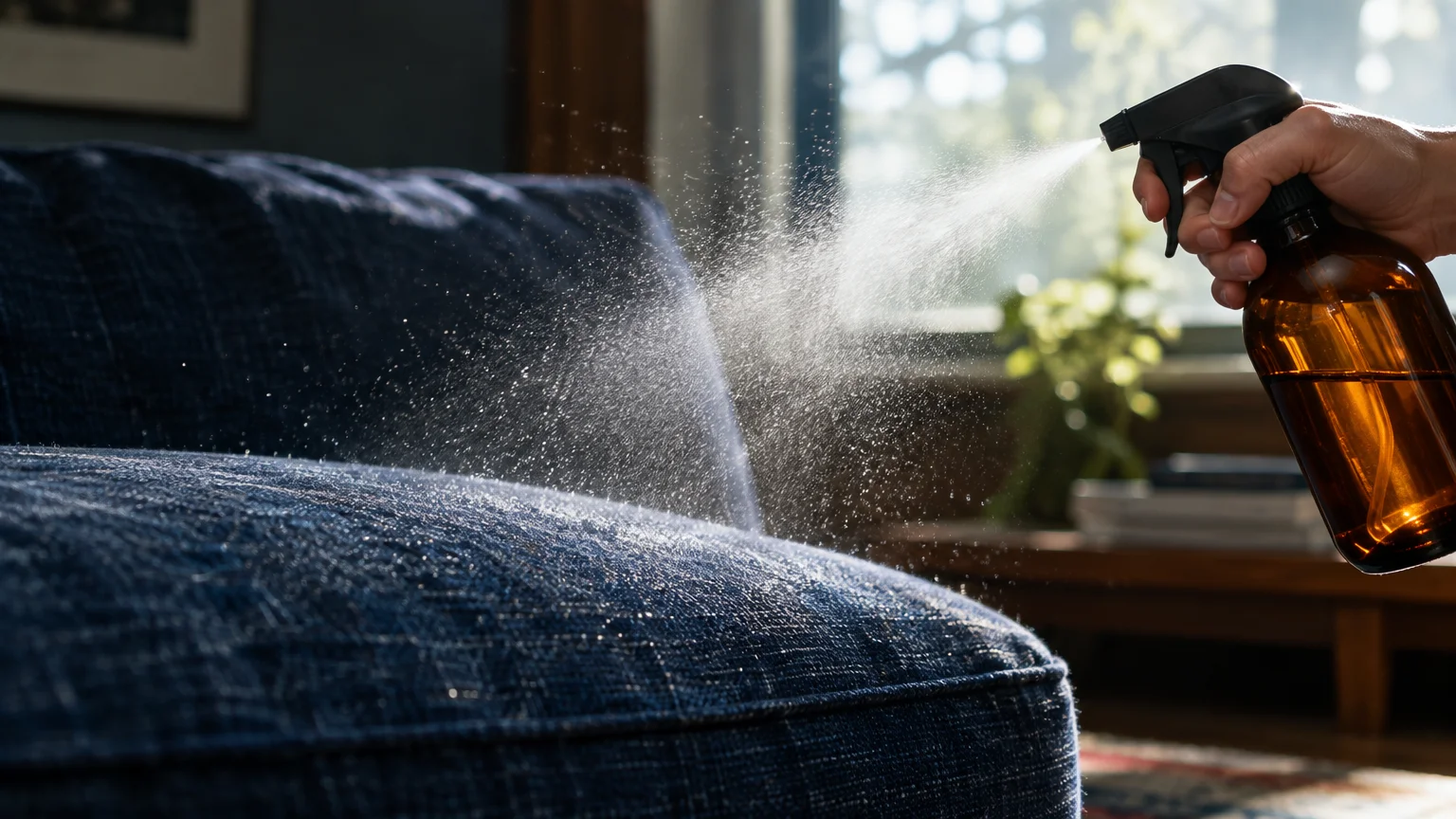
8. Refresh Fabric Fibers with a Mild Vinegar Mist
Distilled white vinegar breaks down stubborn alkaline odor compounds, including pet smells, cigarette smoke, and cooking grease. When diluted properly, it acts as a gentle, natural deodorizer that leaves no sticky residues behind.
Mix equal portions of distilled white vinegar and distilled water in a clean spray mister. Distilled water prevents mineral spots from forming on delicate, dark-colored fabrics.
Hold the nozzle twelve inches away and mist the fabric lightly, avoiding core saturation. The upholstery should feel barely damp to the touch rather than soaked.
Turn on a ceiling fan to encourage swift evaporation. The mild acidic aroma dissipates entirely within an hour, taking stale living room odors along with it.
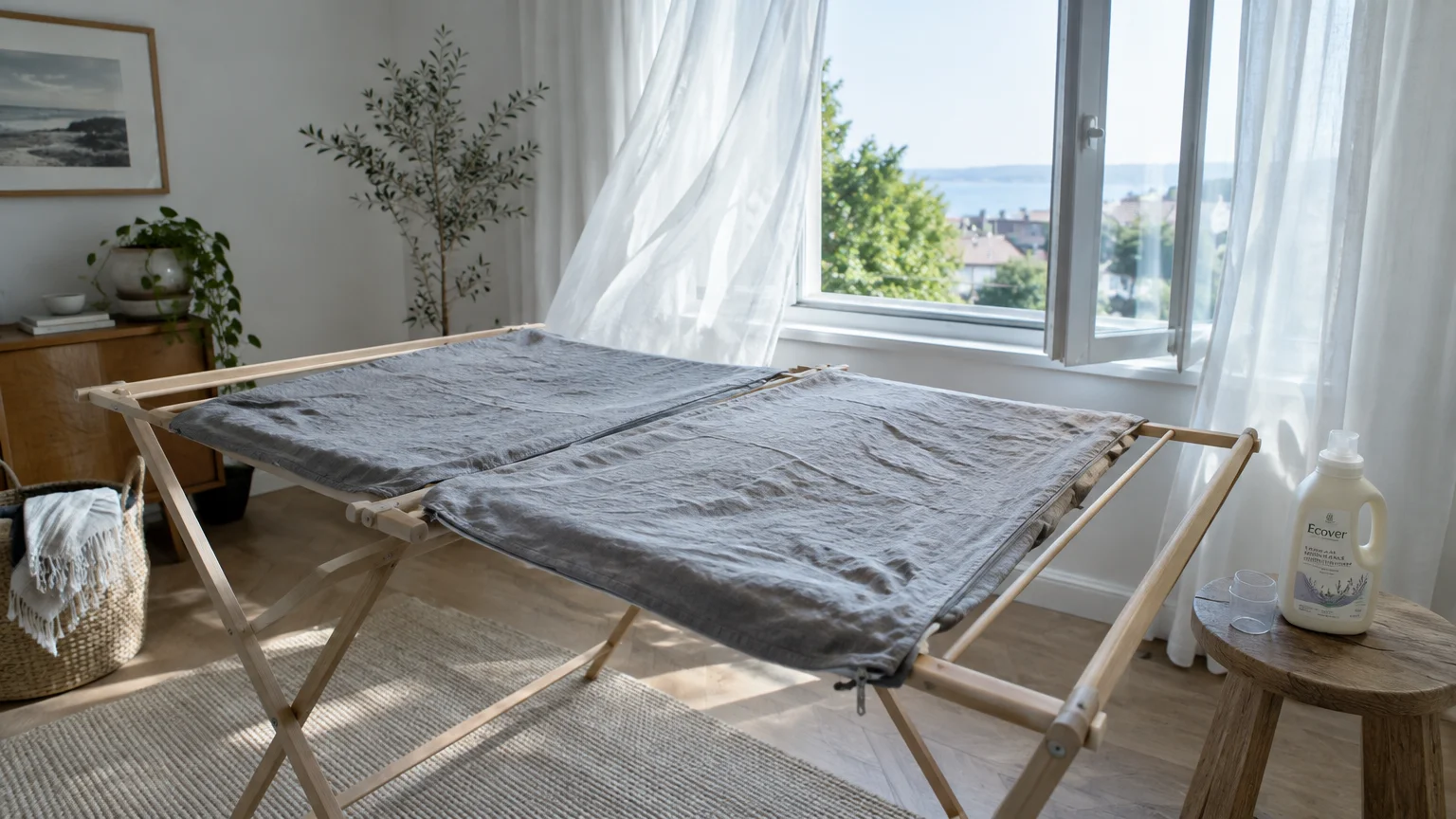
9. Deep Clean Removable Cushion Covers Safely
When routine dusting and spot treatments fall short, washing removable cushion covers provides a comprehensive reset. However, you must adhere strictly to inner tag guidelines to prevent shrinking or fraying.
Close every zipper fully before placing covers in the washing machine to prevent teeth from snagging fabric. Turn each cover inside out to shield exterior decorative textures during the agitation cycle.
Wash using cold water on a gentle cycle with a mild, bleach-free detergent. Skip liquid fabric softeners because they leave waxy films that attract dust over time.
Lay covers completely flat on clean drying racks away from direct heat sources. Stretch them back over foam inserts while slightly damp to ensure a smooth, tailored fit.
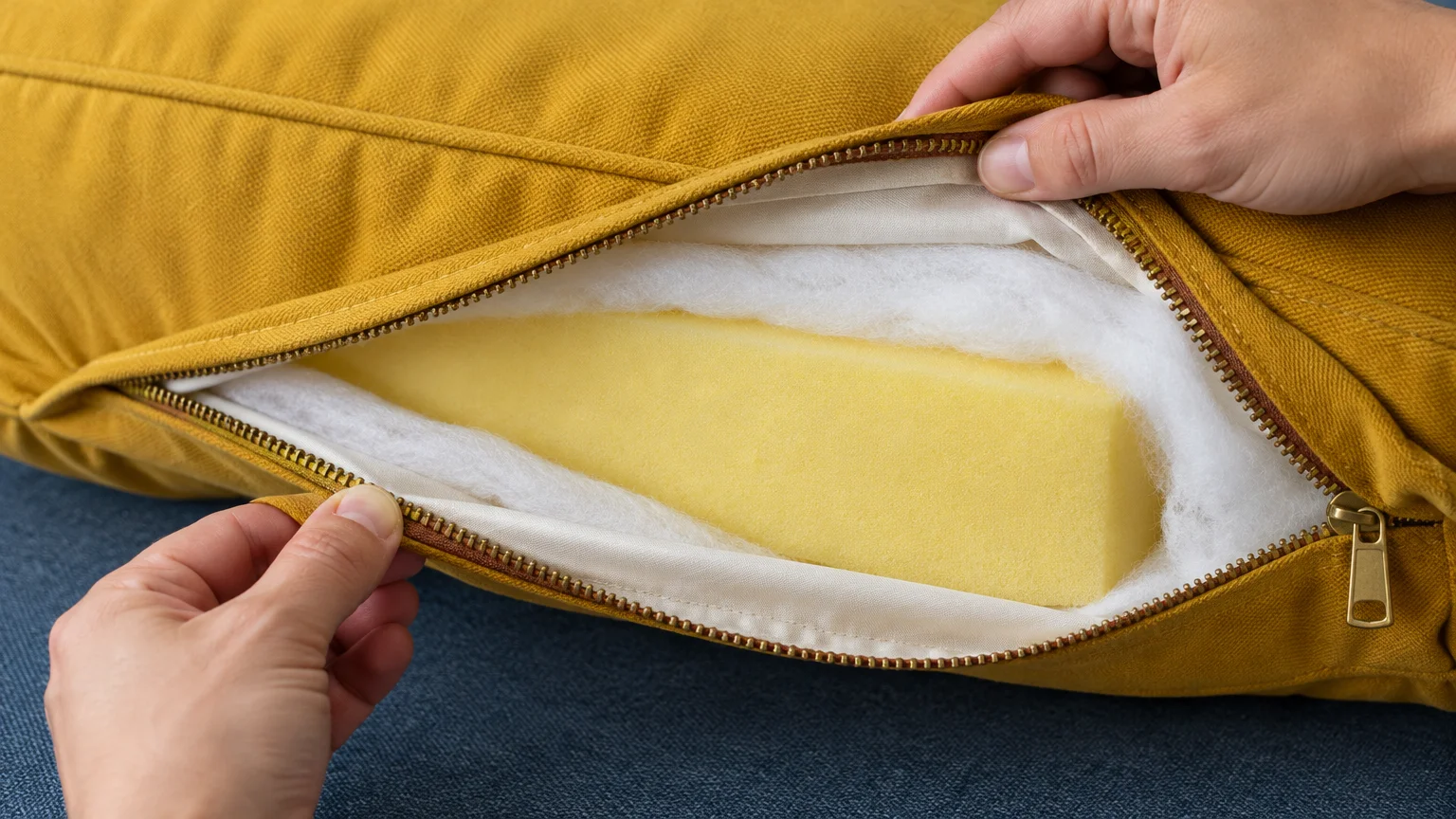
10. Inspect and Revitalize Inner Foam Inserts
Cleaning exterior covers solves only half the freshness puzzle if inner polyurethane cores hold years of dust. Annual core maintenance ensures moisture and mold never take root in your sofa frame.
Unzip your cushion covers once a year to examine the inner foam and Dacron wrap. Look for signs of foam crumbling, moisture discoloration, or stale interior odors.
Vacuum bare foam cores using low suction and a clean brush nozzle. This removes microscopic particles that filter inward through woven fabrics with every seated compression.
Spot-clean small stains on foam using a sponge dampened with mild soap and warm water. Let the core dry completely in an airy room before zipping covers shut.
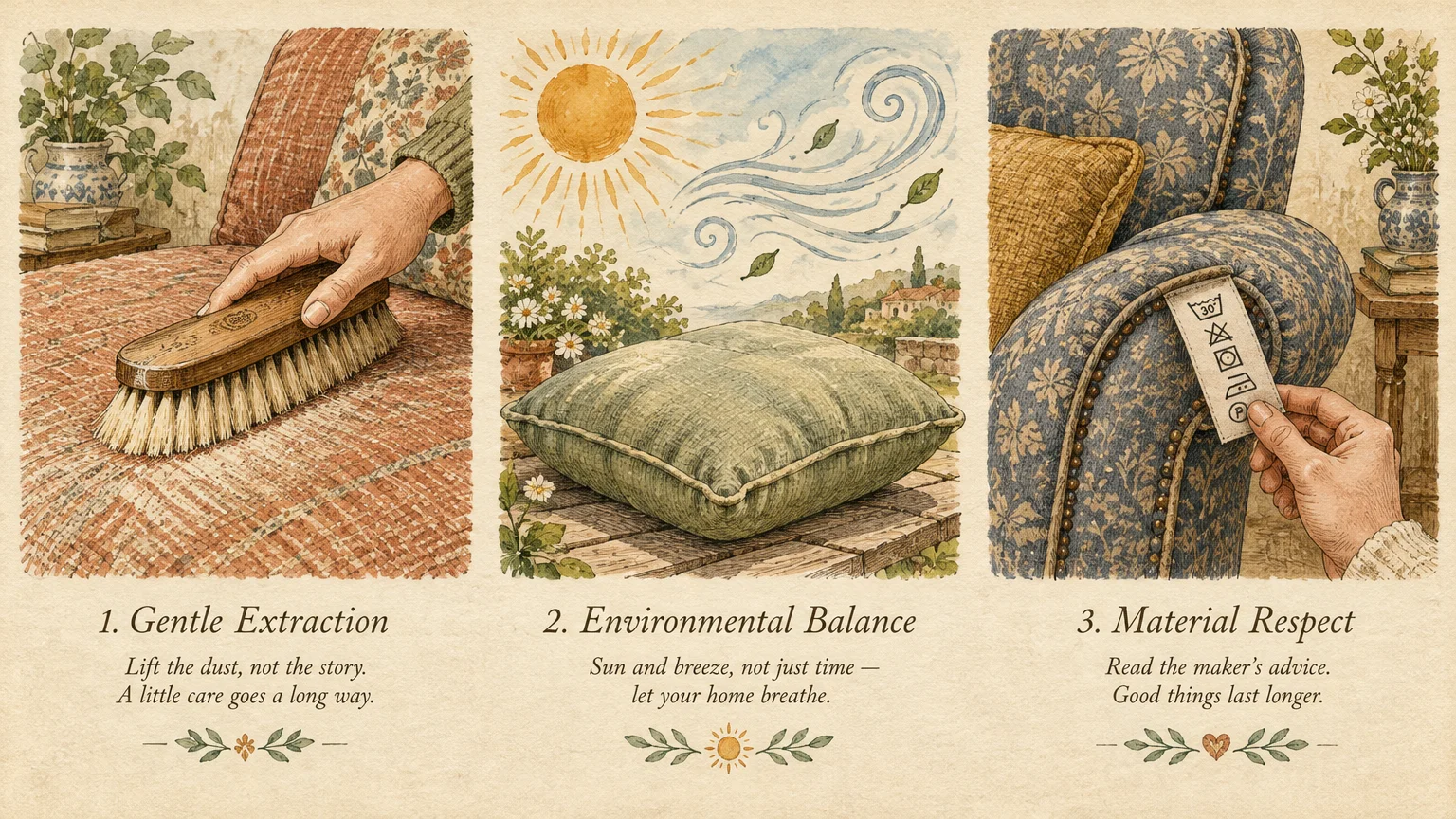
Principles of Thoughtful Furniture Care
“A garden is a grand teacher. It teaches patience and careful watchfulness; it teaches industry and thrift.” — Gertrude Jekyll
Caring for beloved home furnishings requires the same patience and steady stewardship as tending a prized perennial border. Attentive observation catches minor spills and wear before they turn into irreversible damage.
Developing consistent weekly micro-habits protects your decorative investment far more effectively than frantic, infrequent overhauls. A mindful approach keeps your home comfortable, vibrant, and genuinely welcoming.
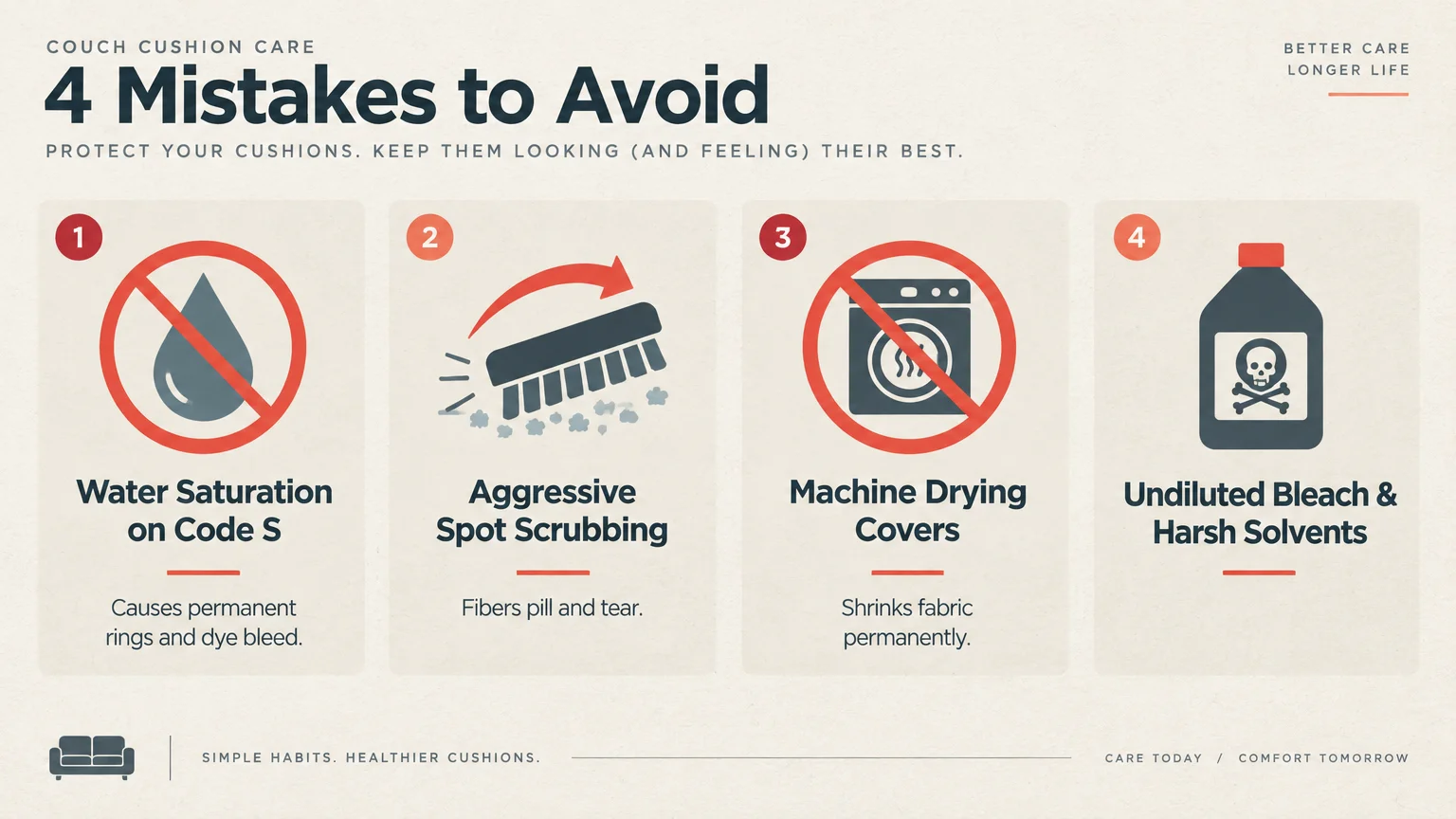
Care Killers: Couch Cushion Mistakes to Avoid
Well-intentioned homeowners frequently cause costly damage by attempting aggressive DIY cleaning techniques. Steer clear of these common errors to keep sofa fresh and preserve delicate fabric fibers.
- Saturating cushions with water: Soaking foam cores promotes lingering dampness, which creates stubborn mold colonies and ruined core support.
- Machine drying cushion covers: High dryer heat shrinks cotton and synthetic weaves, making it impossible to zip covers back onto foam inserts.
- Using harsh chemical bleaches: Chlorine bleach strips textile dyes, weakens structural threading, and leaves permanent yellow discoloration.
- Aggressive brush scrubbing: Rough friction frays woven yarns, creating unsightly fuzzy pilling and tearing delicate seam piping.
- Skipping the spot test: Applying homemade or store-bought solutions without testing an inconspicuous hem often causes tragic color bleeding.
Taking a measured, gentle approach prevents these catastrophic mistakes. Always prioritize gentle extraction over heavy soaking or aggressive friction.
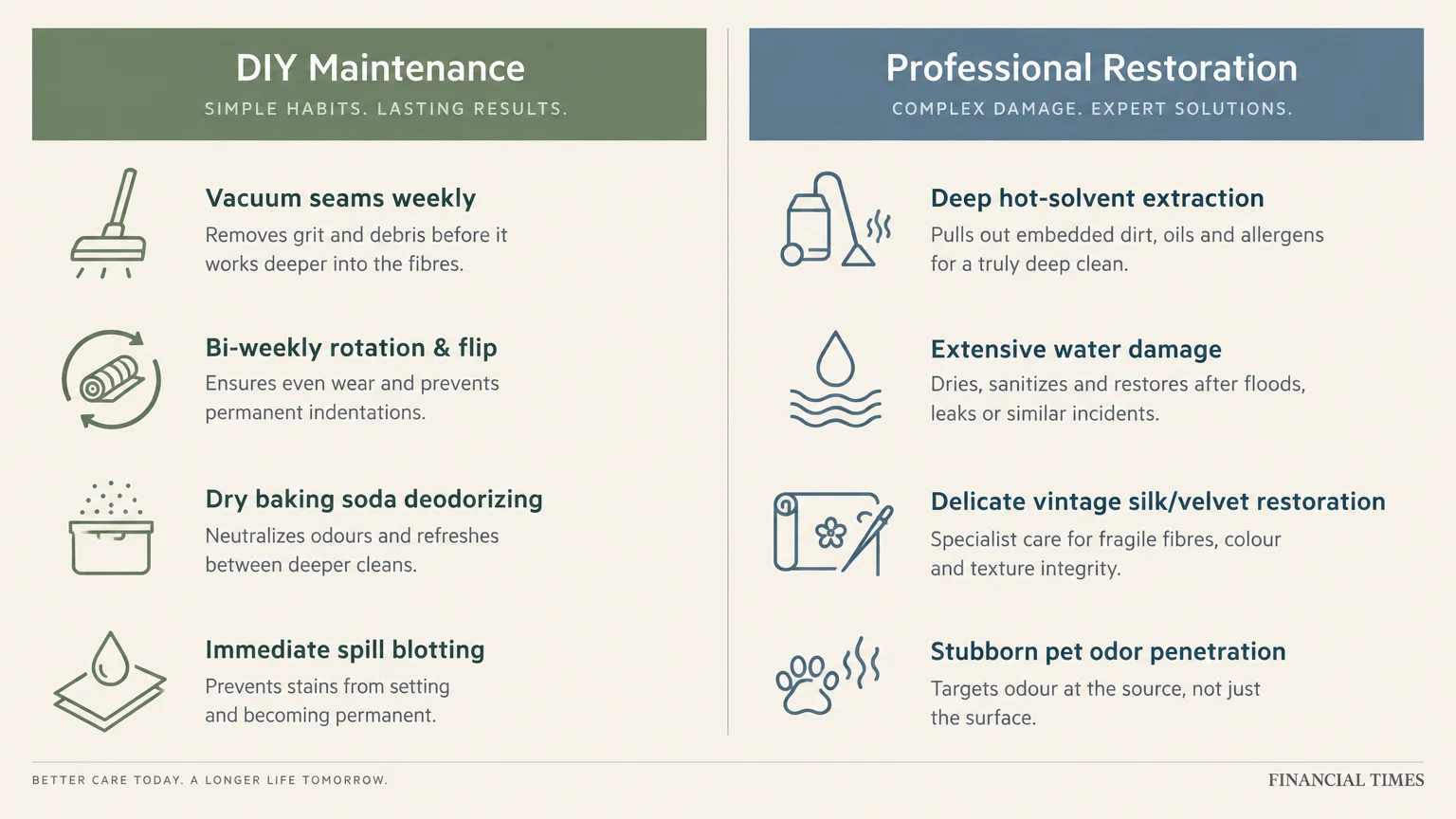
DIY vs. Hiring a Pro
Handling routine vacuuming, surface deodorizing, and minor spill cleanup is well within the ability of most homeowners. However, distinct scenarios warrant calling a certified upholstery cleaning technician.
Contact a professional immediately if your sofa label features an “S” or “X” cleaning code. Solvents required for code “S” fabrics require specialized ventilation and commercial application gear.
Deep biological contamination—such as extensive pet urine accidents, milk spoilage, or vomit—also calls for commercial extraction. Professional truck-mounted hot water extractors pull fluids out without leaving mold-breeding dampness behind.
Similarly, delegate antique heirlooms, raw silk, and vintage mohair velvet to trained specialists. The textile preservation guidelines highlighted by PennState Extension underscore that professional handling safeguards valuable home investments against structural failure.
Frequently Asked Questions
How often should you vacuum couch cushions?
Vacuum your couch cushions once every week. Consistent weekly vacuuming removes dust mites, pet dander, and gritty soil before everyday sitting grinds them into upholstery fibers.
Can you put couch cushion covers in the washing machine?
You can only wash cushion covers if the care tag displays a “W” or “W/S” code. Wash them inside out in cold water on a gentle cycle, then air-dry.
How do you get deep odors out of high-density foam?
Remove the outer cover, dust the bare foam thoroughly with dry baking soda, and wait two hours. Vacuum the core completely, mist with diluted white vinegar, and let dry.
What causes water rings on couch cushions after spot cleaning?
Water rings occur when minerals in tap water or dissolved dirt dry unevenly along the damp perimeter. Feather the edges outward with distilled water and dry quickly with a fan.
Keep Your Seating Fresh Every Day
Maintaining clean, fresh couch cushions does not require exhausting labor or harsh chemical treatments. Embracing these ten simple habits protects your furniture investment and ensures your living room remains relaxing and odor-free.
Start today by unzipping a cushion to check its care code, then vacuuming seams thoroughly with a crevice tool. Consistent small steps create a cleaner, healthier living room you will love returning to every day.
Results for DIY projects and plant care depend on your local climate, home conditions, and experience level. When in doubt, consult a licensed professional.
Last updated: February 2026. Plant care guidance reflects current horticultural best practices—always observe your specific plant’s signals.